





























India has made E20 petrol blended with 20 percent ethanol the new normal at fuel pumps across the country, positioning it as a key pillar of its energy and climate strategy. Yet this “green” shift has triggered a wave of resistance from motorists worried about mileage, engine health and the lack of choice. This article explores both sides: why the government is pushing E20 so aggressively, and why so many drivers feel they are being forced into an experiment.
What Is E20 and Why It Matters
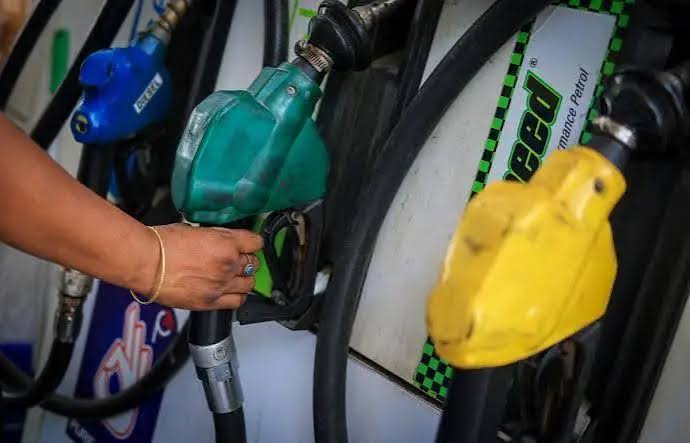
E20 is conventional petrol blended with 20 percent ethanol, a biofuel usually produced from crops like sugarcane or grains. India previously used blends like E5 and E10, but in 2025–26 it rapidly shifted to E20 nationwide, achieving a target originally set for 2030 several years early. For policymakers, this is not just a fuel tweak but a strategic move to cut oil imports, reduce emissions and support farmers.
The Government’s Big Bet on E20
The central government argues that E20 delivers three major benefits.
-
First, ethanol is domestically produced, so every litre blended into petrol reduces crude oil imports and saves foreign exchange.
-
Second, ethanol burns cleaner than pure petrol, helping lower carbon emissions and other pollutants in line with India’s climate commitments.
-
Third, ethanol demand creates an additional revenue stream for farmers and the sugar industry, which the government presents as a way to boost rural incomes.
Union ministers have publicly framed E20 as a national programme for energy security and farmer welfare, and some have even suggested that opposition to it is driven by a “rich petrol lobby” that does not want to lose market share.
The Mileage Question: Why Drivers Are Angry
On the ground, however, motorists are focusing on a different metric: kilometres per litre. Ethanol has lower energy content than petrol, so an E20 blend inherently delivers slightly lower fuel efficiency compared with pure petrol or E5/E10.
Government and auto-industry representatives acknowledge that E20 typically reduces fuel efficiency by about 3–3.5 percent under test conditions, which they describe as a “minor trade-off” for environmental and economic gains. But thousands of drivers have taken to social media claiming much larger real-world mileage drops often 10–20 percent especially in older vehicles, and say their fuel costs have gone up despite the “greener” label.
This gap between official estimates and user experience is a major reason for the backlash, creating a perception that consumers are paying more to enable a policy they did not choose.
Concerns Over Older Vehicles and Engine Health
Another major fear is whether E20 can damage engines, particularly in vehicles sold before manufacturers started explicitly certifying them as E20-compatible. Millions of cars and two-wheelers sold before March 2023 were designed for lower ethanol blends like E5 or E10, and some automakers initially warned that running them on E20 might cause corrosion, clogged filters, rough idling or hard starts.
Drivers have reported issues such as rough engine behaviour, starting trouble and more frequent visits to mechanics after the switch to E20, though these reports are anecdotal and not always clearly linked to ethanol content alone. Insurance companies have also complicated matters by stating that engine damage caused by using inappropriate fuel may not be covered, making motorists worry that they bear the risk if something goes wrong.
In response, government officials and industry bodies insist that years of testing show no evidence of widespread engine damage from E20 and that at least some viral “failure” cases were actually linked to contaminated fuel rather than the blend itself. However, the lack of clear, vehicle-specific guidance at fuel stations has left many owners of pre-2023 vehicles feeling unprotected.
Policy Communication and the “Experiment” Controversy
Public trust took a further hit when India’s Attorney General told a court that E20 was an “experiment” whose full results would only be clear later, a remark that opponents seized upon as confirmation that consumers were being used as test subjects. Motorists already frustrated by mileage drops and lack of choice interpreted this as proof that the rollout was rushed, with insufficient transparency and consultation.
Civil-society groups, opposition politicians and ordinary drivers have filed information requests and legal challenges, arguing that policy ambitions should not override consumer rights to choice and safety, especially when data on long-term impacts is still being collected. Although India’s top court has dismissed at least one petition against the nationwide rollout, the debate highlighted how quickly climate and energy policies can face a “greenlash” if people feel excluded from decision-making.
Why the Auto Industry Is Defending E20
Interestingly, much of the auto industry has lined up behind the government on E20. Industry associations say their members have done extensive bench and field testing, and that, apart from a modest efficiency loss, they see no systemic safety risks in newer vehicles designed for higher blends.
Automakers point out that markets like Brazil and the United States have used high-ethanol blends for years, suggesting that technical challenges can be managed with appropriate engine design and fuel-system materials. They also argue that shifting to E20 forces manufacturers to modernise their fleets and helps prepare for future blends like E25, which regulators are already discussing.
However, inconsistent messaging early on some companies warning about compatibility and later softening their position added to the confusion and fuelled the perception that neither government nor industry had fully thought through the transition for legacy vehicles.
The Economics: Who Really Pays?
From a macroeconomic perspective, E20 can reduce the oil import bill and support the domestic ethanol industry, potentially benefiting the national balance of payments and rural economies. Yet at the micro level, individual motorists currently shoulder most of the costs: slightly lower mileage, unchanged pump prices despite cheaper ethanol inputs, and uncertainty over engine wear and warranty coverage.
Critics argue that if ethanol is cheaper to produce than petrol, some of that cost advantage should be passed on to consumers to offset their mileage losses. Others say that until there is a clear compensation or support mechanism for owners of older vehicles such as retrofit programmes, dual-fuel options at pumps or targeted subsidies the policy will be seen as unfairly regressive.
Why India Is Still Likely to Stay the Course
Despite protests, social-media campaigns and legal challenges, the political and strategic momentum behind E20 is strong. The government views ethanol blending as a crucial bridge technology on the path to cleaner mobility, especially because EV adoption, charging infrastructure and battery supply chains will take years to scale fully.
In other words, while electric vehicles represent the long-term future, E20 is seen as a near-term tool to reduce emissions and oil dependence using existing vehicles and infrastructure. This logic, combined with strong support from parts of the auto and sugar industries, makes a complete rollback of E20 unlikely, though adjustments like better labelling, dual-blend availability, or more transparent test data could emerge in response to public pressure.
What Needs to Change for E20 to Succeed
For India’s E20 gamble to work in both policy and public terms, several gaps need to be addressed.
-
Clearer information: Fuel stations and OEMs must give simple, vehicle-specific guidance about compatibility, expected mileage changes and maintenance tips.indianexpress+2
-
Consumer choice: Providing at least one lower-ethanol option at pumps especially in areas with many older vehicles could ease concerns about being forced into an “experiment.”
-
Data transparency: Publishing detailed, independent test results on fuel efficiency and engine impact, and reconciling them with user-reported data, would help narrow the trust gap.
-
Fair cost-sharing: Exploring ways to pass some of the economic benefits of ethanol (like lower production costs and reduced imports) back to consumers, for example through targeted price or tax adjustments.
If these issues are tackled, E20 could evolve from a contentious mandate into a more widely accepted stepping stone towards cleaner, more self-reliant mobility.