

























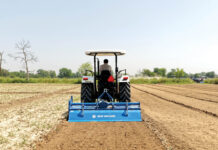







Mahindra & Mahindra Ltd.’s Farm Equipment Business (FEB) reported a robust performance in June 2026, selling 58,177 tractors in the domestic market, a 12% increase from the 51,769 units sold in June 2025. Total global tractor sales for the month, which include exports, reached 59,935 units, up 12% from 53,392 units a year earlier. Exports accounted for 1,758 units, marking an 8% year-on-year rise.

The June results underline Mahindra’s continued dominance in the farm equipment sector and come at a time when weather uncertainties linked to emerging El Niño conditions are raising questions about the upcoming Kharif cropping season. Despite this backdrop, the company says sustained government support measures, including fertilizer subsidies and targeted local interventions, are expected to cushion farmers and help maintain demand for tractors during the planting season.
Veejay Nakra, President of Mahindra’s Farm Equipment Business, highlighted the resilience in domestic demand when announcing the figures. “We have sold 58,177 tractors in the domestic market during June 2026, registering a growth of 12% over last year,” he said. Nakra noted that while it is still early to fully gauge El Niño’s impact, proactive government actions and localized measures should help mitigate risks and support the rural economy through the Kharif season. He also pointed to healthy export performance, with the company shipping 1,758 tractors in June, an 8% increase compared to the prior year.
Cumulative figures for the fiscal year to date also paint a strong picture for Mahindra’s FEB. Domestic sales from April through June 2026 stood at 152,426 units, up 18% from 129,199 units over the same period in the prior year. Exports during the cumulative period reached 5,615 units, a 15% rise from 4,890 units in the previous year, bringing total year-to-date tractor sales to 158,041 units, an 18% increase year-on-year.
Mahindra’s market leadership in tractors is long-standing; the company is the world’s largest tractor manufacturer by volume. The latest sales growth reinforces that position and speaks to the company’s strong rural distribution network, product mix, and brand loyalty among Indian farmers. Analysts say several factors likely contributed to the uptick: a favorable base effect following softer numbers last year, continued replacement demand in certain regions, and timely availability of models across horsepower segments.
The agricultural outlook for the Kharif season will hinge on rainfall patterns, input availability and rural income trends. El Niño events typically correlate with below-average monsoon rainfall in parts of India, which can depress sowing activity and farm equipment purchases in affected areas. Still, the government’s policy responses, notably fertilizer subsidies, direct support to farmers, and localized relief measures, aim to blunt the economic shock of uneven rains and sustain purchasing capacity in rural markets. Mahindra’s leadership highlighted these policy measures as supportive to farm-sector demand.
On the export front, Mahindra continues to strengthen its global footprint. The 8% growth in monthly exports reflects steady international demand across multiple markets and the company’s strategy of blending fully built units with CKD (completely knocked down) shipments to manage costs and local assembly advantages. Over the cumulative period, export growth of 15% underscores Mahindra’s expanding overseas presence and the competitiveness of its product lineup in diverse geographies.
Beyond raw sales numbers, Mahindra’s broader corporate positioning continues to align with global sustainability and rural development priorities. The Mahindra Group, founded in 1945, operates across more than 100 countries and employs over 3,24,000 people. Apart from its leadership in farm equipment, the conglomerate has significant operations in utility vehicles, information technology, and financial services in India, along with businesses in renewable energy, logistics, hospitality and real estate. The group has made ESG initiatives and rural prosperity central to its public messaging, aiming to drive positive change in communities and stakeholder ecosystems.
For farmers and dealers, the near-term focus will be on navigating weather-related uncertainty while completing Kharif sowing and ensuring access to inputs. For Mahindra, sustaining distribution, ensuring timely deliveries and supporting customers with finance and service options will be critical to converting demand into sales over the coming months. The company’s June figures provide an encouraging sign that, even amid macro and climatic headwinds, core demand for tractors remains resilient.
As the monsoon unfolds and policymakers monitor conditions, the agricultural equipment sector will be watching both rainfall patterns and any new support measures closely. For now, Mahindra FEB’s June performance offers a vote of confidence in the company’s market standing and its ability to respond to evolving market dynamics, domestically and abroad.