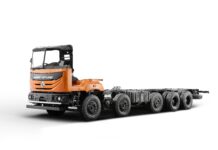











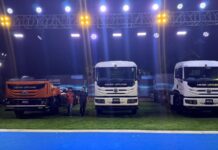













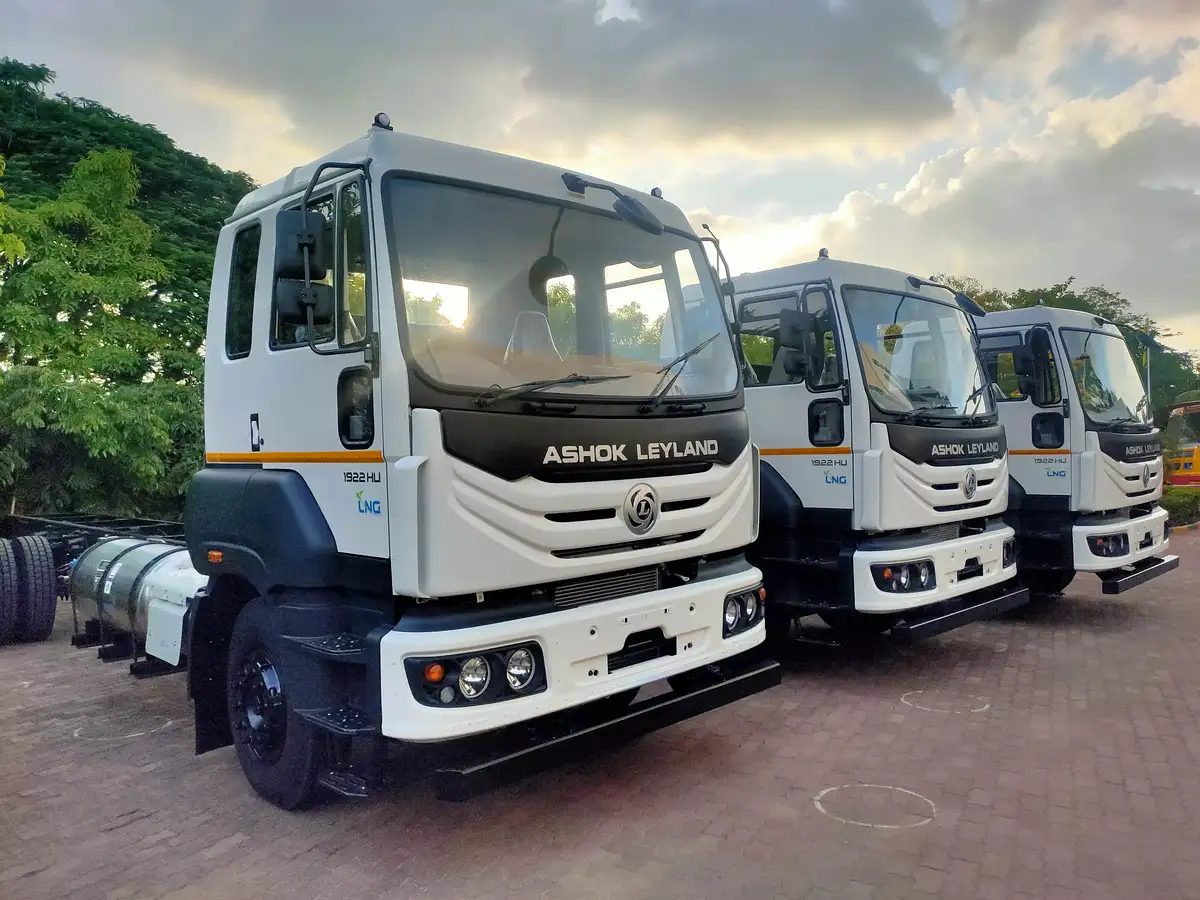
Ashok Leyland , introduced what it calls India’s first commercial truck range fitted with air suspension, a move the company says will raise payload capability, ride comfort and operating efficiency for fleet owners. The Hinduja Group flagship launched three models the AVTR 4925 10×2 MAV (a 49-ton truck with a claimed 1.5-ton payload advantage), the AVTR 4625 10×2 MAV (46-ton, 4-ton advantage) and the AVTR 4525 8×2 MAV (45-ton, 4-ton advantage) positioning the maker as a technology leader in the heavy commercial vehicle (HCV) segment.
Ashok Leyland says the new air-suspension range delivers “best-in-class” payload capability with only a nominal impact on initial purchase cost, enabling operators to lift more freight per trip and improve revenue per axle. The company highlights reduced maintenance needs, improved tyre life and better load handling as additional drivers of total cost of ownership (TCO) benefit.
“This launch reinforces our role as a technology leader in the Indian CV industry,” said Shenu Agarwal, Managing Director & CEO of Ashok Leyland. “These new trucks offer best-in-class payload capability, improved comfort, and better performance, helping our customers improve productivity and profitability.” Sanjeev Kumar, President, MHCV, added that the range was developed to meet customer demands for efficiency, reliability and value. “With benefits such as improved vehicle stability, reduced vibrations, superior ride comfort, and improved tyre life, these trucks are designed to deliver a better ownership experience for customers,” he said.
Air suspension is pitched as the core differentiator. Compared with conventional mechanical leaf-spring systems, air suspensions use pressurized air bags and valves to support vehicle weight and absorb shocks. Ashok Leyland says this translates to enhanced vehicle stability when laden, smoother negotiations over repeated road undulations, and lower transfer of vibration to the chassis and cargo all important for long-haul and sensitive-load applications. The rear suspension reportedly requires no greasing, cutting routine maintenance tasks and downtime.
Payload gains of up to 4 tonnes are a headline outcome. By optimizing suspension weight and load distribution, the trucks can carry more without proportionally increasing axle stress, according to the company. That payload advantage, combined with longer tyre life and reduced vibration-related wear, underpins the claimed TCO improvements. Ashok Leyland also points to nominal incremental investment versus conventional equivalents, suggesting fleet operators may realize payback through higher revenue potential per trip and lower operating expenses.
Flexibility and practicality were emphasized in the product design. The air-suspension range is offered in cowl and cabin variants and multiple loading span choices to suit different body configurations and industry uses. Standard equipment includes iVAC (Intelligent Vehicle Acceleration Control) and ATC (Automatic Traction Control), technologies aimed at improving fuel efficiency and traction across varying terrains. Such features support operational reliability in mixed road conditions commonly encountered across India.
Industry observers say air suspension adoption represents an important step for the Indian CV market, particularly for segments where ride quality, cargo protection and operational uptime are critical. Internationally, air suspensions are more common on premium long-haul tractors and buses for comfort and cargo integrity; localizing the technology for Indian operating contexts including high payload rules, variable road quality and cost sensitivity could drive wider acceptance if the economics align for fleet operators.
Ashok Leyland’s move also follows broader OEM efforts to add value through technology rather than purely through incremental powertrain improvements. By targeting payload and lifecycle economics, manufacturers can address core customer pain points: utilization, uptime and profitability. For fleet owners transporting high-value or sensitive goods, improved ride dynamics and fewer shocks can reduce product damage and claims, further strengthening the ownership case.
That said, the real-world uptake will depend on fleet economics, dealer and service readiness, and operators’ willingness to invest in a newer suspension architecture. Ashok Leyland’s promises of low maintenance and better tyre life will need to be validated in field operations across varied geographies and load cycles. Warranty terms, service network competency for air-suspension components, and availability of spares will play a key role in operator confidence.
With this launch, Ashok Leyland reinforces its positioning as an industry innovator aiming to deliver productivity-enhancing solutions to customers. If the air-suspension range proves reliable and cost-effective in Indian conditions, it could nudge competitors to accelerate similar offerings and reshape expectations around ride quality, payload optimisation and total cost of ownership in the heavy-duty truck market.