

























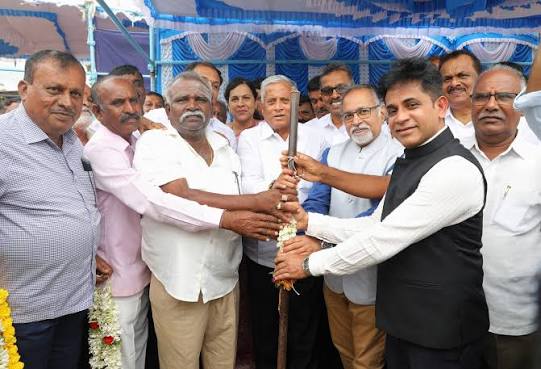
Toyota Kirloskar Motor (TKM) has strengthened its commitment to community development by launching a new school infrastructure project in rural Karnataka, focused on improving access to quality education in the Bengaluru South region. The company held a groundbreaking ceremony at the Government Primary School in Ittamadu, Bidadi, marking the start of construction for additional classrooms and sanitation facilities that will benefit students from multiple neighbouring villages. This initiative forms part of TKM’s broader vision of contributing to society through sustainable and long-term community-focused projects.
The event took place at the Government Primary School, Ittamadu, which serves children from five nearby villages and acts as a key educational hub for the area. Recognising the school’s importance and the growing needs of its students, TKM has committed to building four new classrooms and separate sanitation blocks for boys and girls. By addressing both space constraints and basic hygiene requirements, the project aims to create a more conducive learning environment and support the overall well-being of children and their communities. In total, the improved infrastructure is expected to positively impact over 3,000 community members across the five villages.
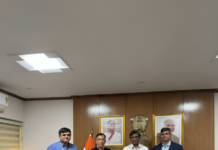
The groundbreaking ceremony was graced by Dr. C. N. Manjunath, Member of Parliament for Bengaluru Rural, who underscored the importance of educational infrastructure in shaping the nation’s future. He emphasised that the future of the country is built in classrooms and that rural schools must have facilities that allow children to learn with dignity and confidence. Dr. Manjunath described TKM’s initiative at Ittamadu as a meaningful contribution to strengthening the educational ecosystem in the region, highlighting how partnerships between industry and society can create lasting change and open new opportunities for future generations.
Senior leadership from Toyota Kirloskar Motor also attended the ceremony, including company representatives such as the Vice President and other executives. Speaking on behalf of the company, Vikram Gulati, Country Head and Executive Vice President, Corporate Affairs, reiterated that TKM views education as one of the most critical foundations for community development. He noted that while infrastructure alone does not determine a child’s future, it creates essential conditions where students can learn, grow and succeed. The project at Ittamadu, he said, reflects TKM’s strong connection with the communities around Bidadi and its belief that access to quality educational facilities can make a meaningful, long-term difference.
This initiative is part of Toyota Kirloskar Motor’s broader focus on sustainable community development, guided by its philosophy of contributing positively to society beyond its core business operations. Over the years, TKM has undertaken a range of projects centred on education, skill development and social welfare, particularly in regions surrounding its manufacturing facilities. The educational infrastructure project in Bengaluru South, which targets benefits for more than 15,000 students, together with the new initiative in Bidadi, showcases the company’s long-term commitment to building stronger, better-equipped schools through partnerships with local institutions and communities.
By improving physical infrastructure, TKM is also supporting wider goals such as increased school enrolment, reduced dropout rates and better learning outcomes in rural areas. Additional classrooms can help reduce overcrowding, enable multi-grade teaching to be organised more effectively and allow schools to introduce new activities or learning spaces. Separate sanitation facilities for boys and girls are especially important for older students, as adequate hygiene facilities are closely linked with attendance, comfort and safety, particularly for girls. In this way, the project supports not just academic learning but also dignity and equality in education.
The choice of Ittamadu and the surrounding villages reflects TKM’s focus on the communities in the immediate vicinity of its industrial operations. Toyota Kirloskar Motor’s manufacturing facilities are located in Bidadi, Karnataka, where it operates two major plants. The company’s first plant, established in 1997 and commencing production in 1999, manufactures models such as the Innova HyCross, Innova Crysta, Fortuner and Legender, with an installed capacity of up to 1,32,000 units. The second plant, which began production in 2010 on the same site, produces other key models including the Camry Hybrid, Urban Cruiser Hyryder and Hilux. Together, the plants offer a total installed production capacity of up to 3,42,000 units and span a land area of approximately 432 acres.
TKM’s broader corporate profile adds context to its community initiatives. The company is a joint venture with 89 percent equity participation from Toyota Motor Corporation of Japan and 11 percent from Kirloskar Systems Limited of India. It employs more than 6,400 people and operates significant manufacturing, R&D and support functions from its Bidadi base. By engaging in social projects such as school infrastructure development, TKM aims to ensure that its presence contributes to the socio-economic development of neighbouring communities, not just through employment and industrial activity but also through direct social investments.
In summary, Toyota Kirloskar Motor’s new school infrastructure project at Government Primary School, Ittamadu, is a concrete example of how a large automotive manufacturer is extending its footprint beyond factories and showrooms into the realm of community building. By adding classrooms, enhancing sanitation facilities and working closely with local leaders and institutions, TKM is helping create environments where children from rural Karnataka can learn in safer, more comfortable and better-equipped spaces. As the project progresses and more students benefit from the improved facilities, it may also serve as a model for similar partnerships between industry and education across other parts of India.