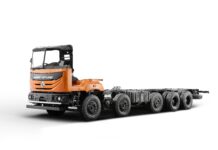












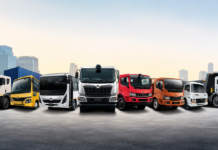
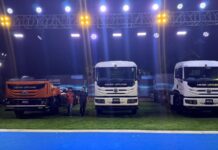














Ashok Leyland has taken a bold step in India’s commercial vehicle (CV) market by launching the country’s first range of trucks equipped with air suspension. The new AVTR family introduced in three heavy-duty variants promises a rare combination in the segment: best-in-class payload capability, improved ride comfort and stronger operating economics with only nominal impact on upfront investment. For fleet operators and logistics businesses looking to squeeze more productivity from each trip, the new models offer a compelling upgrade.
Three models, targeted gains
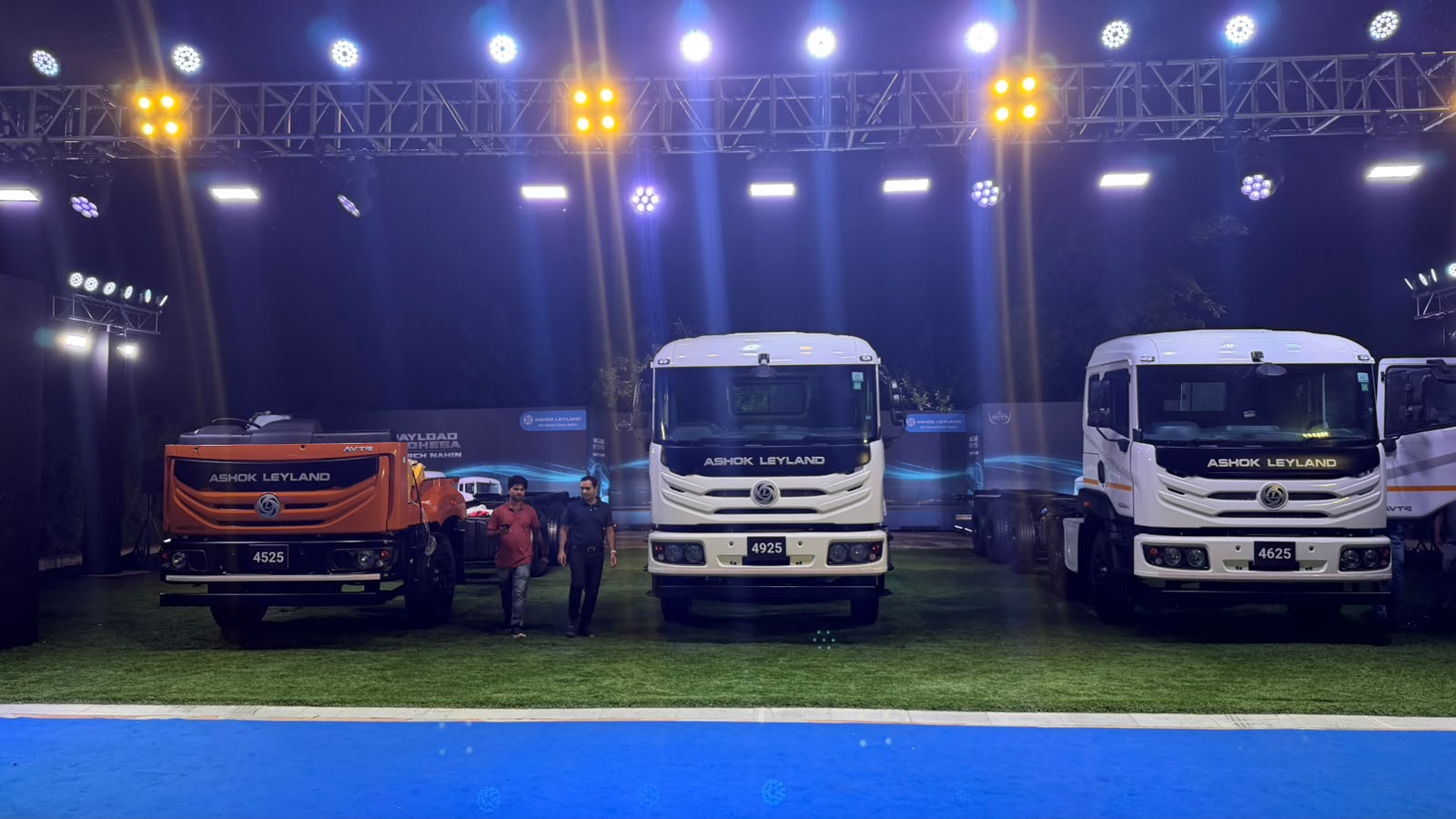
The new line-up includes the AVTR 4925 10×2 MAV, AVTR 4625 10×2 MAV and AVTR 4525 8×2 MAV. Each model stakes a claim as a class first: a 49-ton truck with air suspension (AVTR 4925) and 46-ton and 45-ton variants (AVTR 4625 and AVTR 4525) that respectively bring payload advantages of up to 4 tonnes in certain configurations. Those payload gains translate directly into higher revenue potential for operators, allowing them to carry more freight per trip without breaching regulatory limits.

Ashok Leyland positions the move as a natural evolution of its long-standing technology leadership in India’s CV industry. The company says the air-sprung models were developed to improve load handling, vehicle stability under heavy loads and overall operating efficiency all while keeping maintenance and total cost of ownership (TCO) attractive for customers.
How air suspension changes the economics
Air suspension is not merely a comfort feature. In heavy commercial applications, it affects how loads are handled, how evenly weight is distributed across axles and how tyres and chassis components wear over time. By providing a more consistent and controlled ride height and damping, air springs reduce the severe shocks and vibrations that metal-leaf systems transmit to the vehicle structure and cargo. That leads to several quantifiable benefits:
-
Enhanced payload utilisation: The new models claim payload advantages up to 4 tonnes in select variants, which can increase per-trip revenue without materially increasing fuel or operating time.
-
Improved tyre life: Reduced shock loads and better load distribution lower tyre degradation, cutting replacement costs and downtime.
-
Better vehicle stability: Air suspension helps maintain ride height and vehicle balance under varying loads, improving handling and safety on uneven roads.
-
Lower maintenance for rear suspension: The rear suspension is reportedly greaseless, simplifying upkeep and reducing routine servicing needs.
Together, these effects strengthen the economic case for air-sprung heavy trucks. Ashok Leyland emphasises that the additional payload and operating benefits come with a “nominal” impact on initial investment, making the business case viable for cost-conscious fleet buyers.
Comfort and performance for drivers and cargo
Beyond the direct economics, air suspension adds significant comfort advantages that matter in long-haul operations. Reduced vibrations and smoother ride quality help lower driver fatigue a factor with clear safety and productivity implications. Cargo integrity also improves for freight that is sensitive to jolts, such as packaged goods and electronics.
Ashok Leyland has paired the air suspension with electronic aids such as iVAC (Intelligent Vehicle Acceleration Control) and ATC (Automatic Traction Control) as standard, aiming to maximise fuel efficiency and traction across diverse road conditions. These features address both efficiency and reliability, reinforcing the company’s message of better total cost of ownership.
Flexibility for real-world needs
Recognising the varied demands of Indian transport operators, Ashok Leyland offers the new air suspension range in both cowl and cabin versions with multiple loading span choices. That flexibility allows buyers to match vehicle spec to the route profile, cargo type and local regulations critical considerations for optimising payload and fleet utilisation.
The trucks have been designed with practical commercial applications in mind: heavy construction loads, bulk transport and long-distance logistics where payload per trip and vehicle uptime are central to profitability. By enabling higher payloads within permissible limits, the AVTR models can reduce the number of trips required to move the same volume of freight, yielding measurable time and fuel savings over a fleet’s lifecycle.
Industry implications and competitive edge
Air suspension is common in premium coach and bus applications, and in advanced logistics fleets globally, but its introduction into heavy-duty trucks at scale marks a step-change for India’s CV market. For operators competing in tight-margin segments, incremental gains in payload, tyre life and uptime can meaningfully improve profitability.
Ashok Leyland’s launch strengthens its positioning as a technology pioneer in the domestic truck market. The move may also prompt rival manufacturers to accelerate similar upgrades, potentially raising the baseline expectations for ride quality and payload efficiency across the industry.
Customer messaging and service considerations
Beyond the product, the long-term value of air-sprung trucks will depend on dealer support, parts availability and service training. Ashok Leyland’s reputation in the market gives it an advantage in these areas, but the company will need to ensure robust aftersales networks and clear maintenance guidance so operators can realise the promised benefits without operational hiccups.
The inclusion of greaseless rear suspension points to the company’s efforts to reduce routine service tasks; still, operators will watch closely for real-world data on maintenance intervals, tyre savings and fuel performance to validate the TCO claims.
A meaningful upgrade for operators
In a market where margins are closely watched and uptime is critical, the AVTR air suspension range offers a practical route to higher payloads and better economics. By combining technology-led comfort improvements with clear operational benefits, Ashok Leyland is betting that customers will value the cumulative gains of carrying more per trip, lowering operating disruptions and improving driver comfort.
If the payload and cost advantages materialise as promised in everyday operations, the AVTR models could quickly become a preferred choice among fleets targeting productivity gains. For now, the announcement marks a clear signal that Indian truck customers can expect faster adoption of technologies previously seen only in premium applications and that Ashok Leyland intends to lead that transition.