



















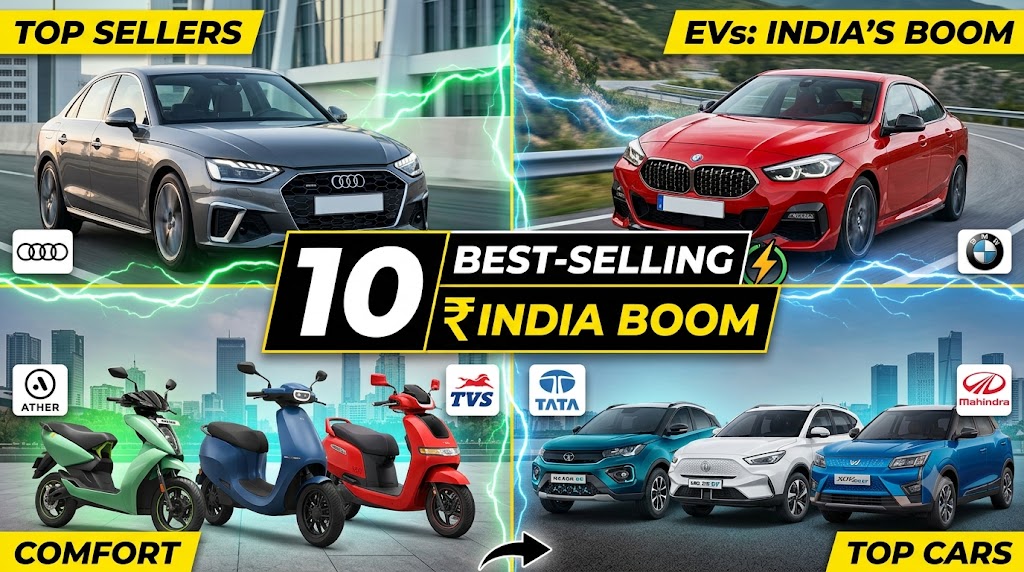
India’s electric vehicle market has moved beyond the experimental phase and is now firmly in the growth lane. In just a few years, electric cars and scooters have shifted from niche options to serious contenders in mainstream buying decisions, especially in urban and semi-urban markets. Rising fuel prices, improving product quality, better charging access and wider brand participation have all helped push EVs into the spotlight. Today, sales charts show clear leaders in both electric cars and scooters, and those models are quietly shaping the future of Indian mobility.
Electric cars: Compact EVs and SUVs lead the charge
On the car side, the most successful EVs in India tend to be compact hatchbacks and SUVs that blend familiar formats with electric technology. Buyers are still cautious about range and charging, so they prefer cars that feel like “normal” family vehicles but with an electric powertrain. That is why compact electric SUVs and crossover-style EVs have become the backbone of the segment.
A common thread among the best-selling electric cars is brand trust. Established names have a clear advantage because EV buyers often worry about long-term reliability, service support and resale value. When a familiar brand offers an electric version of a known model, customers find it easier to make the switch. Strong sales performance of compact EVs and mid-size electric SUVs reflects this pattern: they are sized for Indian families, priced within reach of upper middle-class buyers, and backed by networks that already serve millions of ICE vehicles.
Another factor behind their success is positioning. Top-selling electric cars usually highlight everyday practicality rather than just performance numbers. They focus on usable range, cabin space, boot capacity and features like connected tech, digital instrument clusters and safety equipment. Together, these elements make an EV feel like a modern upgrade rather than a compromise. As more such models hit the market, the gap between “normal car” and “electric car” continues to narrow in the minds of buyers.
Why electric cars are gaining traction
Several reasons explain why electric cars are steadily finding more buyers:
-
Rising fuel prices make the running cost advantage of EVs more attractive, especially for high-usage customers.
-
Government incentives and lower road taxes in some states improve the overall value proposition.
-
Home charging options are expanding in urban apartments and gated communities.
-
Early concerns about reliability are easing as more EVs clock real-world kilometres without major issues.
Moreover, the availability of multiple EV models from different brands gives customers choices across price bands and body styles. This competition improves features and pricing, which in turn drives more adoption. For many buyers, the decision now is less about “whether” to go electric and more about “which” electric car to choose.
Electric scooters: Everyday commuting drives demand
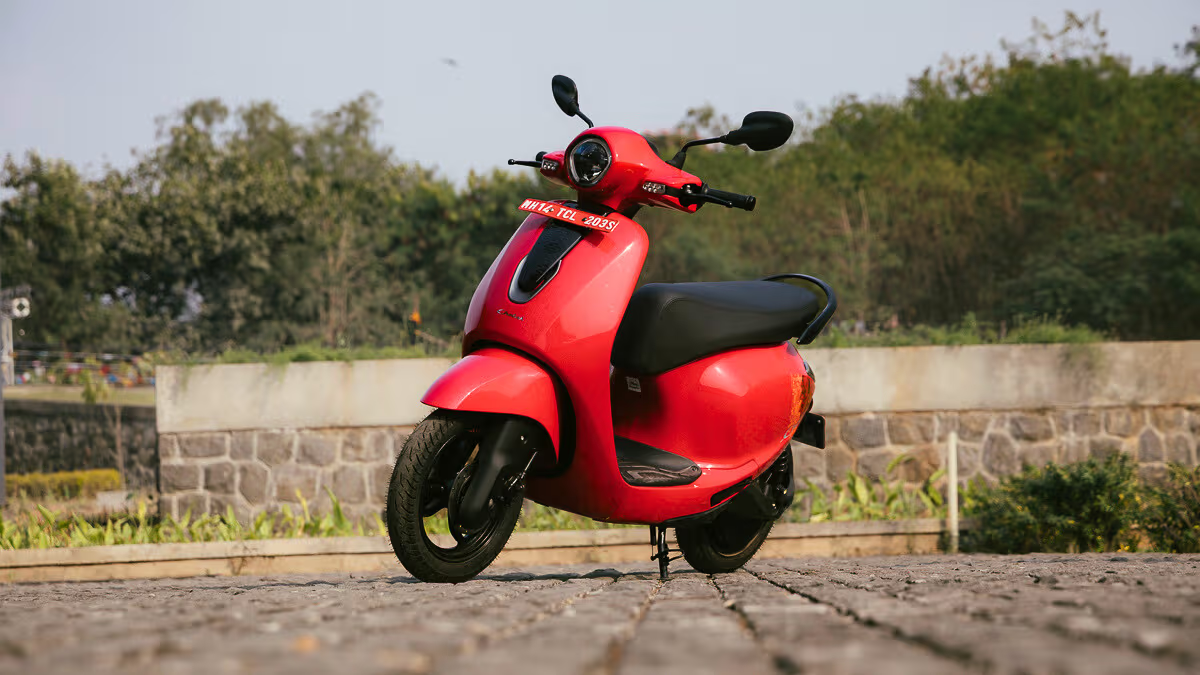
If electric cars are the face of aspirational mobility, electric scooters are the backbone of daily EV usage in India. Two-wheelers dominate personal transport in the country, and it is here that electric power has found quick acceptance. For a large number of urban commuters, an electric scooter offers exactly what they need: low running costs, ease of use, and enough range for daily travel.
The best-selling electric scooters share a few common traits. They offer practical range for city usage, reasonable acceleration, and designs that feel familiar rather than experimental. Many of the top models come from established two-wheeler manufacturers as well as from focused EV brands, creating a healthy mix of legacy trust and new-age innovation. This combination helps reassure buyers who might have hesitated to try a completely new brand.
Strong monthly sales numbers for leading electric scooters show that growth is no longer limited to a few metro pockets. Demand is spreading across Tier-1 and Tier-2 cities, where daily commuting distances are moderate and fuel expenses add up quickly. For delivery workers, office commuters and students, an electric scooter can make economic sense within just a few years of ownership.
Why electric scooters are surging ahead
Several forces are driving the surge in electric scooter sales:
-
Short, predictable daily routes make range anxiety less of a concern.
-
Lower maintenance requirements compared to petrol scooters reduce long-term costs.
-
State and central policies encouraging EV two-wheelers improve affordability.
-
A growing charging and swapping ecosystem in cities supports practical usage.
Additionally, the variety of models has expanded significantly. Buyers can now choose between performance-focused scooters, family-oriented models with comfortable seating and storage, and utility-oriented designs for delivery or commercial use. As more people see electric scooters in their neighbourhoods, social proof grows, and word-of-mouth becomes a powerful driver of adoption.
Cars vs scooters: Two sides of the same EV story
Although electric cars and scooters occupy different price bands and buyer profiles, they are part of the same transition. Cars show that EVs can offer premium tech, comfort and status, while scooters prove that electric mobility can be affordable, practical and mass-market. Together, they create a layered EV ecosystem where different segments grow for different reasons.
For policymakers and industry leaders, this dual growth is significant. Electric scooters reduce urban emissions and fuel consumption in high-density city areas, while electric cars push innovation in batteries, software and charging infrastructure. As charging networks expand and technology improves, the strengths of each segment will reinforce the other.
What this means for buyers
For prospective buyers, the current EV landscape offers more choice than ever before. In cars, a range of compact and SUV-style EVs can serve as primary family vehicles, especially in cities with reliable charging options. In scooters, a broad set of models from known and new brands offer low-cost commuting with modern features.
The key is clarity: buyers should honestly assess their daily usage, charging access, budget and expectations. High-usage urban commuters benefit most from electric scooters; families with mixed city-highway usage may find electric cars suitable if they have regular charging access. Those who value tech, quiet driving and lower running costs often find EVs compelling once they experience them first-hand.
What is clear already is that EVs are no longer a distant future; they are a visible present. The best-selling electric cars and scooters are not science experiments or rare sightings. They are regular vehicles on Indian roads, quietly proving that electric mobility can work in real-world conditions. As more models join the top-sellers list, the EV shift in India will only accelerate, driven not just by policy or marketing, but by ordinary buyers making practical, everyday choices.