























India’s automobile industry in 2026 stands at one of its strongest points ever. Sales across passenger vehicles, two-wheelers, commercial vehicles and even tractors have touched or neared record highs, and the sector has become a major pillar of the country’s manufacturing and export story. At the same time, the industry is being reshaped by new technologies, stricter regulations, changing consumer tastes and a global push towards cleaner mobility. Growth is no longer just about selling more vehicles; it is about selling safer, smarter and greener vehicles while staying profitable in a highly competitive market.
One of the most visible trends is the premiumisation of demand. A decade ago, India was seen mainly as a small-car and entry-level two-wheeler market. Today, compact and mid-size SUVs dominate passenger vehicle sales, and buyers are increasingly willing to pay extra for features like sunroofs, connected infotainment, multiple airbags and advanced driver assistance systems. Even in two-wheelers, there is a clear shift towards sportier 150–250 cc motorcycles, feature-rich scooters and performance-oriented brands. This move up the value chain has helped automakers protect margins even as input costs and regulatory expenses have risen.
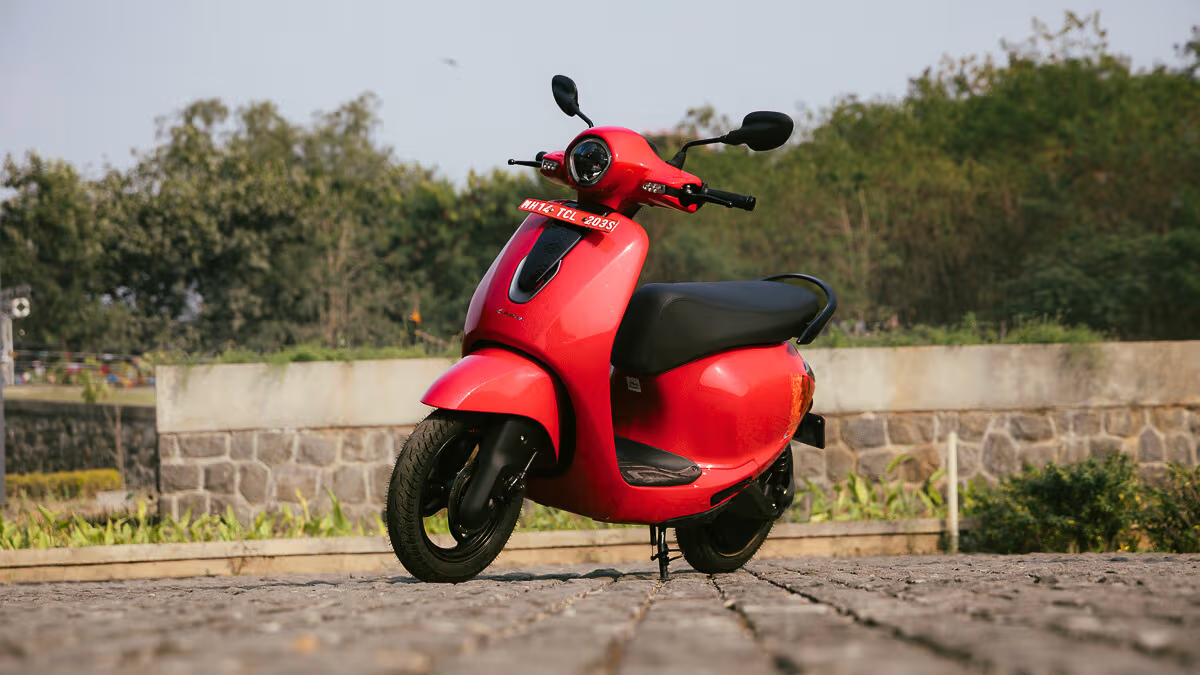
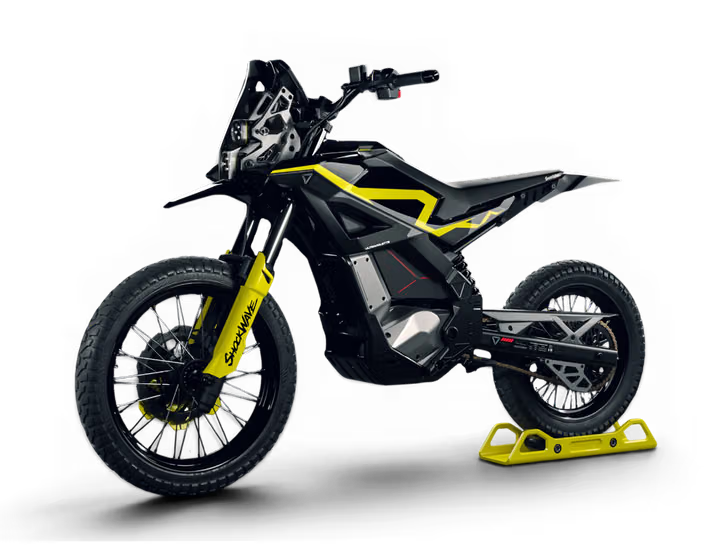
Electrification is another force that is starting to reshape the landscape. Electric two-wheelers and three-wheelers have gained noticeable traction in cities, particularly for delivery and last-mile connectivity. In passenger cars, EV sales are growing from a small base, supported by central and state incentives, lower running costs and improving charging infrastructure. Government schemes aimed at accelerating EV adoption and localising EV components are expected to create large opportunities in batteries, power electronics and charging services over the next few years. However, EVs still account for a relatively small share of overall sales, and issues such as upfront price, range anxiety and charging access remain barriers for many buyers, especially outside major urban centres.
Alongside EVs, India is also pursuing a multi-fuel strategy. Compressed natural gas vehicles continue to be popular in metros where CNG is readily available, offering lower running costs and emissions compared to petrol. The nationwide rollout of E20 petrol, which blends 20 percent ethanol with petrol, marks another major policy shift. It aims to reduce oil imports, support farmers and cut emissions, but also raises questions about mileage, compatibility of older vehicles and long-term engine durability. This multi-path approach reflects the reality that India must balance affordability, energy security and environmental goals, rather than relying on a single “solution” fuel.
On the manufacturing side, India is cementing its position as a global hub. The country offers significant cost advantages in labour and operations compared with many developed markets, and large investments have flowed into new plants, capacity expansions and component manufacturing. Exports of vehicles and auto components have risen steadily, with India-made cars, two-wheelers and commercial vehicles finding buyers in Africa, Latin America and parts of Asia. For many global companies, India is no longer just a sales market but a key base for engineering, sourcing and exports, especially as they diversify supply chains away from traditional centres.
Policy support has played a crucial role in this growth story. Over the past few years, reforms in indirect taxes, incentives for electronics and EVs, and a long-term automotive roadmap have given the sector more clarity and stability. Programmes that promote local manufacturing of high-value components, from engines and transmissions to batteries and semiconductors, are intended to reduce import dependence and create high-quality jobs. At the same time, regulations on emissions and safety have become stricter, pushing automakers to upgrade their products rapidly and invest heavily in technology and design.
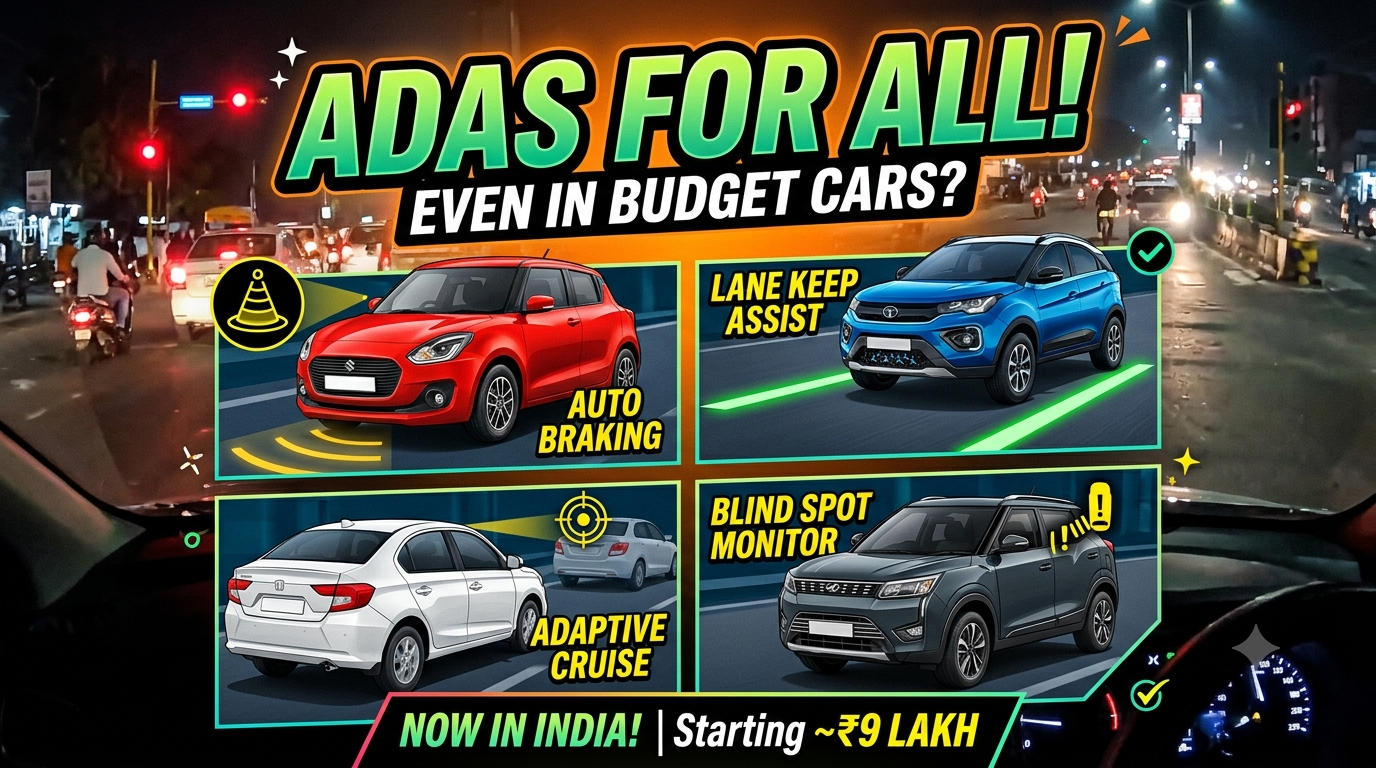
Safety and technology have become differentiators rather than afterthoughts. New crash-test norms and the introduction of homegrown safety rating programmes have pushed manufacturers to offer more airbags, stronger body structures and electronic stability systems even in lower variants. Customers are also more aware: safety ratings, online crash videos and influencer reviews now influence purchase decisions, especially among younger buyers. Connected-car features, digital instrument clusters and app-based services are becoming standard in many segments, blurring the line between automobiles and consumer electronics.
Despite this positive picture, the industry faces several challenges. Input costs, including steel and imported components, remain volatile, and currency weakness can squeeze margins. Competition is intense, with a few large players dominating many segments while new entrants, including global EV specialists and Chinese-origin brands, eye the Indian market. Meeting overlapping expectations of affordability, safety, low emissions and high technology is not easy, especially for entry-level products that cater to price-sensitive consumers in rural and semi-urban areas.
Looking ahead, most analysts expect the Indian auto industry to continue growing at a mid- to high single-digit rate over the next few years. Demand is supported by a young population, rising incomes, urbanisation and ongoing investment in roads and logistics. However, growth will not be evenly distributed. Companies that can balance scale with innovation, offer credible EV and alternative-fuel options, and build strong brands around safety and technology are likely to gain share. Those that remain dependent on outdated platforms or delay their transition may struggle.
In simple terms, the Indian auto industry in 2026 is like a powerful car entering a fast, complex corner. It has momentum, capability and confidence, but must handle multiple forces at once: electrification, digitalisation, regulatory pressure and shifting consumer expectations. How well it negotiates this curve will determine not just sales numbers, but also India’s role in the future of global mobility.