






























Tata Motors has taken a major step forward in India’s commercial vehicle electrification journey by securing more than 3,400 electric commercial vehicle orders across freight, logistics and passenger mobility segments. The announcement signals that electric mobility is no longer limited to pilot projects or early trials. It is now entering large-scale everyday use across a wide range of business operations.
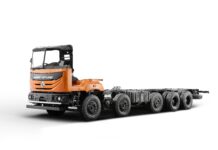
The orders include around 2,000 small commercial vehicles and pick-ups, about 900 trucks and nearly 500 buses. That mix shows how electric vehicles are steadily moving beyond short-range city delivery use and into more demanding applications such as cement, steel, mining and tarmac operations. It also reflects growing trust among fleet operators who are beginning to see electric commercial vehicles as practical tools for real business needs.
For Tata Motors, this development is more than a sales milestone. It marks an important shift in how the market views electric transport. Businesses are no longer asking whether electric commercial vehicles can work in India. They are now asking how quickly they can be integrated into operations, and Tata Motors is positioning itself to answer that question with a broad product portfolio and ecosystem support.
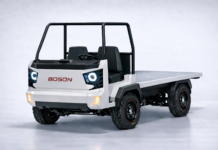
Over the past year, the company has expanded its electric lineup across multiple duty cycles. In the small commercial vehicle and pick-up category, models such as the Ace Pro EV, Ace EV and Intra EV are supporting last-mile delivery and intra-city distribution. These vehicles are aimed at sectors like e-commerce, logistics, FMCG and FMCD, where efficiency, uptime and operating cost matter just as much as payload.
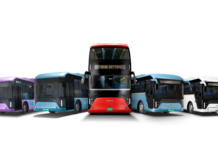
Tata Motors has also moved deeper into intermediate and heavy-duty segments with the Ultra EV range in the 7 to 12 tonne category, along with the Prima EV 55T tractor and Prima EV 28T tipper. These vehicles are designed for more intensive freight duties, showing that electric technology is now capable of handling heavier commercial workloads. In passenger transport, the Starbus EV and Ultra EV buses are supporting both city and intercity operations, helping public and private transport operators adopt cleaner mobility solutions.
The company’s leadership in this space is built not only on new products but also on practical experience. Tata Motors already operates more than 3,800 electric buses across several cities, with a cumulative run of over 55 crore kilometres. That real-world usage has given the company valuable insight into reliability, efficiency and lifecycle performance. At the same time, more than 17,000 Tata electric small commercial vehicles are already on the road, reinforcing the growing confidence in electric solutions across different kinds of terrain and business models.
What sets Tata Motors apart is its ecosystem-first approach. The company understands that vehicle adoption depends on more than the product itself. Fleet owners need charging access, financing support, software tools and dependable service. To address this, Tata Motors has built partnerships with more than 14 charge point operators, introduced EV-focused financing options with leading banks and NBFCs, and expanded fleet management through its Fleet Edge platform. It has also launched uptime assurance programmes to help customers keep vehicles running smoothly and productively.
This broader support structure is especially important in commercial mobility, where downtime can directly affect revenue. By helping customers manage charging, operations and financing more efficiently, Tata Motors is making the transition to electric vehicles less risky and more attractive for businesses of all sizes.
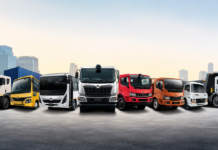
The latest order wins suggest that the market is responding positively to that strategy. Customers are increasingly looking for vehicles that can deliver lower emissions without compromising operational practicality. Tata Motors is meeting that demand with a full portfolio that spans small carriers, heavy trucks and buses, backed by the service network and operational experience needed for long-term adoption.
In many ways, this is the point where electric commercial mobility in India begins to mature. The conversation is no longer about possibility alone. It is about scale, confidence and integration into everyday business. Tata Motors appears to be leading that change, not just by selling electric vehicles, but by building the systems around them that help customers use them successfully.
With over 3,400 new orders, a wide product range and a growing support ecosystem, Tata Motors has strengthened its position as a central force in India’s transition to zero-emission commercial transport. The milestone shows that the shift to electric mobility is accelerating, and that commercial operators are ready to be part of that change.