
























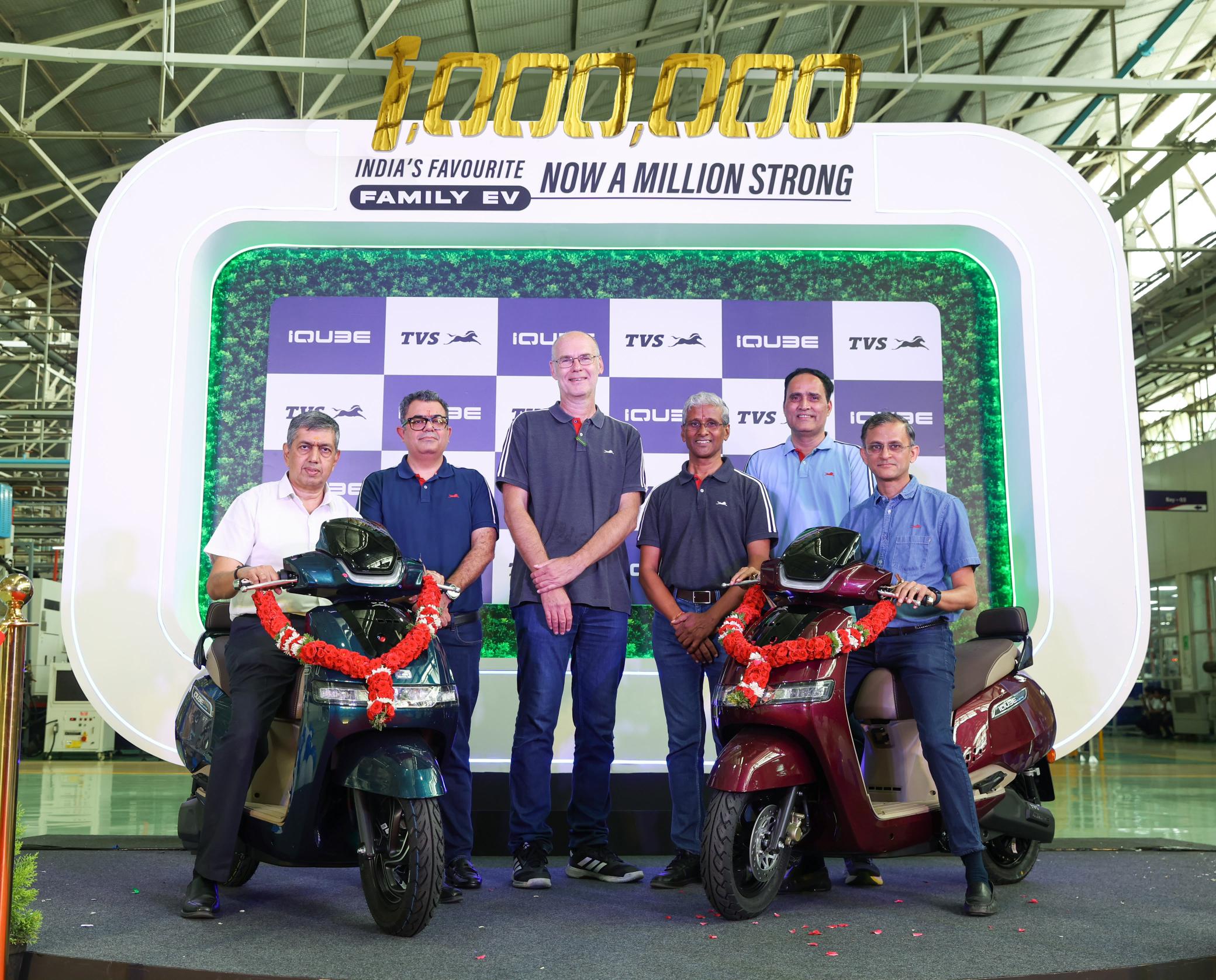
TVS Motor Company has marked an important milestone with the rollout of the one millionth TVS iQube from its Hosur manufacturing plant. The achievement highlights how quickly electric mobility has grown in India and how one homegrown scooter has helped shape that change.
Launched in 2020, the TVS iQube has grown into one of India’s most popular electric scooter brands. TVS says it has become the country’s favourite family EV because it was designed around the needs of Indian riders. Over time, the company expanded the lineup with different battery capacities, range options, and connected features, giving customers more freedom to choose a version that fits their daily travel needs.
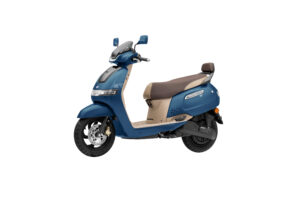
The milestone is also a reflection of TVS Motor’s long-term investment in engineering, research and development, product innovation, and manufacturing strength. The company says the iQube was designed, engineered, and manufactured in India for the world. That philosophy has helped TVS combine local innovation with global standards of quality, performance, and sustainability.
TVS Motor Chairman Sudarshan Venu said the rollout of one million iQubes shows how electric mobility is becoming part of everyday life in India. He added that the milestone was built on years of investment in engineering, innovation, and manufacturing capabilities. According to him, India has a real opportunity to become a global leader in the future of mobility as the country moves toward the vision of Viksit Bharat.
The iQube’s growth has been supported by a strong sales and service network. TVS says it now has more than 3,300 touchpoints across over 3,000 cities, helping the scooter reach a much wider customer base. This network has made ownership easier by giving customers access to service, support, and purchase options in many parts of the country. Along with that, continuous manufacturing expansion has helped the company keep pace with demand.
The scooter’s appeal also lies in its practical, family-friendly design. TVS has positioned the iQube as a reliable everyday electric scooter rather than a flashy niche product. Its range of variants and features allows it to serve different kinds of riders, from first-time EV buyers to families looking for a dependable urban commuter. That flexibility has been a major reason behind its wide acceptance.
TVS has also highlighted the broader environmental impact of the iQube community. Since launch, riders have collectively travelled more than 14.94 billion kilometres on the scooter. According to the company, that usage has helped avoid 522,969 tonnes of carbon dioxide emissions. TVS says this is equivalent to planting nearly 20.9 million trees, showing how individual mobility choices can add up to a meaningful environmental benefit.
This sustainability message is central to the company’s larger story. As India continues to push toward cleaner transportation and energy transition, electric two-wheelers are becoming a key part of that effort. The success of the iQube suggests that EV adoption is no longer just a future goal; it is happening now in a real and measurable way.
TVS Motor itself has a strong industrial base to support this growth. The company says it operates four advanced manufacturing facilities in India and Indonesia and sells products in 90 countries. It also points to its century-long legacy, its reputation for quality, and recognition such as the Deming Prize. These credentials have helped TVS build trust among buyers and strengthen its position in the two-wheeler market.
The one millionth iQube rollout is more than a sales achievement. It represents how Indian engineering, manufacturing, and consumer adoption are coming together to drive the EV transition. For TVS, it is proof that its long-term strategy in electric mobility has worked at scale. For India, it is another sign that sustainable transport is no longer a distant ambition but a growing reality on the road.