























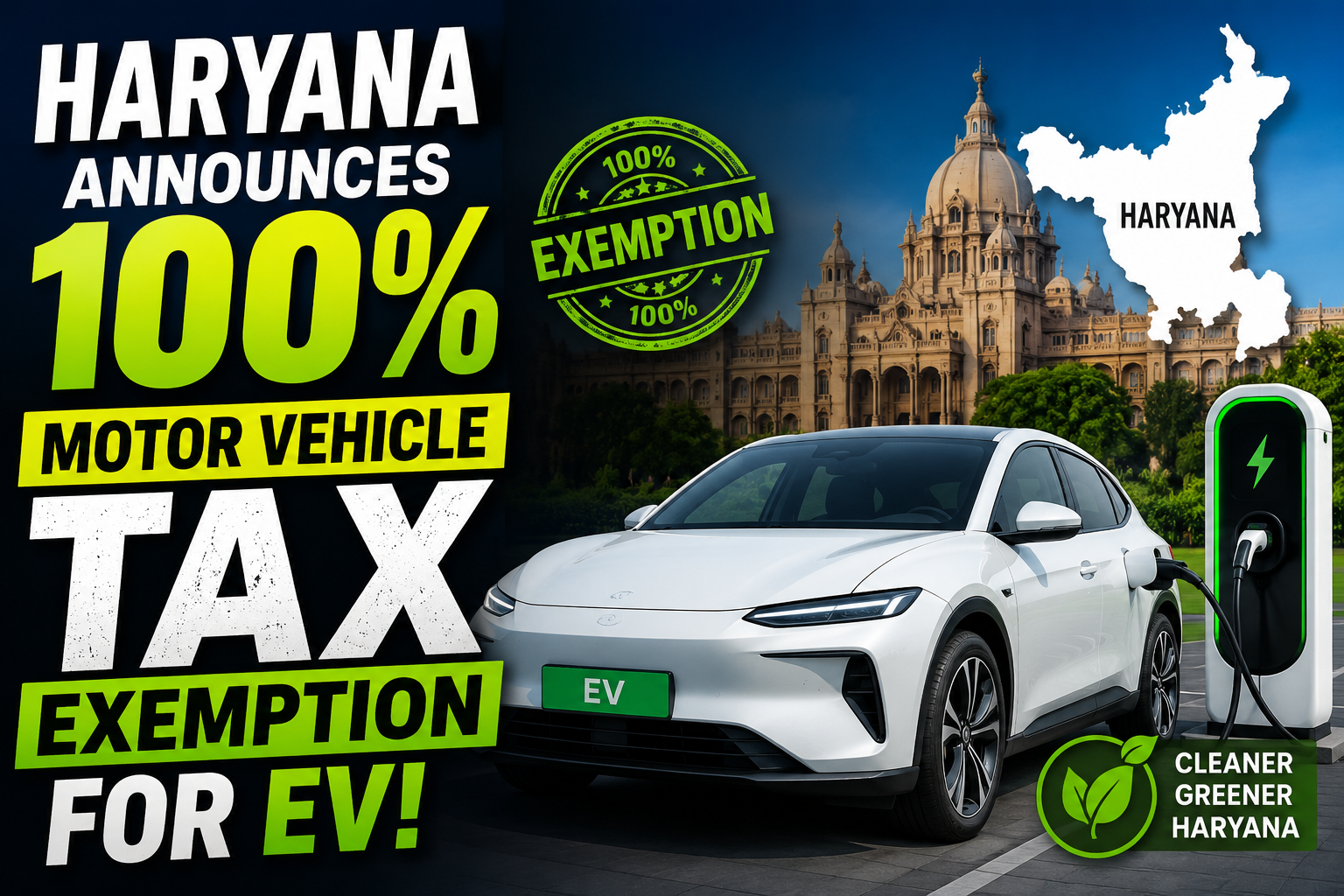
Haryana has delivered one of the biggest policy boosts for electric mobility in India by approving 100% motor vehicle tax exemption on new electric vehicles priced up to Rs 30 lakh. The move is expected to make EV ownership significantly cheaper in the state and could give another strong push to India’s growing electric vehicle market.
The decision comes at a time when more Indian states are competing to attract EV buyers with tax waivers, lower registration costs and policy support. Haryana’s latest move stands out because it applies not just to cars, but also to electric two-wheelers and three-wheelers, including autos and e-rickshaws, as long as they are registered in the state.
What the new policy says
Under the revised policy, battery electric vehicles priced up to Rs 30 lakh ex-showroom will get a complete exemption from motor vehicle tax at the time of registration. That means buyers of mass-market EVs in Haryana will no longer need to pay the tax amount that would normally be added during registration.
For EVs priced above Rs 30 lakh, the state has kept a 50% exemption in place. This ensures that even premium EV buyers continue to benefit, though the biggest advantage now clearly goes to more affordable and mid-range electric vehicles.
The existing 20% rebate that Haryana offered earlier on electric and battery-operated vehicles has now been upgraded to a much stronger incentive. The policy remains one of the more attractive state-level EV support measures in India.
Which vehicles benefit
The tax exemption applies to new pure electric and battery-operated two-wheelers, three-wheelers and four-wheelers purchased and registered in Haryana. That means buyers of electric scooters, e-rickshaws, electric autos and EV cars can all benefit, provided the vehicle falls within the price cap.
For Indian buyers, that is a meaningful change because the biggest growth in EV adoption is still coming from two-wheelers and urban mobility vehicles. At the same time, the exemption also helps electric car buyers who are comparing an EV against a petrol or CNG alternative.
Why it matters for buyers
Price is still one of the biggest hurdles for EV adoption in India. Even though electric vehicles usually cost less to run, the higher upfront purchase price often makes buyers hesitate. By removing motor vehicle tax, Haryana is reducing that first hurdle and making the on-road price more attractive.
That can make a real difference in showroom decisions. A lower on-road price can help buyers move from considering an EV to actually booking one. For many buyers, especially in the compact car and two-wheeler space, every bit of upfront savings matters.
Why Haryana did this
The move is part of a broader effort by the state government to promote cleaner transport and encourage more people to switch to EVs. Haryana has been working on EV-friendly measures for some time, and this tax exemption is one of its strongest steps yet.
The policy also fits the larger national trend of faster electrification. As charging infrastructure expands and more EV models enter the market, states are using tax relief and registration benefits to speed up adoption. Haryana clearly wants to stay competitive in that race.
How it compares with earlier support
Earlier, Haryana offered a 20% exemption on motor vehicle tax for electric and battery-operated vehicles. The new move upgrades that to 100% for eligible EVs up to Rs 30 lakh, which is a major jump in support.
That makes the state more attractive for electric mobility buyers, especially those who are deciding where to register their vehicles. For a buyer, the difference between paying tax and paying nothing at all can be significant enough to influence the final purchase decision.
What it means for the market
For manufacturers, this is good news too. Better tax incentives usually help create stronger demand, and stronger demand can support higher EV sales in the region. That may benefit companies selling electric two-wheelers, compact electric cars and commercial EVs in Haryana.
It could also encourage more people in NCR-linked areas and other parts of the state to consider EVs as a practical mainstream option rather than a niche product. As more state governments announce similar measures, EV competition in India is likely to become even more aggressive.
Haryana’s decision to offer 100% motor vehicle tax exemption on EVs up to Rs 30 lakh is a strong, buyer-friendly policy that can reduce the upfront cost of owning an electric vehicle. It covers two-wheelers, three-wheelers and cars, which makes it broad enough to impact multiple parts of the EV market.
For Indian buyers, this is exactly the kind of policy that can make EVs feel more practical and more affordable. If you are planning to buy an electric vehicle in Haryana, this announcement is a clear reason to recheck the on-road price and compare it with petrol and CNG options again.