

































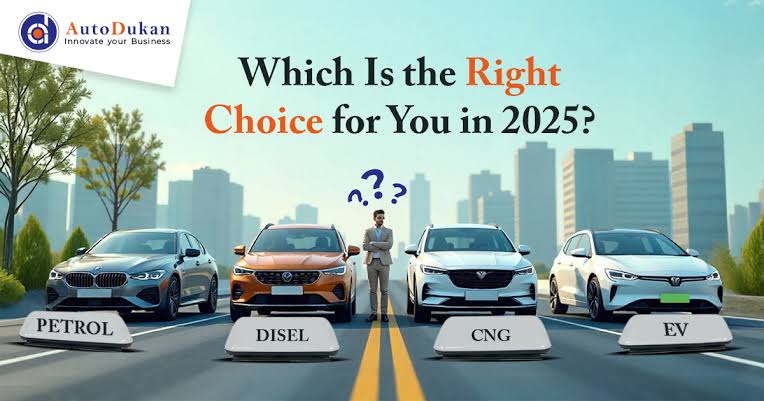
While buying a new car, Indian buyers no longer have to choose between comfort and economy.
With the option to go for CNG with automatic transmission in a couple of models from Maruti, Tata and others, the only question that arises is: Is CNG automatic really cheaper than petrol automatic over the lifetime of the car or are we paying a premium for a nice feeling?
The upfront cost: CNG tends to be more expensive
Factory fitted CNG variants almost always come with a price premium over their petrol counterparts. This premium generally lies in the range of Rs 80,000 to Rs 1.2 lakh for variants in the sub-Rs 10 lakh segment, although this depends on the make, model and transmission (manual or automatic).
A Maruti Baleno petrol AMT could well be priced significantly lower than the equivalent Baleno CNG AMT, even though the two cars share the same engine and gearbox. Similar premiums apply to petrol AMT variants from Tata in comparison to their iCNG AMT counterparts across the Tiago, Tigor and Punch line-up.
The running cost: CNG wins hands down
Using representative 2026 fuel prices and claimed efficiencies:
Petrol (Delhi): ~Rs 102/ltr
CNG (Delhi): ~Rs 87/kg
For a typical compact car:
Petrol AMT: ~18–20 km/l
CNG AMT: ~28–36 km/kg, depending on the model
At these figures, the cost of running for every km works out to roughly:
Petrol AMT: ~Rs 5.00–5.70/km
CNG AMT: ~Rs 2.40–3.10/km
Which means, running with a CNG AMT saves us about ~Rs 2–2.50/km.
If we are running 800 km/month: ~Rs 1,600–2,000 savings per month
1,200 km/month: ~Rs 2,400–3,000 savings per month
1,500 km/month: ~Rs 3,000–3,750 savings per month – or ~Rs 36,000–45,000 savings per year
With a five-year ownership of a high-runner at 1,500 km/month, we can save as much as Rs 1.8–2.2 lakh in fuel costs over a petrol automatic.
Break-even: When does CNG become a better deal?
The key figure here is the break-even period – the period of ownership after which the higher cost of the CNG variant is negated by its lower running cost.
Assuming:
CNG premium: Rs 1 lakh over petrol AMT
Monthly running: 1,000 km
Average saving: Rs 2/km
Monthly saving: ~Rs 2,000 -> Annual saving: ~Rs 24,000
Break-even: ~4–5 years
If you run 1,500 km/month, the same Rs 1 lakh premium can be recovered in ~3 years. With 2,000 km/month as the monthly runner, break-even can be achieved in as low as 2–2.5 years.
This is why CNG makes the most sense for:
Ride-hailing drivers (Ola, Uber, etc.)
Sales and field staff covering large daily distances
Families with long commutes and frequent city-trips daily
It makes little sense to consider CNG automatic for low runners (under 600–700 km/month).
Performance and driving experience
CNG not only brings down your cost per km, but also changes your driving experience in subtle ways.
Power loss: Most CNG cars lose 10–15% of the power in the gas mode in comparison with petrol. This becomes noticeable while overtaking on highways and climbing ghats with the car fully loaded.
AMT response: The 5-speed AMT in CNG cars is tuned for efficiency and not for sportiness. While smooth in normal driving, the response could lag under aggressive acceleration. For city commuting, this is not a problem.
Refinement: Factory fitted CNG systems from Maruti and Tata are pretty refined, with good integration and smooth switching between petrol and CNG modes.
If you are looking to drive relaxed in the city with low cost per km, a CNG AMT is a great choice. However, if you find yourself pushing the car regularly or driving loaded on highways, it would be a good idea to try both petrol and CNG variants to see which one you connect with more.
Practical trade-offs: Boot space & CNG access
There are two non-financial factors that could tip the scales when considering a CNG automatic:
Boot space
Most factory CNG cars have a boot-mounted cylinder which reduces the boot space and sometimes even the spare wheel in the boot. For small families or occasional weekend getaways, this is no problem. But for regular long weekends with a family and lots of luggage, this could be a concern.
CNG availability
The entire economics of CNG depends on your access to CNG stations. In metros and most tier-1/tier-2 cities this is no longer a problem. But if your daily commute or regular running routes pass through CNG-scarce regions, it might be a good idea to hold off on a CNG automatic.
A good rule of thumb is, if you can run on CNG for 70–80% of your monthly distance, the economics still work out in favour of CNG.
Read this- EV Scooters Double in Sales While SUVs Dominate: Inside India’s August Auto Record
Resale and long-term ownership
CNG cars have always had a strong resale demand in India, especially from Maruti and Tata – thanks to their reputation for low running costs. As more CNG automatics hit the market, this trend is expected to continue, especially with popular models like the Dzire, Baleno, Tiago and Punch.
However, the CNG automatic segment is still pretty new, so we will need to wait for 5–7 year old cars to clear their ownership cycles to understand their resale value better. For now, brand and model name continue to have a bigger impact on resale value than the CNG tag.
So, which should you buy in 2026?
You should buy a CNG automatic if:
You run more than 1,000 km/month
You have easy access to CNG at home, work or on your regular routes
Your primary concern is lowest cost per km over the next 4–5 years of ownership
You are okay with a slight drop in power and reduced boot space
You should buy a petrol automatic if:
Your monthly running is under 700–800 km
You frequently take long highway trips with a fully loaded car and luggage
You live in a region with limited CNG infrastructure
You value performance and maximum boot space over cost-saving
In 2026, CNG automatic is a mainstream practical option for a lot of Indian buyers. With lower fuel costs, better infrastructure and factory-fitted reliability, CNG AMT is a great choice for everyone who wants to save money on their daily running costs.
If your monthly running is high and you have easy access to CNG, a CNG automatic can save you Rs 1–1.5 lakh over a petrol automatic over five years of ownership – which could well be put towards a better variant, insurance or your next car.
For the Indian buyer, the ideal car in 2026 is not the one with the flashiest tag along with the highest power output, but rather the one that costs the least every day without compromising on comfort.
Watch this-