


































The debate “Petrol OR CNG” has been going on in the Indian auto industry since the day the first factory-fitted CNG car rolled out of the showroom. And as the prices of petroleum products keep fluctuating, this debate grows stronger with each passing day. The case for choosing CNG over petrol seems obvious: CNG is significantly cheaper than petrol on a per km basis, and therefore makes economical sense. But does it really?
There is a magic number that determines whether the initial outlay on a CNG car is justified by the savings over its lifetime, and whether the CNG option is a viable alternative to petrol vehicles in the first place. This magic number happens to be around 15,000 km, depending on the price difference between petrol and CNG, and the fuel efficiency of the specific car model. So if you drive less than 15,000 km per year, you would actually be losing money by buying a CNG-fuelled vehicle.
The Premium: What you pay extra for a CNG Car
Now, it’s important to understand that the initial outlay on a CNG car is quite hefty. A factory-fitted CNG car costs anywhere between INR 80,000 to INR 1.2 Lakhs more than its petrol equivalent. Take the example of a popular petrol hatchback that costs INR 6.5 Lakhs. Its CNG equivalent will likely cost you INR 7.4 Lakhs. This difference of INR 90,000 has to be justified by the savings on fuel costs, which brings us to the magic number we mentioned earlier.
The Magic Number
The fuel cost savings depend on the mileage of the specific model, as well as the price of petrol and CNG in your region. Taking Delhi/NCR prices for 2026 as reference:
Petrol Price: INR 102/L
CNG Price: INR 87/Kg
Petrol Mileage: 18 km/L
CNG Mileage: 26 km/Kg
Fuel Cost per km: Petrol (102/18) = INR 5.66/km; CNG (87/26) = INR 3.35/km
Savings per km: INR 2.31/km
Therefore, if you drive X km per year, your annual savings on fuel would be 2.31 X. Let’s look at a few scenarios:
Scenario 1: You drive 10,000 km/year
Annual savings = 10,000 2.31 = INR 23,100
Time to recoup INR 90,000 = ~3.9 years
Scenario 2: You drive 15,000 km/year
Annual savings = 15,000 2.31 = INR 34,650
Time to recoup INR 90,000 = ~2.6 years
Scenario 3: You drive 25,000 km/year
Annual savings = 25,000 2.31 = INR 57,750
Time to recoup INR 90,000 = ~1.5 years
So as the driving distance increases, the time taken to justify the initial outlay on the CNG car decreases, and thus the economics of a CNG car begin to make sense.
When does a CNG Car make sense (even at 15,000 km/year)?
As you can see, a CNG car is always a viable option if you drive more than 15,000 km annually. But when it comes to driving less than 15,000 km, the value proposition of a CNG car depends on the following factors:
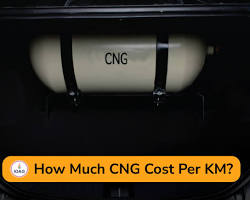
Boot Space: The twin-cylinder CNG system eats into the boot space of your vehicle, which might not be desirable if you have a family of four that needs space to carry all their belongings on a road trip.
Hilly Terrain: The lower octane rating of CNG hurts engine performance by 10-15%. If you are buying a CNG car for use in hilly regions, you may end up losing out on power. It’s best to leave CNG cars for flat terrains and save the petrol cars for hilly terrains such as Shimla and Mussoorie.
Infrastructure: If your city has unreliable CNG infrastructure (read: long queues at petrol pumps), or you are likely to travel to regions without CNG infrastructure, a petrol car makes more sense. The additional time spent filling up a CNG car can easily outweigh the benefits of cheaper fuel.
Resale Value: While CNG cars have good resale value on the whole, a 5 year old CNG car may have a slightly lower resale value than its petrol equivalent if the buyer expresses doubt about the cylinder and engine condition.
The CNG AMT conundrum: With CNG AMT cars (such as the new Tata Aeris, Maruti Dzire and Hyundai Aura) becoming increasingly commonplace, the choice between CNG AMT and CNG Manual is another important consideration. CNG AMT cars usually cost INR 50,000 to INR 70,000 more than their CNG Manual counterparts. This means that you’d need to drive more than 18,000-20,000 km/year to justify a CNG AMT over a petrol AMT. However, if you spend a lot of time in traffic and prefer the ease of an automatic transmission, a CNG AMT may just be right for you.
The Takeaway: Know thy magic number
We’ve seen how the economics of a CNG car work. The magic number of 15,000 km determines whether a CNG car is a worthwhile investment or not. So here’s what you need to do next time you are in the market for a car:
If you drive less than 12,000 km/year: Don’t even consider a CNG car
If you drive between 12,000-18,000 km/year: Consider buying a CNG equivalent of your preferred petrol car, but calculate your personal magic number based on the on-road price difference between the two variants.
If you drive more than 18,000 km/year: Go ahead and buy the CNG equivalent of your preferred petrol car!
Before making any buying decisions, calculate the amount you are likely to drive on an annual basis and evaluate the economics from there.
Watch this-