



































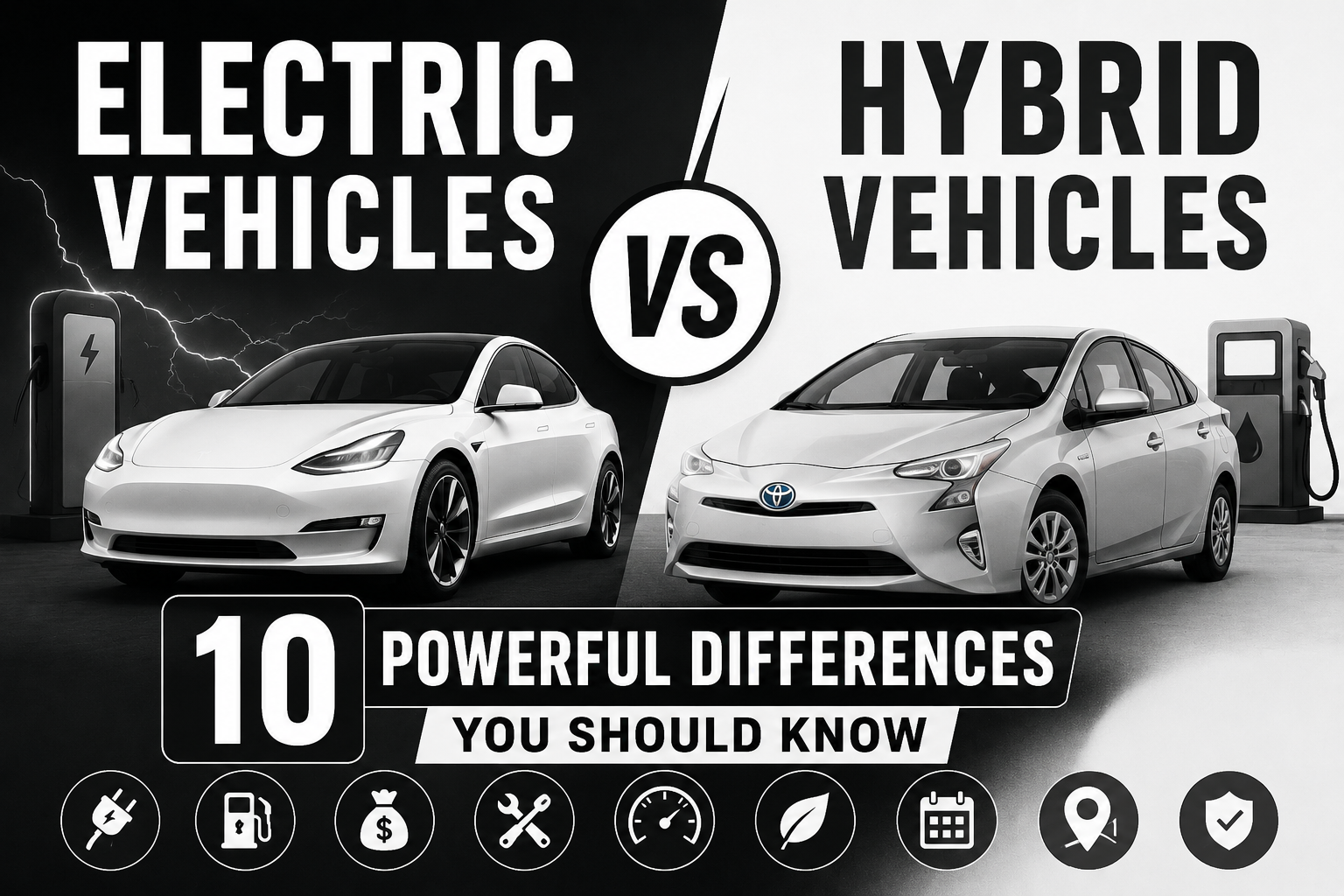
Electric vehicles vs hybrid vehicles is one of the most important comparisons for buyers today. Both options can reduce fuel use and lower emissions, but they work in very different ways and suit different driving needs.
1. How each vehicle works
Electric vehicles run only on battery power and electric motors, while hybrid vehicles combine a petrol engine with an electric motor. That basic difference affects almost everything else, from refueling to maintenance. In simple terms, an EV depends on charging, while a hybrid can keep moving with fuel even when the battery is low.e-amrit.niti+2
2. Fuel and charging differences
A major point in electric vehicles vs hybrid vehicles is how they are powered day to day. EVs need charging from home or public stations, while conventional hybrids mainly use fuel and recharge their batteries through driving. Plug-in hybrids can also be charged externally, which gives them more electric driving than standard hybrids.nyserda.ny+2
This makes hybrids easier for people who are not ready to depend fully on charging infrastructure. EVs, on the other hand, reward drivers who can charge regularly and want to reduce fuel use as much as possible.mgmotor.co+1
3. Range and convenience
Range anxiety is still one of the biggest concerns for EV buyers. Hybrids usually offer more flexibility on long trips because they can switch to fuel when needed. EVs can travel far too, but they require planning around charging stops, especially on highway routes or in places with limited charging access.progressive+1
For city driving, EVs often feel very convenient because most charging can happen overnight at home. For mixed driving or travel in areas with fewer chargers, hybrids may feel easier to live with.
4. Maintenance needs
Maintenance is another clear difference in electric vehicles vs hybrid vehicles. EVs usually have fewer moving parts, so they often need less routine servicing than hybrids. There is no engine oil change for a pure EV, which can reduce upkeep over time.
Hybrids still contain a petrol engine, so they need many of the same checks as regular cars, plus some electric system maintenance. That extra complexity can mean more service items over the life of the car.
5. Emissions impact
EVs have no tailpipe emissions, which makes them the cleaner choice at the point of use. Hybrids still burn fuel, so they produce some emissions even though they are more efficient than standard petrol cars. For drivers focused on reducing local pollution and carbon output, EVs usually offer the stronger environmental case.
That said, hybrids can still be a meaningful step down from traditional fuel-only vehicles. They help cut fuel use and emissions without requiring a full switch to charging.
6. Cost considerations
Cost is often where the decision gets practical. EVs can cost more upfront, but they may save money on fuel and maintenance over time. Hybrids are often attractive to buyers who want better efficiency without the higher initial jump into full electrification.
The best value depends on how you drive. If you drive mostly in the city and can charge easily, an EV may pay off faster. If you drive longer distances and want fewer changes to your routine, a hybrid may feel more economical in daily life.
7. Driving experience
EVs are known for silent operation, quick acceleration, and smooth power delivery. Many drivers enjoy the instant response and calm cabin feel. Regenerative braking also changes the driving style in a way some people find enjoyable.
Hybrids feel more familiar because they behave like regular cars with an electric boost. For some drivers, that familiarity makes the transition easier. This is an important part of the electric vehicles vs hybrid vehicles debate because comfort matters as much as technology.
8. Best use cases
EVs are often best for urban drivers, short to medium daily commutes, and people with reliable charging access. They also suit buyers who want lower running costs and are ready to embrace a fully electric setup. Families with a home charger may find an EV especially practical.
Hybrids are often better for drivers who take longer trips, live where chargers are limited, or want a backup fuel source. They also work well for buyers who are curious about electric driving but not ready to go fully electric yet. In many cases, the right answer depends on lifestyle more than technology.
9. Technology trends
Both EVs and hybrids are improving fast. EV batteries are getting better, charging is expanding, and software is becoming more advanced. Hybrids are also becoming more efficient and refined, especially in markets that want a gradual transition.autodesk+3
This means the choice is not fixed forever. Many buyers may start with a hybrid and later move to an EV as charging access and battery confidence improve.
10. Which one is right for you
If you want zero tailpipe emissions, lower mechanical complexity, and can charge regularly, an EV is usually the stronger choice. If you want flexibility, longer range without charging stops, and a smoother transition from petrol driving, a hybrid may fit better. Both are smarter than choosing a conventional fuel-only car if your goal is efficiency.progressive+2
The electric vehicles vs hybrid vehicles decision comes down to how, where, and how often you drive. For city use and long-term savings, EVs are hard to beat. For convenience and flexibility, hybrids still have a strong place in today’s market.