































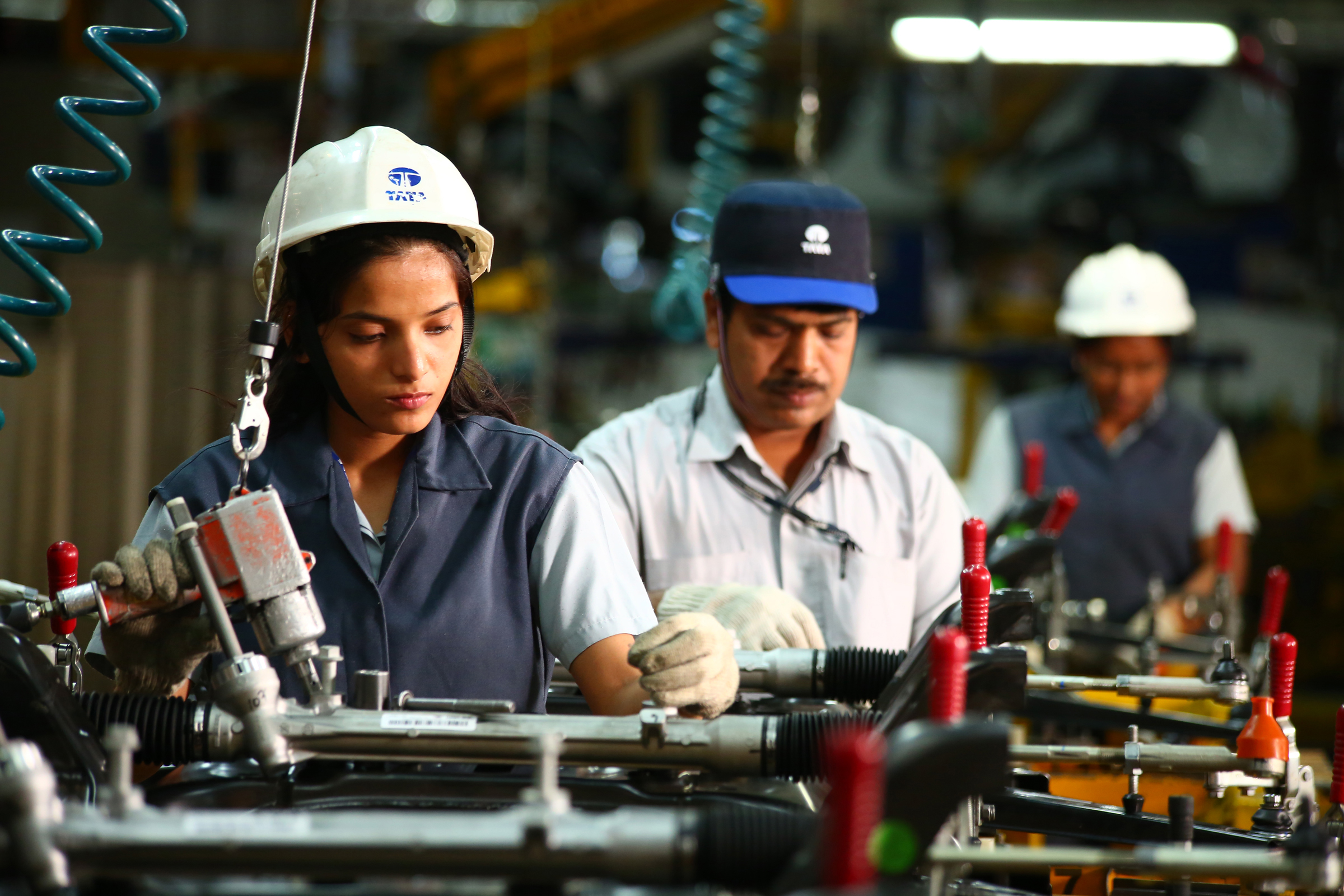
Tata Motors is marking World Youth Skills Day by celebrating the impact of its flagship Kaushalya Programme, one of India’s largest industry-led skilling initiatives focused on building a future-ready manufacturing and mobility workforce. Since its launch in 2021, Kaushalya has enrolled more than 23,000 young people and enabled over 5,000 of them to secure employment, achieving a 100% placement rate, including more than 50 international placements.
Bridging the gap between education and employability
The core objective of Kaushalya is to bridge the long-standing gap between formal education and real-world employability. As India aims to become a global manufacturing powerhouse, the programme is creating pathways to meaningful careers in advanced manufacturing, automation and emerging mobility technologies.
By focusing on skills directly aligned with industry needs, Kaushalya helps young people move beyond theoretical learning into practical, employable expertise. This approach not only supports India’s industrial ambitions but also gives youth a clearer route into stable, growth-oriented careers.
A more diverse and inclusive manufacturing workforce
Kaushalya is also consciously expanding access to manufacturing careers for underrepresented communities. Women account for 21% of participants, while 25% come from affirmative action categories. This diversity focus reflects Tata Motors’ wider commitment to building an inclusive and equitable workforce that better represents India’s social fabric.
For women and youth from marginalised backgrounds, the programme offers both skills and confidence to participate in sectors traditionally seen as male-dominated or inaccessible. This is helping slowly reshape perceptions about who can belong in advanced manufacturing and automotive careers.
Industry-led curriculum and earn-and-learn model
Launched in 2021, Kaushalya is now operational across Tata Motors’ manufacturing facilities in Pune, Jamshedpur, Lucknow, Pantnagar, Sanand and Dharwad. The programme offers a fully sponsored Diploma in Mechatronics under an earn-and-learn model, allowing trainees to study while gaining hands-on experience and financial support.
The curriculum is co-created with industry experts and aligned to emerging technologies reshaping mobility. It combines classroom learning with immersive shop-floor exposure at Tata Motors plants. Trainees develop capabilities across Automobile Engineering, Manufacturing Technology, Electrical and Electronics, Mechatronics, Automation, IoT and Industry 4.0. This blend of theory and practice ensures graduates are ready to contribute from day one in complex, technology-driven environments.
Strong placement outcomes across India and overseas
One of the programme’s standout achievements is its 100% placement record for graduates, including more than 50 international placements. After successfully completing the course, trainees are offered structured opportunities across Tata Motors’ extended ecosystem: dealerships, suppliers, vendors, Tata Group companies, other automotive manufacturers and international employers.
Kaushalya alumni today work at organisations such as Tata Steel Downstream Products Ltd, Tata Advanced Systems Ltd, Zydus, JSW Greentech, Subros, Spinny, Wipro and others. The programme has also opened global doors, with 50 graduates placed at Jaguar Land Rover’s manufacturing facility in Nitra, Slovakia. These outcomes underline how industry-academia collaboration can produce skills that are directly relevant and valued in the market.
Stories of transformation: from remote villages to global careers
The human impact of Kaushalya is best seen in its individual success stories.
Anita Kende Bethekar, a Diploma in Mechatronics trainee now working with Jaguar Land Rover in Slovakia, comes from a remote tribal village in Maharashtra. For her, a global automotive career once felt unimaginable. She describes how the Kaushalya programme equipped her with skills, exposure and confidence to pursue opportunities far beyond her earlier circumstances. Today, she is the first girl from her village and surrounding region to hold a passport and build an international career, turning her achievement into a source of pride for her family, community and other young girls who aspire to dream bigger.
Similarly, Soham Ravindra Manmode, a Diploma in Automobile Manufacturing Technology trainee placed with Tata Motors Customer Support, grew up in a financially challenged family in a small town. A career in the automotive industry seemed like a distant dream. Through Kaushalya, he was able to learn, earn and gain real-world experience at the same time. The programme helped him build skills and confidence, leading to a rewarding role at Tata Motors. He now takes pride in supporting his family and contributing to India’s automotive growth story.
These stories illustrate how structured, industry-led skilling programmes can become powerful vehicles for social mobility.
Building India’s next-gen mobility workforce
Sitaram Kandi, Chief Human Resources Officer at Tata Motors, emphasises that India’s manufacturing competitiveness and mobility ambitions will be shaped by the quality of its workforce. Through Kaushalya, Tata Motors is investing in the next generation of skilled professionals by combining technical education, industry exposure and experience-rich learning.
He highlights that the programme is not only helping young people build meaningful careers, but also strengthening the talent pipeline required for an advanced, technology-driven automotive industry. The strong placement outcomes, in his view, demonstrate how effective industry-academia collaboration can be in creating skills that are relevant, employable and future-ready. Tata Motors plans to continue expanding the programme’s reach to enable more youth to participate in India’s growth story.
Looking ahead: scaling impact as mobility evolves
With more than 5,000 trainees expected to become industry-ready each year, Kaushalya is helping build a sustainable talent pipeline for India’s automotive and manufacturing sectors. As the industry moves towards electrified, connected and software-defined mobility, the programme’s focus on Mechatronics, Automation, IoT and Industry 4.0 becomes even more critical.
Tata Motors’ continued investment in Kaushalya signals a long-term commitment to youth skilling, employability and industrial competitiveness. By equipping young people with future-ready capabilities and opening doors to both domestic and global opportunities, the programme is playing an important role in shaping India’s next generation of mobility professionals and strengthening the foundation for the country’s next phase of industrial growth.