

































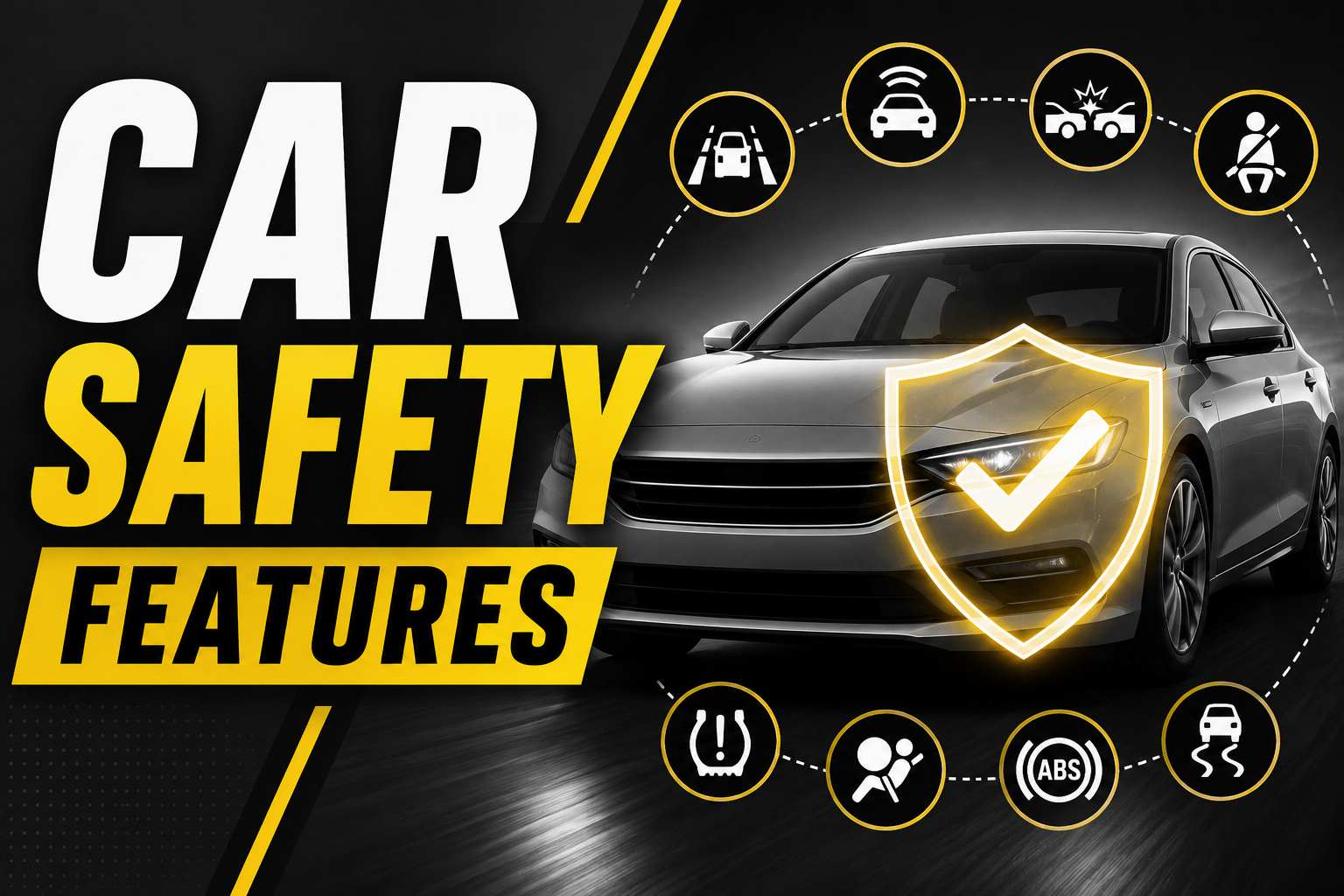
Car safety features are no longer limited to seat belts and airbags. Modern vehicles now include smart systems that help prevent accidents, protect passengers, and make driving easier in traffic, rain, night conditions, and emergency situations.
1. Anti-lock braking system
Anti-lock braking system, also known as ABS, helps keep your wheels from locking when you brake hard. This lets you steer the car while stopping, which can be very important in an emergency. It is one of the most basic and useful car safety features.
ABS is especially helpful on slippery roads. It reduces skidding and gives the driver better control during sudden braking. For many drivers, it is a feature they will not think about until they really need it.
2. Electronic stability control
Electronic stability control helps prevent the car from spinning or sliding out of control. It watches the direction you want to go and compares it with the car’s actual movement. If the vehicle starts to lose grip, the system applies brakes to individual wheels.
This feature is useful during sharp turns, wet roads, and emergency maneuvers. It gives the driver more confidence and helps reduce rollover risk in certain situations. It is one of the most important modern car safety features.
3. Airbags
Airbags provide a cushion during a crash and help reduce injury. Most cars now come with front airbags, side airbags, and curtain airbags. These work together with seat belts to protect the head, chest, and upper body.
Airbags are not a replacement for seat belts, but they are a major part of crash protection. When a collision happens, they deploy in milliseconds. That quick response can make a serious difference.
4. Seat belt reminder
Seat belt reminders may seem simple, but they save lives. These systems alert the driver and passengers if someone is not buckled up. In many cars, the warning sound or light continues until the belt is fastened.
A seat belt is still one of the most effective safety tools in any vehicle. The reminder feature helps make sure everyone uses it every time. Among car safety features, this one is basic but powerful.
5. Tire pressure monitoring system
A tire pressure monitoring system, or TPMS, keeps track of tire inflation. If a tire is too low on air, the system alerts the driver. Proper tire pressure helps with braking, fuel efficiency, handling, and tire life.
Low pressure can also raise the risk of a blowout. TPMS gives early warning so the problem can be fixed before it becomes dangerous. It is a smart feature for everyday safety and long-term maintenance.
6. Rear camera and parking sensors
Rear cameras and parking sensors make reversing much safer. They help you see objects, people, or obstacles that may be behind the vehicle. This is especially helpful in tight parking spaces and crowded streets.
These tools reduce blind spots and lower the chance of small accidents. They are also useful for new drivers and anyone who parks often in busy places. Many modern car safety features focus on awareness, and this one is a strong example.
7. Blind spot monitoring
Blind spot monitoring helps you see vehicles that are not visible in your mirrors. If a car is in your blind spot, the system gives a warning light or sound. This is especially useful during lane changes on highways.
It can prevent side collisions and make driving less stressful. The feature is most helpful when traffic is heavy or when larger vehicles block your view. For many drivers, it adds an extra layer of confidence.
8. Automatic emergency braking
Automatic emergency braking can detect a possible crash and apply the brakes if the driver does not react in time. It is designed to reduce the severity of a collision or avoid one altogether. Some systems also detect pedestrians or cyclists.
This feature works best when traffic slows suddenly or when a vehicle stops unexpectedly. It is one of the most advanced car safety features currently available. As roads get busier, this kind of support becomes more valuable.
9. Lane departure warning
Lane departure warning alerts you if the car drifts out of its lane without a turn signal. Some vehicles also include lane keep assist, which gently helps move the car back into place. This is useful during long drives or when the driver is tired.
It can reduce accidents caused by distraction or momentary loss of focus. Highway driving becomes safer when the vehicle helps keep you centered. This feature is now common in many newer cars.
10. ISOFIX child seat anchors
ISOFIX anchors help secure child seats properly and safely. They make installation easier and more reliable than using seat belts alone in many cases. For families with young children, this is an essential safety system.
A poorly installed child seat can be dangerous in a crash. ISOFIX reduces that risk and gives parents more peace of mind. It is one of the most valuable car safety features for family vehicles.
The best car safety features work together to prevent accidents and protect people when danger happens. Some features help you avoid a crash, while others reduce injury if a crash occurs. Together, they create a safer driving experience for everyone in the car.
When buying a new vehicle, it is wise to look beyond style and price. Safety technology can make a major difference in daily driving. Cars with strong safety systems often offer better confidence, comfort, and protection on the road.