


































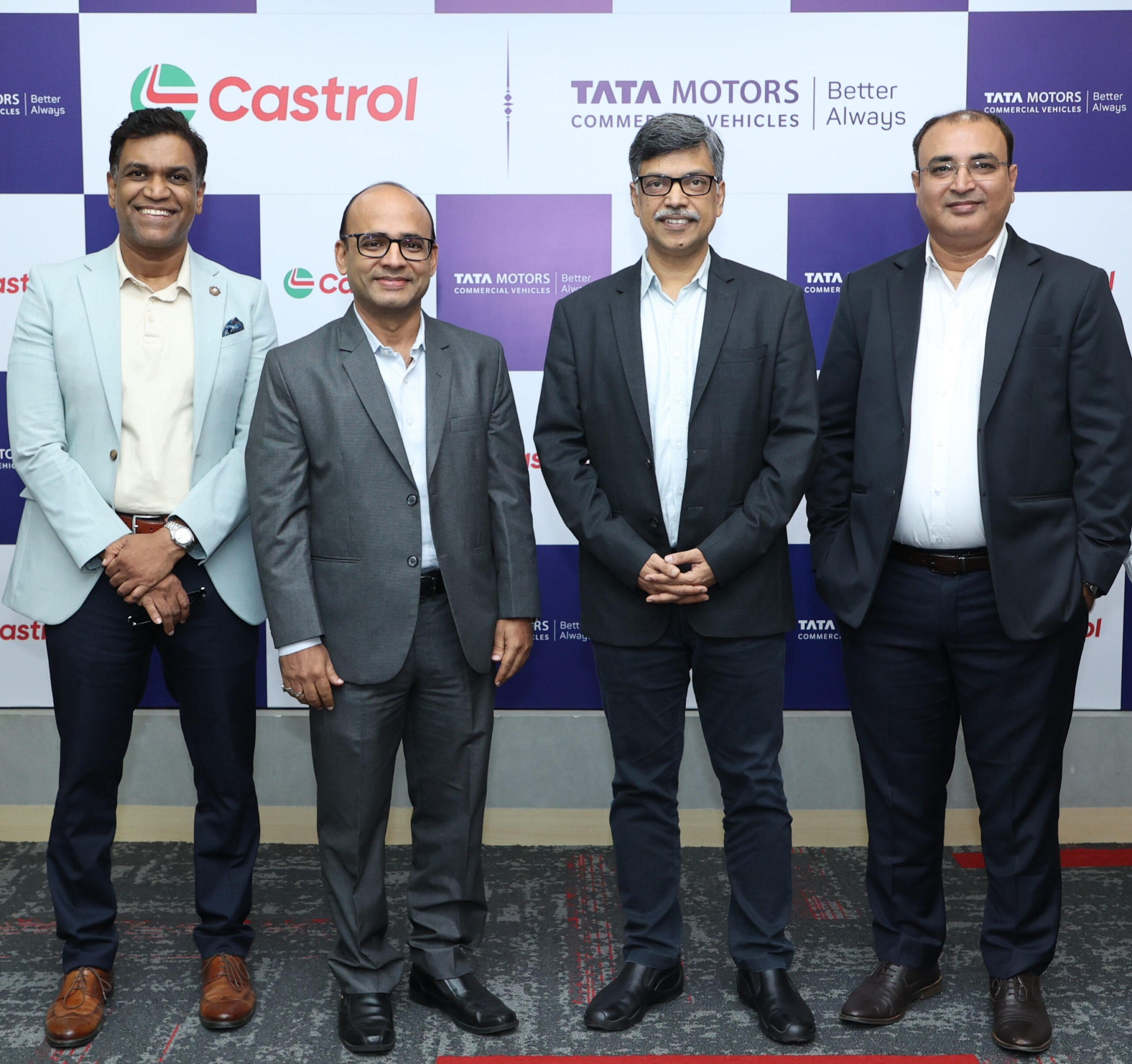
Tata Motors, one of India’s leading commercial vehicle manufacturers, and Castrol India Limited, a leader in advanced automotive and industrial lubricant technology, have signed a memorandum of understanding to jointly launch a pilot programme for a used oil circularity ecosystem. The initiative is designed to create a structured and traceable model for the responsible collection, channelisation and recycling of used engine oil, while supporting India’s Extended Producer Responsibility framework and broader circular economy goals across the automotive lubricant value chain.
At the heart of the collaboration is the need to address used engine oil as a hazardous waste stream that requires careful handling. Under the pilot, Tata Motors’ authorised service network in Karnataka will serve as a structured collection point for used engine oil generated during routine vehicle servicing. The collected oil will then be channelised through a system designed to ensure responsible storage, movement and recycling through registered recyclers. By building this system, the two companies aim to close a long-standing gap in the formal management of used oil and improve environmental outcomes in a sector where scale and traceability are both critical.
The pilot is significant because used engine oil is produced in large volumes across India and, if improperly disposed of, can create serious environmental risks. Leakage into soil and water, unsafe burning and informal handling all contribute to pollution and public health concerns. A structured recovery system helps prevent such outcomes while also creating opportunities for recycling and reuse. In practical terms, the initiative turns a waste liability into a resource stream that can re-enter the value chain in a more responsible form.
Speaking on the development, Tata Motors Commercial Vehicles’ Head of Spares and Non-Vehicle Business, Vikram Agrawal, said that responsible used-oil management is central to building a truly circular automotive ecosystem in India. He noted that the volume of used engine oil generated across India makes responsible collection and recycling a matter of significant environmental consequence. According to him, the collaboration with Castrol India creates a credible and scalable model that links collection at service touchpoints to high-quality re-refined output, making it an important step in Tata Motors’ wider sustainability journey.
Castrol India also highlighted the strategic importance of the partnership. Anoop Jindal, Vice President, B2B OEM Sales at Castrol India Limited, said that building a circular economy for lubricants requires collaboration across the entire value chain. He described the Tata Motors association as Castrol India’s first OEM collaboration focused on creating a structured ecosystem for responsible used-oil management in India. Jindal added that the company is working to strengthen every link in the circularity chain, from collection and channelisation to recycling and reuse, and that learnings from earlier collection pilots in southern India have helped deepen understanding of the challenges and opportunities involved in scaling such models.
The pilot will use Tata Motors’ authorised sales and service touchpoints in Karnataka as formal collection nodes. This is important because authorised touchpoints already have the operational discipline, customer interface and service regularity needed for a dependable collection network. Castrol India will take responsibility for channelising the collected oil to registered recyclers, using its lubricant expertise and prior pilot experience to support quality assurance and traceability through the process. Together, these roles create a system that can be measured, audited and potentially expanded to other regions if successful.
The collaboration also reflects the broader direction of both companies’ sustainability strategies. For Tata Motors, the project complements its focus on electric vehicles, CNG platforms and energy-efficient mobility solutions. It shows that the company’s sustainability agenda extends beyond vehicle manufacturing and into service, waste management and ecosystem design. For Castrol India, the pilot fits into its strategy of embedding recycled materials into high-performance lubricant products, reinforcing the company’s interest in circularity not only as an environmental goal but also as a materials and innovation opportunity.
More broadly, the MoU signals an important shift in how the automotive industry can manage waste streams in India. Circular economy models work best when manufacturers, lubricant companies, recyclers and service networks work together instead of operating in silos. This pilot is a practical example of that approach. It creates the foundation for a more organised and transparent system that could help India move closer to formalised used-oil recovery at scale, especially if the model proves efficient in Karnataka.
If the programme succeeds, it could become a reference point for future partnerships in the sector. It may also demonstrate how regulatory compliance, environmental responsibility and business collaboration can align in a way that benefits industry and society alike. In that sense, the Tata Motors-Castrol India MoU is not just about waste collection. It is about building the infrastructure for a cleaner, more accountable and more circular automotive future in India.