



































A new study from IIT Kharagpur has found that scientific speed management can significantly reduce fatal crash risk, fatalities and crash severity on Indian highways. The research provides timely evidence for policymakers as India works toward its goal of halving road crash deaths and serious injuries by 2030.
The findings were presented at a high-level road safety dialogue organised by the Road Safety Network in partnership with IIT Kharagpur. The event came at a crucial moment, as India continues to face a major road safety challenge, with more than 1.8 lakh lives lost in road crashes in 2024. Against that backdrop, the study offers a practical and evidence-based approach to making highways safer.
The research was conducted on a 51-km stretch of NH-16 between Balihati and Kolaghat in West Bengal. It examined how design-based speed management measures affected vehicle behaviour and crash outcomes. The results were significant: operating speeds dropped by 39 to 45 percent for cars, 29 to 33 percent for heavy vehicles, and 18 to 28 percent for two-wheelers. The study also recorded a clear reduction in fatal crashes, fatalities, crash severity and the likelihood of a crash becoming fatal at locations where these measures were implemented.
Speeding remains one of the biggest contributors to road crashes in India. According to the Ministry of Road Transport and Highways’ Road Accidents in India 2024 report, over-speeding accounted for 62 percent of all road crashes and led to more than one lakh fatalities nationwide. Vulnerable road users continue to face the greatest risk, with pedestrians accounting for 20.6 percent of all road crash fatalities. These figures underline why speed management is not just a traffic issue but a public health priority.
Prof. Bhargab Maitra, Professor in the Department of Civil Engineering at IIT Kharagpur and a member of the Road Safety Network, said the Safe System approach recognizes that human error is unavoidable, but roads, policies and systems must be designed so that mistakes do not result in deaths or serious injuries. He noted that scientific speed management is a critical part of this approach and that the evidence shows safety improves when speeds are aligned with the function of the road and the needs of all users, especially vulnerable ones
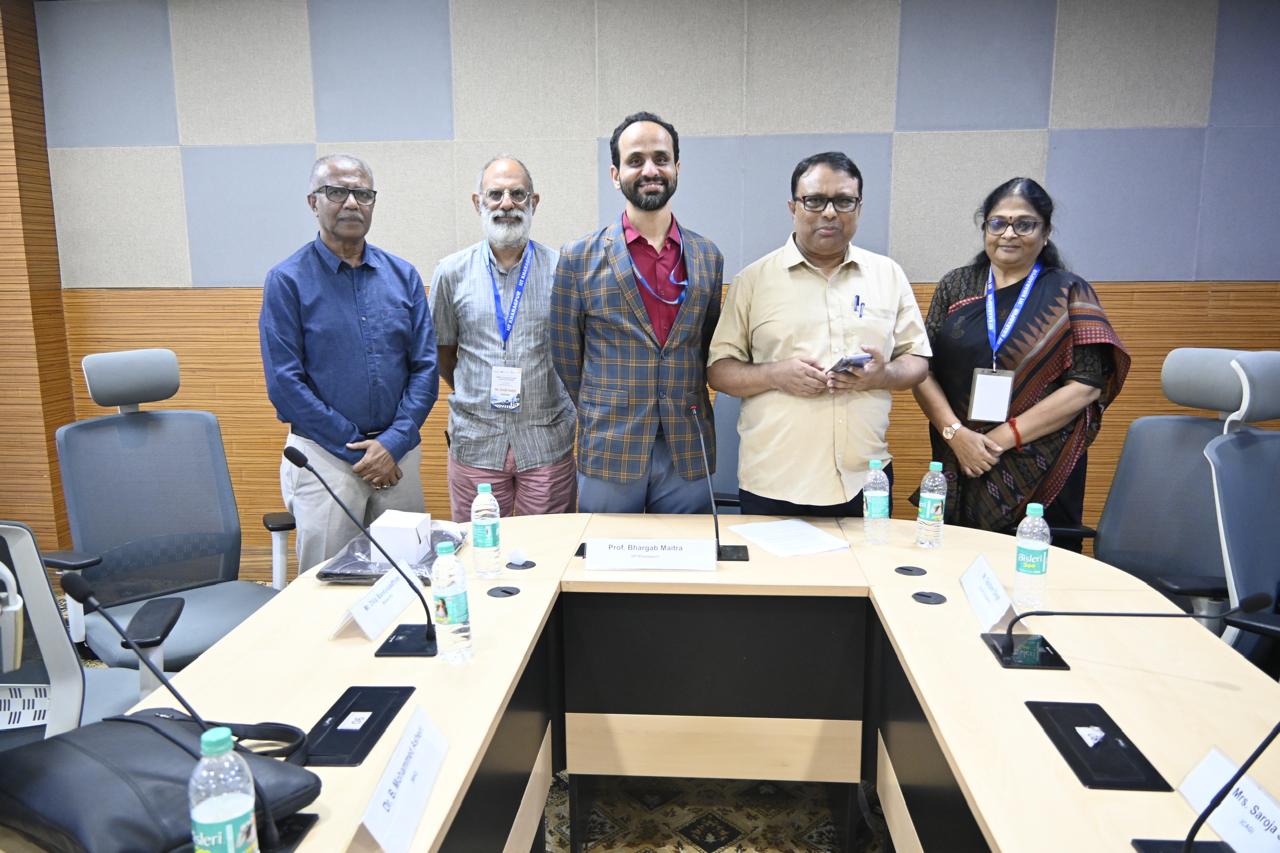
The dialogue at IIT Kharagpur Research Park brought together government officials, public health experts, researchers and road safety practitioners. The plenary session, titled “Advancing Road Safety Through Evidence-Based Policy Interventions,” featured insights from Smt. Papia Ghosh Roy Choudhury of the Government of West Bengal, Gautam Singh of SaveLIFE Foundation, Ranjit Gadgil of Parisar, Dr. Mohammed Asheel of the World Health Organization and S. Saroja of Citizen Consumer and Civic Action Group. Their discussions focused on how scientific evidence can shape better road safety strategies.
During the event, the Road Safety Network presented recommendations for the Ministry of Road Transport and Highways and other authorities. These included rationalising speed limits based on road function and user risk, adopting context-sensitive speed zoning frameworks, strengthening road infrastructure and access control, expanding technology-enabled enforcement, improving crash data systems and enhancing coordination across transport, enforcement, health and urban development departments. The goal is to build a comprehensive Safe System that matches policy to actual road conditions.
The study’s core message is straightforward: safer speeds save lives. On roads like NH-16, where traffic is heavy and vehicle mix is diverse, design-based interventions can make a measurable difference. Rather than relying only on driver behaviour, the findings show that road design and policy can actively shape safer outcomes.
The Road Safety Network, which includes organisations such as Parisar, SaveLIFE Foundation, Consumer Voice, Citizen Consumer and Civic Action Group, Synergie, Centre for Environment Education, IIT Kharagpur and CUTS International, continues to push for evidence-informed road safety reform. Its work reflects a growing consensus that India’s road safety goals will require a combination of engineering, enforcement, data and institutional coordination.
This study strengthens the case for speed management as a national priority. It shows that well-designed interventions can reduce danger on highways, protect vulnerable road users and support India’s long-term road safety targets.