











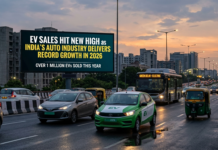










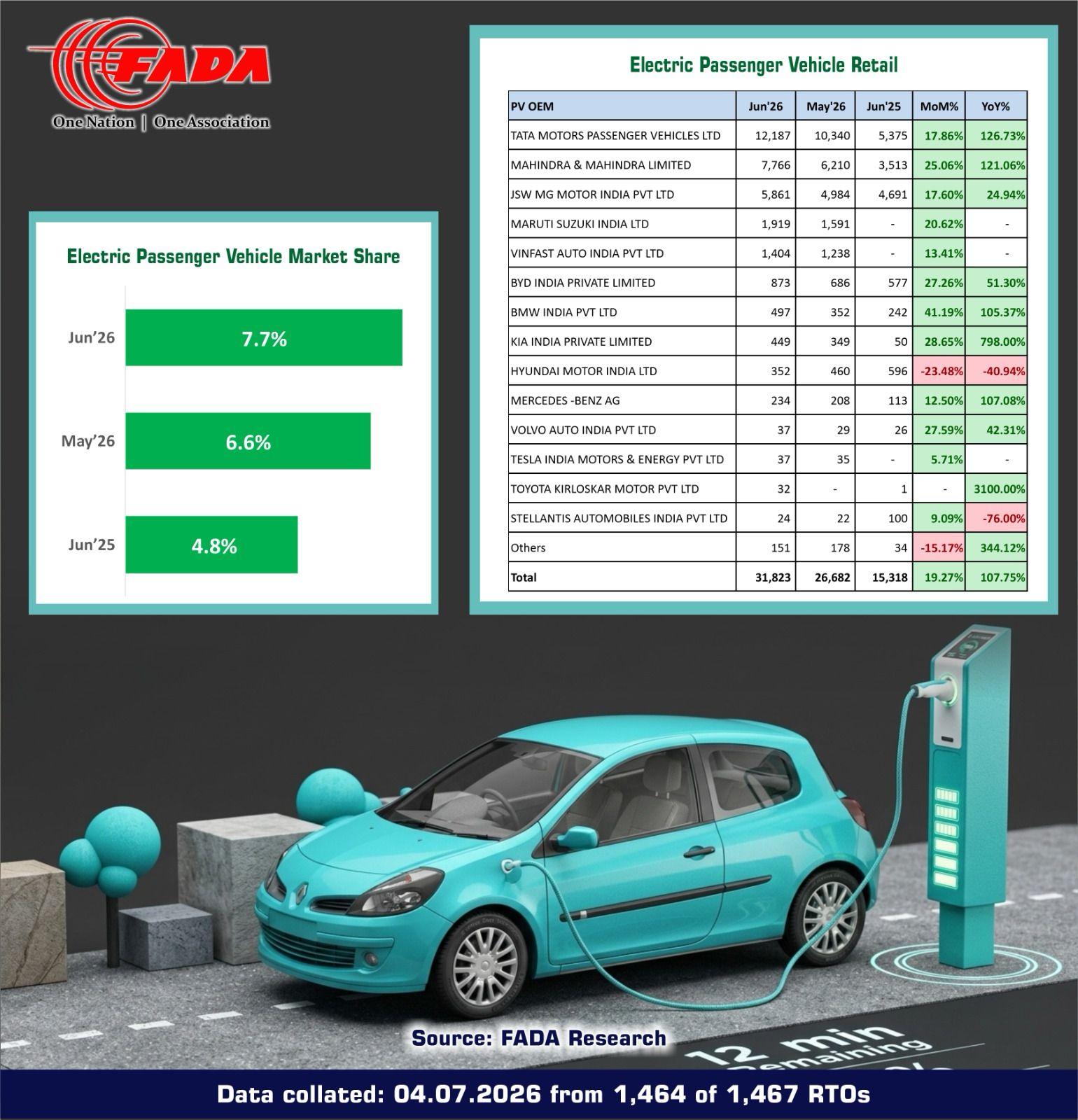
June 2026 marked a major inflection point in India’s shift towards cleaner mobility, with electric vehicle retail volumes hitting their highest level on record. According to data released for the month, dealers across the country sold 3,06,220 electric vehicles, the highest ever captured in national retail statistics and almost 63 percent higher than the same month a year earlier. This surge came despite a seasonally slow period for auto sales and the added uncertainty of a delayed monsoon, underscoring how strongly electrification is beginning to anchor itself in India’s automotive landscape.
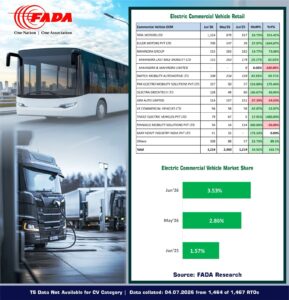
What stands out in the June numbers is not just the headline total, but the breadth of growth across segments. Electric Passenger Vehicles posted their best month yet, with 31,823 units retailed. For a category that started from a very low base only a few years ago, this represents a rapid acceleration in acceptance among car buyers who once viewed EVs as experimental or niche. Electric Commercial Vehicles also recorded their highest monthly tally at 3,214 units, reflecting growing confidence among fleet operators and logistics companies that battery-powered trucks and buses can handle real-world duty cycles and operating conditions.
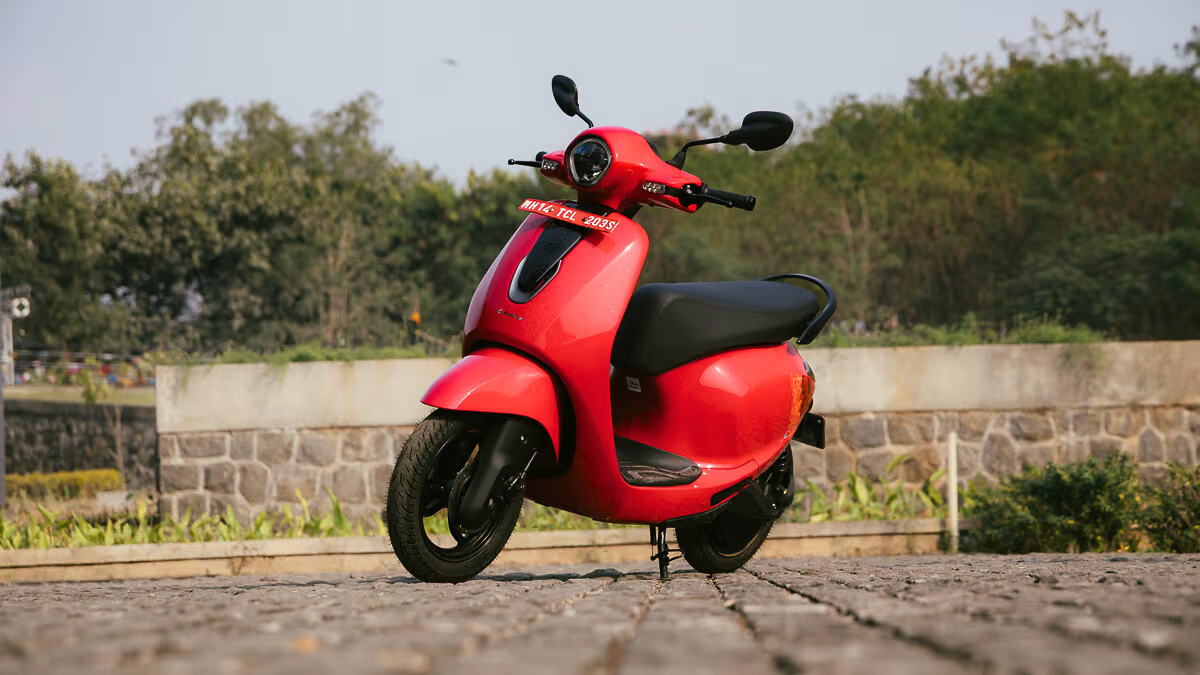
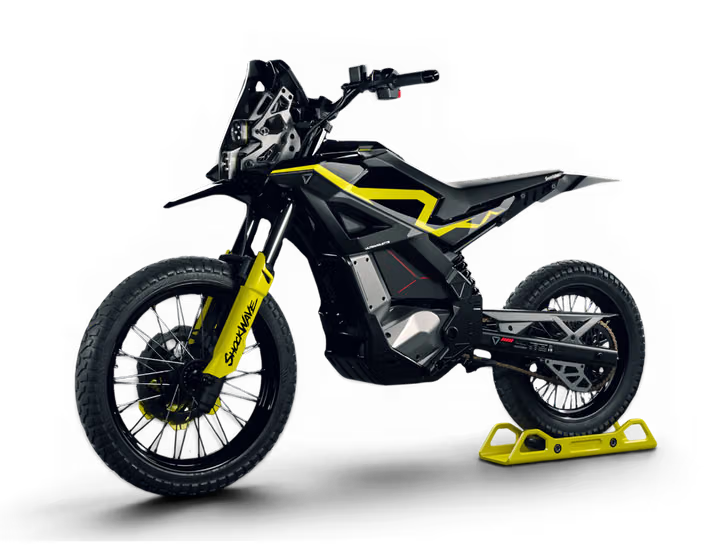
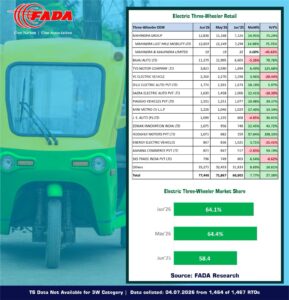
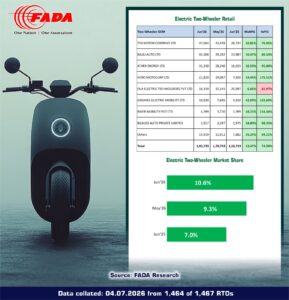
Two-wheelers, the backbone of India’s mobility system, continued to drive the bulk of EV volumes. Electric two-wheeler retail for June stood at 1,93,735 units, maintaining a strong trajectory even as some incentives are rationalised and competition intensifies. This segment includes everything from entry-level scooters aimed at daily commuters to more premium products targeting performance-oriented riders and delivery fleets. At the same time, Electric Three-Wheelers reached 77,448 units, consolidating their position as the most electrified segment in the Indian vehicle market. E-rickshaws and e-loaders have become a familiar sight in many towns and cities, offering operators lower running costs and often benefiting from local policies that favour zero-emission public and goods transport.
Together, these numbers pushed overall EV penetration in June to above 12 percent of total vehicle retail for the first time. This means that more than one in eight vehicles sold in India that month was electric. The penetration story is even more striking when viewed segment-wise. In three-wheelers, more than 64 percent of retail volumes are now electric, making this category a clear front-runner in India’s electrification journey. Two-wheelers, too, have entered double-digit penetration at around 10.6 percent, signalling that EVs are no longer confined to early adopters or government fleets but are becoming a realistic choice for everyday consumers.
The Federation of Automobile Dealers Associations (FADA) has emphasised that this shift is not a short-term spike driven by a single policy or scheme, but a durable transition rooted in broad-based adoption. One of the most important reasons for this durability is the diversity of players now active in the EV space. In electric two-wheelers, legacy manufacturers that once focused mainly on conventional scooters and motorcycles now lead the segment, bringing their distribution networks, brand trust and after-sales capabilities into the EV era.
In electric passenger vehicles and commercial vehicles, established automakers are scaling up production, launching new models and investing in localised supply chains. This has helped improve product reliability, service availability and perceived value, which are critical for cautious buyers. At the same time, new entrants, both Indian and international, are choosing India as a priority market for their EV portfolios. These companies are introducing fresh designs, innovative business models such as battery leasing or subscription, and sometimes bringing in global technology adapted to Indian conditions.
The combination of legacy strength and new-age innovation is giving customers more choice than ever before. Affordability is also improving, not only through direct subsidies but via falling battery costs, higher localisation and greater competition. For high-usage segments such as delivery, ride-hailing, last-mile logistics and public transport, the economics of EVs are becoming increasingly attractive when viewed over the full life cycle rather than just the upfront price. Lower fuel and maintenance costs, along with regulatory benefits like access to certain routes or lower permits, can tilt the balance decisively in favour of electric options.
Equally important is the progress in charging infrastructure and supporting ecosystems. While challenges remain, especially in smaller towns and rural areas, metros and key corridors are seeing a steady expansion of public and semi-public chargers. Fleet operators often set up captive charging depots, and residential and workplace charging solutions are slowly becoming more common in new developments. Where products, charging access and economics align, consumers are showing that they are ready to make the switch.
FADA’s leadership frames this moment as an expression of the wider “India Growth Story” through the lens of clean, self-reliant mobility. Rising aspirations mean that buyers want vehicles that are modern, connected and future-proof. Widening affordability, aided by macroeconomic growth and targeted policy support, allows more people to consider EVs as practical options rather than luxury statements. And a growing awareness of environmental issues, especially in cities with chronic air pollution, is making clean mobility a socially desirable choice as well.
Yet, the journey is far from complete. For EVs to move from 12 percent penetration to a true majority in the market, several issues need continued attention: consistent and long-term policy signals, stable and sustainable incentive structures, faster rollout of charging infrastructure beyond major cities, and continued innovation in financing, residual values and recycling. Rural and low-income segments will need tailored solutions that address their unique needs and constraints.
Still, June 2026 will likely be remembered as a milestone month that showed how far India has come in a very short time. What was once an experiment at the margins of the auto industry has now clearly entered the mainstream. With legacy players, new entrants, policymakers, financiers and consumers all pulling in the same direction, India’s EV transition has moved from promise to practice and the record numbers from June suggest that this is just the beginning of a much larger shift on the country’s roads.