


































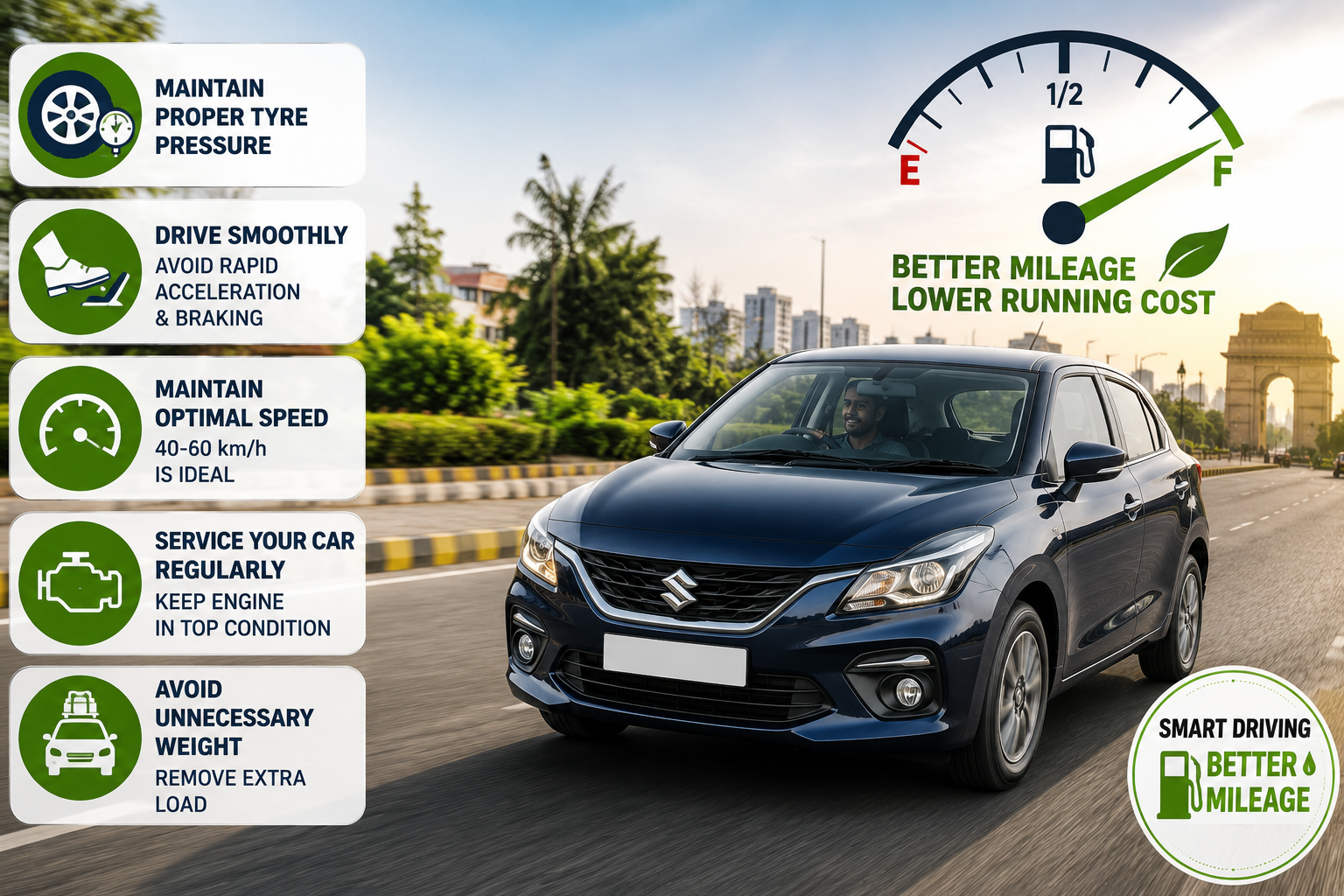
With petrol and diesel prices only rising, and city traffic only getting worse, even a 1-2 km/l improvement in mileage can save thousands of rupees every year. Even more great news is that most of the gains come from common driving habits and practices, not requiring any expensive upgrades.
1. Tyre pressure: Easy mileage booster
Underinflated tyres are one of the most common reasons for poor fuel economy in India. Rolling resistance increases manifold with reduced tyre pressures, causing the engine to burn more fuel to overcome the resistance.
Check tyres at least once a week, preferably in the morning (cold tyres give accurate readings).
Refer to the recommended pressure printed on the driver’s side door frame or in the owner’s manual. Never use the ‘maximum pressure’ indicated on the tyre sidewall.
As a reference, most hatchbacks require 30-32 PSI (front) and 28-30 PSI (rear) whereas compact SUVs need 32-35 PSI.
Even 5 PSI lower than recommended pressure will lead to a 1%+ drop in mileage in the long run. A small digital tyre pressure gauge (cost: ₹200-400) will help you stay right on top of this number.
2. Smooth driving beats aggressive driving
The way you drive has a bigger impact on mileage than the car you drive. In city traffic, aggressive driving (accelerating hard and braking hard) burns more fuel than smooth driving.
Accelerate gently; don’t floor the accelerator from every signal.
Anticipate traffic movements and don’t accelerate hard when approaching a red light. Let the car coast towards the signal instead.
For manual cars, upshift as early as possible to keep the RPMs in the 1,500-2,500 range.
For automatics, use the ‘Eco’ mode (present in many modern cars) to reduce throttle response and change gears at higher RPMs.
Smooth driving not only improves mileage but also improves brake and tyre life.
Read this- Hero MotoCorp August 2026 sales: 5.42 lakh domestic units, YTD up 17%
3. AC usage: City vs highway
Using AC burns more fuel as it’s an additional load on the engine. The trick is to use AC intelligently based on your speed and road type.
While driving in city traffic (speeds under 50-60 km/h):
Open the windows for better ventilation while moving at low speeds. The aerodynamic drag is minimal at these speeds.
Use AC only if necessary, and set it to a comfortable temperature (say, 24C). Use the recirculation mode to reduce the intake of hot air from outside.
While driving on highways (speeds above 60 km/h):
Use the AC with windows closed at a comfortable temperature.
It’s not advisable to open the windows at higher speeds as it creates aerodynamic drag which can cut into your mileage.
Before switching on the AC, try to park in the shade (if available), and open the windows to clear out the hot air. Close the windows and switch on the AC.
4. Reduce extra weight and drag
Most Indian cars carry a surprising amount of extra weight, often without the owner realizing it. Water cans, old tools, gym bags, cartons, and extra luggage in the boot add up to become a huge weight penalty on the engine, especially on city roads with frequent stops and starts.
Lighten up the load in the boot by removing unneeded items. Avoid keeping a 5-10 litre water can or heavy tool kit in the car if it’s not in use.
Remove rooftop carriers and bike stands when not in use. These add to the aerodynamic drag on the car and can reduce highway mileage.
Even a few kg of reduced weight can make a huge difference on long drives.
5. Plan trips to avoid traffic
Time spent in traffic is fuel burnt with no distance covered. Good trip planning can help significantly in improving mileage.
Avoid peak hour traffic whenever possible. A longer but smoother route can often be more mileage-friendly than a shorter, but stop and go route.
Try to combine errands to make fewer, but fuller trips instead of multiple short ones.
If you’re going to be stopped for more than 30-60 seconds (long signals, railway crossings, stopping outside a shop), turn off the engine to save fuel.
Use navigation apps to find the most efficient route to your destination based on current traffic conditions.
6. Regular maintenance
A well-maintained engine and drivetrain will use less fuel. Following the manufacturer’s service schedule is critical to maintaining good mileage.
Change engine oil and oil filters on time according to the manufacturer’s specifications.
Keep air filters clean.
Check spark plugs (petrol cars) and injectors (diesel cars) at regular intervals.
Check AC condenser and air conditioning system yearly.
Keep a close eye on tyre wear and alignment.
A properly serviced car will not only deliver better mileage but also avoid expensive repairs in the long run.
7. Fuel quality and filling habits
Using good quality fuel helps maintain engine performance and fuel economy. It’s also important not to overfill the petrol tank, and to fill it up to the brim only when the fuel gauge reaches empty. For petrol cars, it’s a good idea to avoid running the petrol tank dry on a regular basis. This can lead to engine wear and tear as sediment gets stirred up when the fuel level is low.
8. Monsoon and Indian roads
Indian roads and climate add some special considerations:
Maintain steady speeds on slippery roads during monsoon, and avoid sudden acceleration on wet patches of road.
On bad roads and potholes, slow down early instead of slamming on the brakes at the last minute.
Worn out tyres on wet roads can cause loss of traction and reduce fuel economy.
With proper maintenance and driving habits, it’s possible to get 10-20%+ improvement in mileage for most Indian cars. The key is to develop good driving habits and practice them consistently to see a measurable improvement in your car’s fuel economy.
Watch this-