


























India’s auto industry has had a record-breaking month, with passenger vehicles, two-wheelers and three-wheelers all posting a historic August performance. SUVs have driven passenger-vehicle growth, while the adoption of electric scooters has triggered a surprise increase in two-wheeler sales.
Record sales across the board
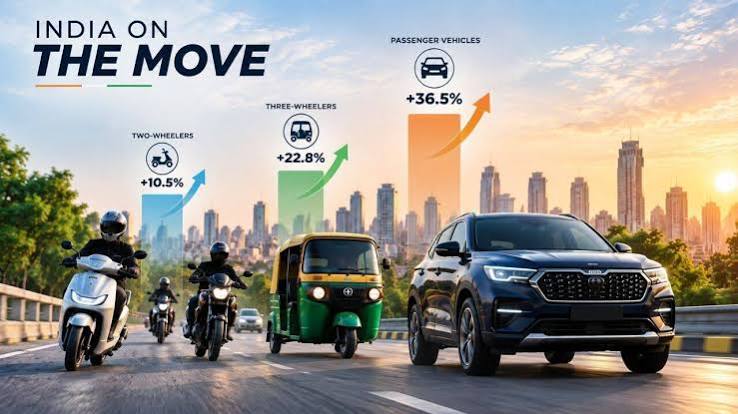
India’s auto industry had a historic August, according to Society of Indian Automobile Manufacturers (SIAM). Domestic PV sales jumped 36.5% YoY to 4.39 lakh units in August 2026 (vs. 3.22 lakh in the same period last year).
Two-wheeler sales crossed the 20-lakh mark, hitting 20.35 lakh units (+10.5% YoY) and three-wheeler sales grew 22.8% to 93,764 units.
Overall, India’s auto industry manufactured more than 31.57 lakh vehicles during the month.
SUVs drive the PV boom
The PV category, which includes cars and SUVs, saw an overall sales increase of 36.5% in August 2026.
This was primarily driven by demand for utility vehicles (UVs), which include SUVs and multi-utility vehicles (MUVs):
UV domestic sales: ~2.50 lakh units (+39.2% YoY)
From April to August 2026, UV sales grew 30.7%, accounting for over two-thirds of all PV volumes.
The category has been growing rapidly, as buyers replace hatchbacks and sedans with higher vehicles, including SUVs from Maruti Suzuki, Hyundai, Tata and Mahindra, as well as Kia.
For automakers, the takeaway is clear – if you don’t have a strong SUV portfolio, you’re already losing out.
Scooters outpace motorcycles; EVs drive the boom
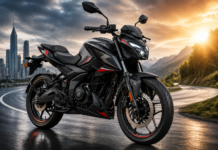
Two-wheelers have also been a growth category, but it’s the scooter segment that has seen the fastest increase. Whereas motorcycles still outsold scooters in absolute terms:
Scooter sales: 8.55 lakh units (+23.8% YoY)
Motorcycle sales: 11.33 lakh units (+2.4% YoY)
Scooters accounted for the majority of the increase in two-wheeler sales in August, reflecting their appeal to a broad base of buyers.
Electric vehicles are also driving the two-wheeler boom. The segment is seeing rapid growth in e-scooters:
Electric scooters (above 250W): 1.85 lakh units (+120% YoY)
E-scooter share: ~22% of total scooter wholesales in August 2026 (up from ~11-12% in the same period last year)
Ola Electric, Ather, Bajaj Chetak, TVS iQube and other new entrants have introduced innovative products that are disrupting the market.
Read this- Kia Carens and Carens Clavis Get Factory-Fitted CNG Variants in India
The August tailwind
August is typically a pre-festival month, with dealers stocking up on inventory ahead of Ganesh Chaturthi, Onam and the run-up to Navratri and Diwali, while buyers also start looking to purchase ahead of festive discounts.
SIAM has noted that festive demand will support healthy volumes in Q2, building on this strong August performance. However, it’s worth noting that this year’s numbers come against a strong backdrop of previous year’s sales, and global macroeconomic factors could impact margins and pricing power in the coming months.
Drivers of the PV and two-wheeler boom
Several factors are contributing to the PV and two-wheeler sales boom:
Strong rural and semi-urban demand: Improved monsoon prospects, stable farm incomes and better credit availability have boosted demand for entry-level and mid-range vehicles.
Product offensive: A proliferation of new SUVs, SUV-inspired hatchbacks and technologically advanced scooters (both ICE and electric) have created significant demand.
EV push and lower running costs: Lower cost-per-km, improving charging infrastructure and EV subsidies at state level have tilted the scales in favor of electric vehicles, particularly scooters.
Festive sentiment: After a few years of uncertainty, both buyers and lenders are showing greater appetite for large ticket purchases.
Winners and watch-outs
Winners
SUV-focused brands: Companies with strong UV portfolios have seen their order books balloon, with some reporting waiting periods of up to several months for popular models.
Scooter leaders: Honda has regained the scooter leadership, while TVS, Ola, Ather and Bajaj are fighting it out in the electric segment.
Three-wheeler manufacturers: The category grew 22.8% in August 2026, driven by both passenger and cargo demand.
Watch-outs
Input costs and crude prices: Further increases in crude oil and input costs could lead to margin compression and price corrections, impacting demand.
Policy changes: Shifting government policies on EVs, localisation norms and financing could impact the industry.
Implications for buyers
The current market scenario presents both opportunities and challenges for auto buyers:
More choice: Buyers have greater range of products to choose from at various price points.
Higher expectations: Consumers are demanding more features, technology and personalization, even in mainstream products.
Need to be patient: Popular SUVs and EV scooters have tight availability, with long waiting periods, especially in Tier-I and Tier-II cities.
The road ahead
August 2026 has been a great month for India’s auto industry. If the festive season performs as expected, and given the tailwinds for SUVs and e-scooters, we may be looking at a record year for the industry.
However, the key challenge for automakers will be to scale production and manage costs, while also maintaining product diversity in a rapidly evolving market. And for buyers, it’s a great time to research, test-drive and make a purchase decision, as the market is poised for significant changes in the coming months.
Watch this-