








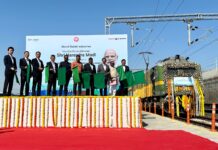
















Maruti Suzuki India Limited has crossed one million cumulative vehicle dispatches from its in-plant railway sidings at Hansalpur in Gujarat and Manesar in Haryana.
The milestone was reached in just over 3 years and 5 months since Gujarat facility commenced operations in March 2023 and the Manesar siding became operational in June 2025. Maruti Suzuki is currently the first and only Indian passenger vehicle manufacturer to operate in-plant railway sidings at its manufacturing locations.
Gujarat Contributes 7.9 Lakh Vehicles
Of the one-million vehicles dispatched through the two facilities, approximately 7.9 lakh units were transported through the Gujarat railway siding and another 2.1 lakh vehicles through the Manesar facility.
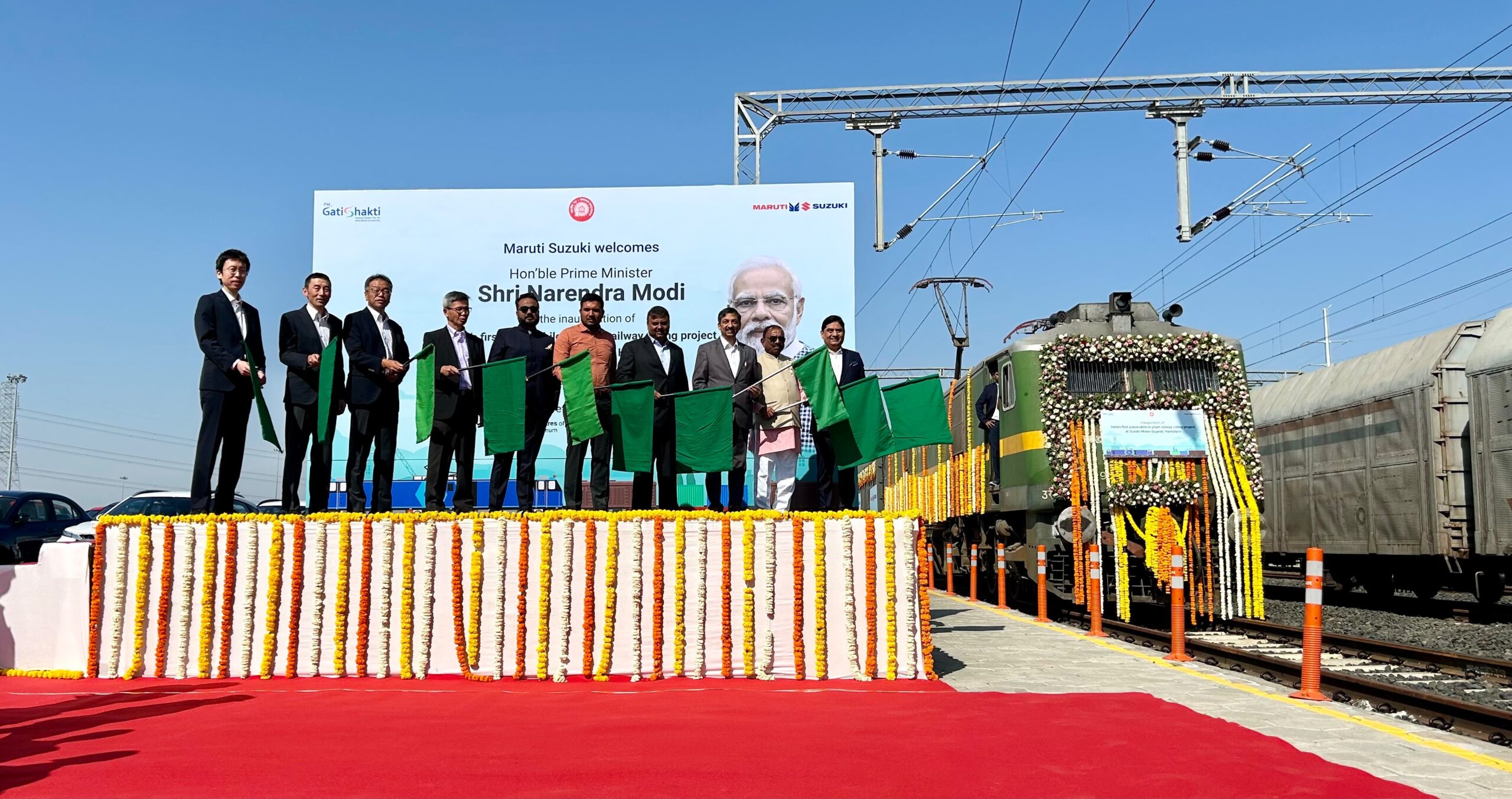
The figures highlight the key role of the Hansalpur facility in Maruti Suzuki’s vehicle distribution network. The Gujarat siding commenced operations in March 2023 and has enabled the company to directly dispatch vehicles from its manufacturing plant to different points across India.
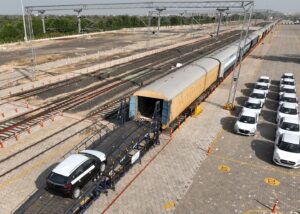
The dedicated railway terminal facilitates the loading of finished vehicles onto trains within the factory premises, thereby eliminating the need to transport vehicles by road from the plant to an external railway station prior to loading them onto rail rakes.
The Gujarat facility has a capacity to dispatch up to three lakh vehicles per annum to various destinations across the country. Its strategic location enables Maruti Suzuki to efficiently service markets in western, northern and southern India.
Manesar Siding Adds 2.1 Lakh Vehicles
Maruti Suzuki’s Manesar in-plant railway siding contributed approximately 2.1 lakh vehicle dispatches to the one-million milestone.
The Manesar facility commenced operations in June 2025 and has rapidly become an integral part of the company’s logistics network. In March 2026, the Manesar siding crossed the one lakh vehicle dispatch milestone, which was achieved within nine months of its commencement.
Spread across 46 acres within the Manesar manufacturing facility, the siding has a fully electrified corridor with four full-length tracks for railway rakes and a track for engine movement.
With a capacity to dispatch up to 4.5 lakh vehicles annually, the Manesar facility has emerged as one of the largest in-plant automobile railway facilities in the country.
By enabling direct loading at the manufacturing facility, the Manesar siding reduces the reliance on trucks for long-distance vehicle movement and enhances the company’s dispatch efficiency and capacity to handle large shipment volumes.
Rail Dispatches Rise to 26.5 Per Cent
Maruti Suzuki’s focus on rail-based logistics has seen a steady rise in its share of rail-based vehicle dispatches over the past decade. The company’s share of rail-based vehicle dispatches has increased from 5 per cent in FY 2014-15 to 26.5 per cent in FY 2025-26.
In the current financial year, up to August 31, 2026, Maruti Suzuki has already dispatched more than three lakh vehicles by rail. Together, the Gujarat and Manesar sidings accounted for 70 per cent of the company’s total rail-based vehicle dispatches in this period.
The company aims to increase the share of rail-based vehicle dispatches to 35 per cent by FY 2030-31, which will be facilitated by further investments in railway infrastructure, including an in-plant siding for Maruti Suzuki’s upcoming Kharkhoda manufacturing facility.
The expansion of rail infrastructure is expected to support Maruti Suzuki in building a more integrated multimodal logistics network.
Read this- 5 Biggest Mistakes First-Time Car Buyers in India Make
Environmental Benefits
The switch from road to rail-based transport offers several benefits, including reduced fuel consumption, greenhouse gas emissions and congestion. Maruti Suzuki’s dedicated railway sidings have enabled the company to shift a larger share of finished vehicle transportation from trucks to trains.
The company has highlighted the environmental benefits offered by its Gujarat and Manesar facility with the Manesar railway siding alone estimated to have avoided around 16,800 metric tonnes of carbon dioxide equivalent emissions following the dispatch of one lakh vehicles within its first nine months of operation.
Rail transport also reduces the need for vehicle carriers for long-distance movement, which can ease congestion on highways and reduce the overall carbon footprint of the supply chain.
Maruti Suzuki’s Gujarat railway siding has further gained the recognition of being the world’s first modal-shift transportation project to generate carbon credits. The achievement highlights the company’s initiatives in combining manufacturing, logistics and sustainability.
Developed under PM GatiShakti
The two in-plant railway sidings were developed in line with the objectives of the PM GatiShakti National Master Plan. The programme focuses on creating efficient multimodal infrastructure and connectivity.
Speaking on the achievement of the one-million-milestone, Hisashi Takeuchi, Managing Director and CEO of Maruti Suzuki India, stated that it marked an important step in the company’s green logistics journey.
Watch this- BMW i5 Long Wheelbase Review | Comfort, Performance & 0-100 km/h Test!
He further added that the Gujarat and Manesar facilities demonstrated the potential of integrated multimodal infrastructure to deliver operational and environmental benefits.
The direct connection between manufacturing facilities and the railway network enables Maruti Suzuki to reduce handling time and improve vehicle dispatch planning, while it gains greater control over the movement of finished vehicles.
Over 3.3 Million Vehicles Sent by Rail
Maruti Suzuki has cumulatively dispatched over 3.3 million vehicles through railways since FY 2014-15.
From this total, one million vehicles have been dispatched through the in-plant sidings at Gujarat and Manesar, while the remaining have been transported using external loading terminals located outside the manufacturing facilities.
The company’s overall rail dispatch capacity is expected to grow as its existing facilities achieve higher utilisation rates and new infrastructure is added, with the Kharkhoda siding being an important part of this growth.
Sustainable Logistics Strategy
The achievement of the one-million vehicle milestone is a testament to Maruti Suzuki’s commitment to building a sustainable logistics strategy. The company is increasingly relying on railways to transport vehicles and has reduced its dependence on road-based dispatches.
With rail-based dispatches already accounting for 26.5 per cent of Maruti Suzuki’s total vehicle movement in FY 2025-26, the company is on the path to achieving its long-term target of 35 per cent by FY 2030-31.
The Gujarat and Manesar in-plant railway sidings are expected to continue playing a key role in Maruti Suzuki’s logistics strategy, as they can reduce emissions and fuel consumption as well as help ease road congestion and logistics costs and improve vehicle distribution efficiency across India.
Watch this-