
















While the world’s eyes are fixed on lithium batteries, charging stations, and gigafactories, a quiet homegrown revolution is underway in India’s fuel tanks.
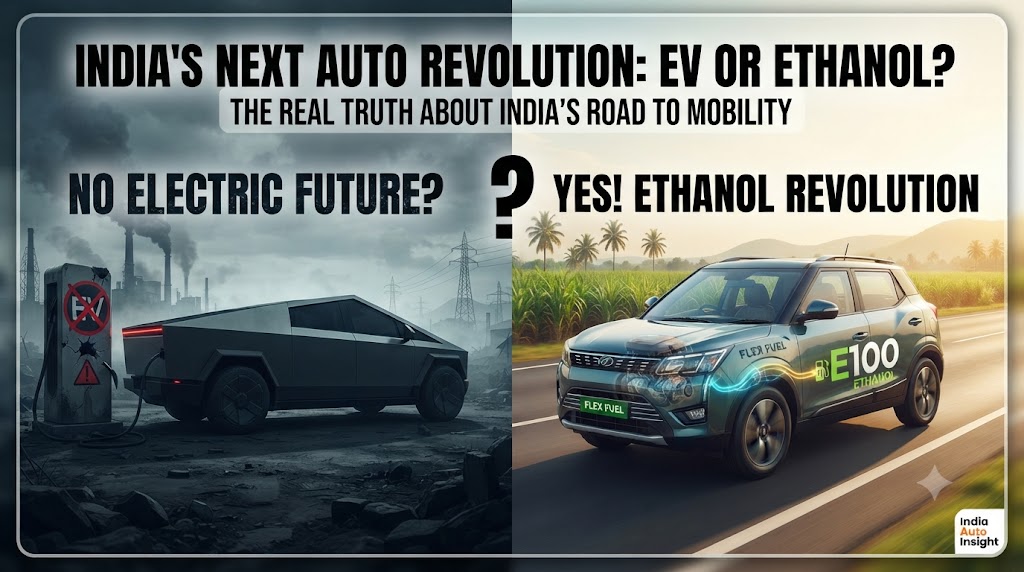
The next decade-long chapter of Indian automobile history can very well begin with not a plug, but a pump – E100, or pure Ethanol – and not necessarily a revolution in the EV space.
While the government sets a deadline of 2025-26 for 20% ethanol blending (E20) in petrol, it has already begun quietly laying the groundwork for E100 vehicles by 2030. Unlike E20, which is a blend, E100 is 100% ethanol, which is cleaner-burning and potentially reduces particulate emissions significantly. With an aim to reduce India’s $100+ billion annual crude-oil import bill and reduce the country’s reliance on geopolitical oil markets, the government is looking to develop a sustainable domestic substitute for petrol as a transport fuel. E100, which is being targeted for use in flex-fuel vehicles, has the potential to cut down the country’s oil import bill by up to 30%.
While flex-fuel vehicles (FFVs), which can run on any percentage of ethanol-blended fuel from E0 (pure petrol) to E85 (85% ethanol) with minimal modifications, have been around in Brazil for years, where over 70% of light vehicles are flex-fuel, they had been a curiosity in India till recently. However, major car manufacturers are now looking at developing FFVs that can run on E100 as a possible entrée into the Indian market, which the government had earlier only permitted as a pilot project in a few state-run oil companies.
Toyota, Maruti, and Hyundai have all been working on prototype flex-fuel vehicles for the Indian market, which will be able to run on any percentage of ethanol-blended fuel, from E5 to E100. These vehicles will not only require special fuel lines that are resistant to ethanol’s corrosive properties but also have specialized sensors that can sense the percentage of ethanol in the fuel and modify the air-fuel ratio in the engine accordingly. Ethanol’s corrosive properties and the different combustion characteristics mean that the engine will have to have modifications to deal with higher levels of ethanol without compromising on performance.
Toyota has announced plans to introduce Strong Hybrid Electric Vehicles (SHEVs) with flex-fuel capability in India. SHEVs use a hybrid system to capture energy from braking, which means that they are more efficient and, combined with flex-fuel technology, can run on petrol or E100 (or any percentage of the two), depending on the driver’s needs and the availability of fuel.
While manufacturers are preparing for a possible flex-fuel future, the government is looking at incentivizing the creation of ethanol-blended petrol fueling infrastructure. While India is the world’s second-largest producer of sugarcane, the process of refining raw cane sugar into ethanol requires significant capital investment in terms of distilleries and distribution infrastructure. The government’s Ethanol Blended Petrol (EBP) programme is looking to incentivize sugar mills to divert surplus sugar to ethanol production, which would then be blended with petrol and sold at fuel stations.
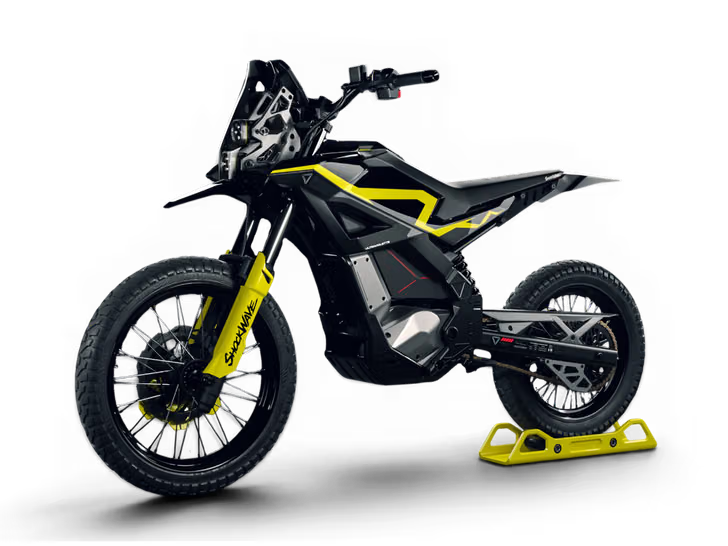
Read this- Ultraviolette Shockwave: India’s 100V Electric Trail Bike Is Coming to Shake Up 2027
Ethanol has less energy density than petrol, which means that an E100 run car would see a 20-30% reduction in mileage compared to a petrol-run car. Unless ethanol is significantly cheaper than petrol, such a price differential would be a disincentive for ordinary motorists to switch to E100. The government is looking at introducing a differential pricing mechanism for ethanol-blended petrol, which will subsidize the price of E100 to make it competitive with petrol for the average motorist in terms of cost per km driven.
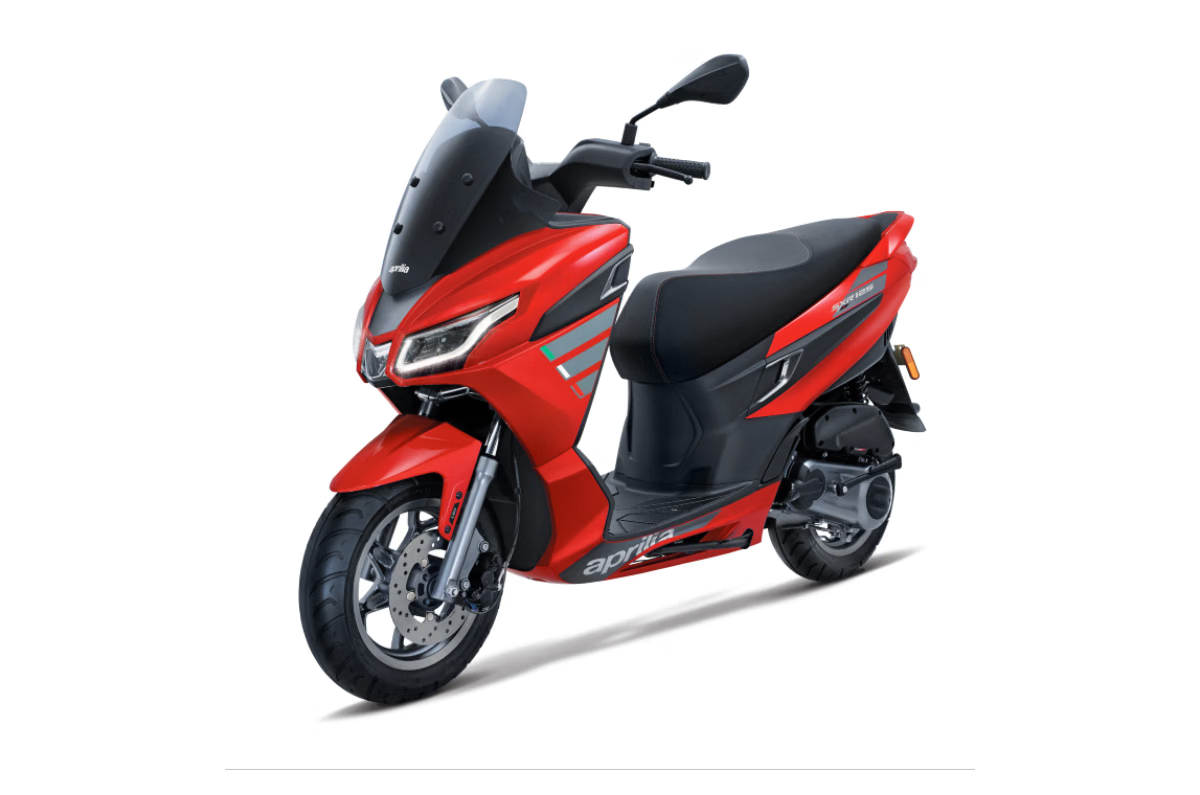
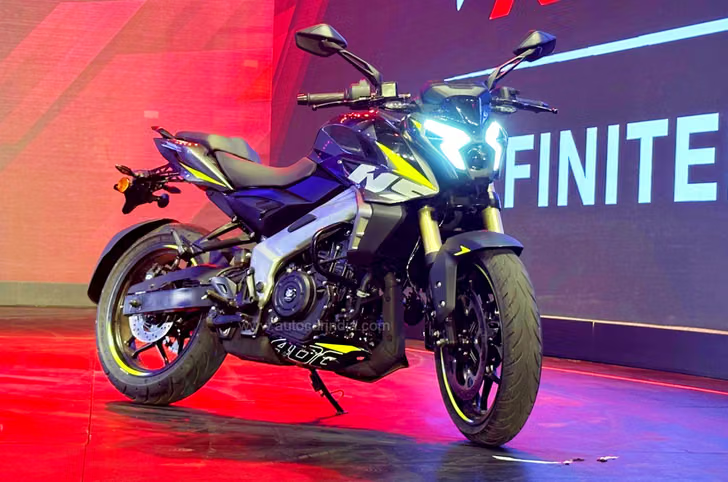
Meanwhile, two-wheeler manufacturers are looking to create 125cc and 150cc engines that can run on E100. For India’s millions of two-wheeler commuters, a switch to ethanol can be a great way to cut down on fuel costs and reduce congestion and pollution in urban centers, if an ethanol fueling infrastructure can be created at the level of local kirana stores.
Two-wheelers are also a great test-bed for E100 run engines. With smaller fuel tanks and primarily used in urban and semi-urban areas, two-wheelers can offer a great value proposition to the average Indian commuter in terms of both affordability and range. While E100 has less energy density than petrol, the range anxiety experienced by two-wheeler commuters is much lower than that experienced by their four-wheeler counterparts and will also be much lower in semi-urban and urban areas due to shorter average distances driven per day.
The reality of India’s auto future lies in the dichotomy between EVs and ethanol-blended petrol. While EVs will dominate the premium and four-wheeler space, ethanol-blended petrol vehicles will continue to dominate the core four-wheeler and commercial-vehicle space, dominated by government-operated state-owned entities and transporters.
India’s automobile future will most likely see a dual track approach to transportation fuel with EVs and ethanol-blended petrol vehicles coexisting in an equilibrium. This is a pragmatic approach as EVs will dominate the premium and four-wheeler space, while ethanol-blended petrol vehicles will continue to dominate the core four-wheeler and commercial-vehicle space, dominated by government-operated state-owned entities and transporters. While the government has been reluctant to grant a complete exemption on road taxes to EVs, it is looking at introducing differential road tax rates for ethanol-blended petrol vehicles that increase progressively with the percentage of ethanol in the fuel.
The dichotomy between EVs and ethanol-blended petrol vehicles reflects an underlying truth about India’s automobile future. As the world’s second-largest automobile market, India’s transport sector needs a sustainable transportation fuel alternative that can meet the needs of India’s diverse population. While EVs represent the future of transportation in metro cities, ethanol-blended petrol vehicles will serve a critical role in reducing the country’s oil import bill and reducing carbon emissions from the transport sector.
India’s automobile future may not see an either/or proposition between EVs and ethanol-blended petrol vehicles but will most likely see a dual track approach to transportation fuel with EVs and ethanol-blended petrol vehicles coexisting in an equilibrium.
Watch this-