




























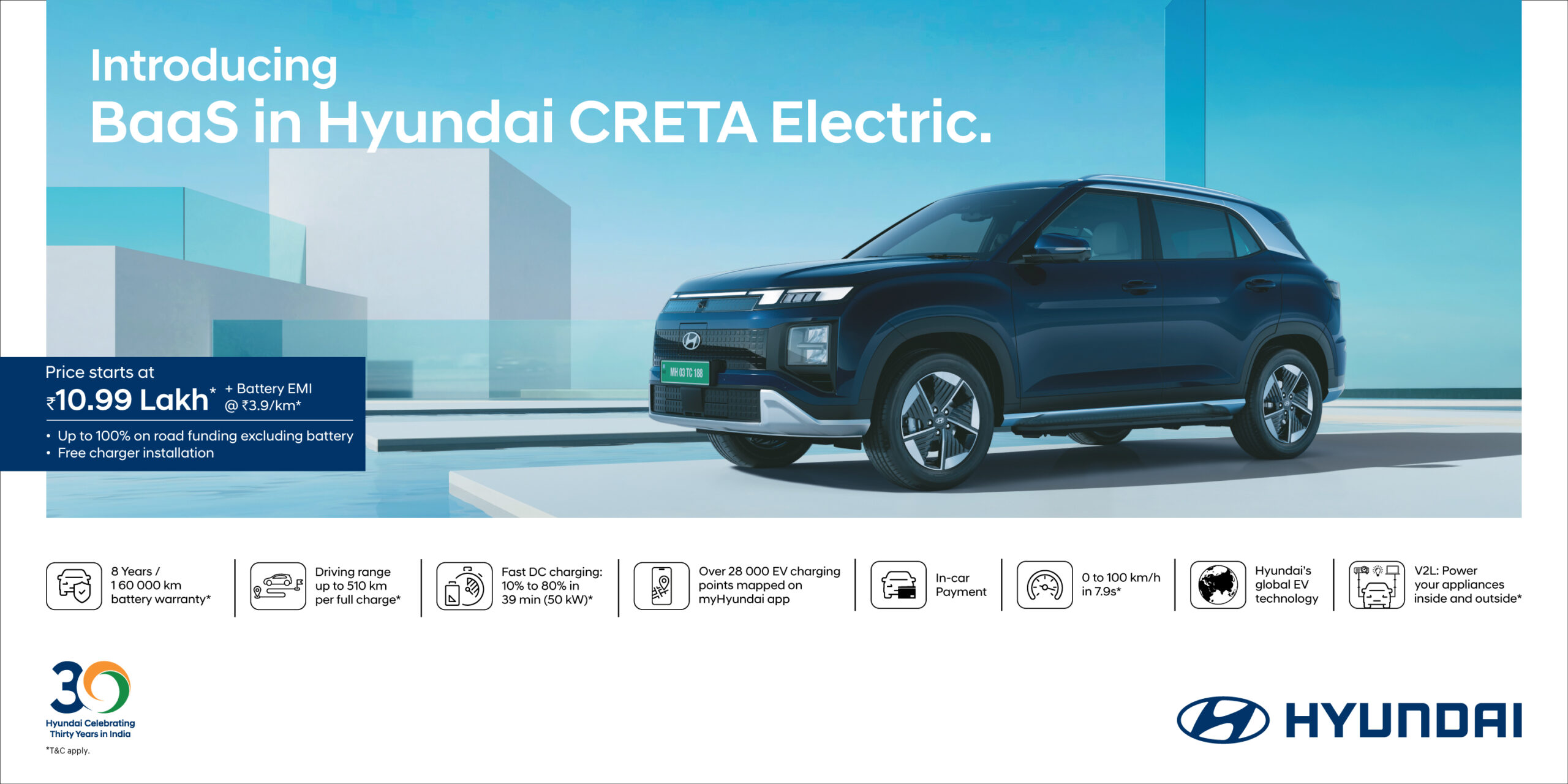
Hyundai Motor India Limited has taken another big step toward making electric mobility more practical for Indian buyers by introducing a Battery-as-a-Service ownership model for the CRETA Electric. With this move, customers can now buy the SUV at a starting ex-showroom price of INR 10.99 lakh and pay for the battery separately through an EMI starting at just INR 3.9 per kilometre. The idea is simple but powerful: lower the upfront cost of owning an EV and make the transition to electric driving easier for more people.

For many car buyers, the biggest hurdle to choosing an electric vehicle is the initial purchase price. Hyundai’s new BaaS model directly addresses that concern by separating the battery from the vehicle purchase. This allows customers to enter the EV market with a lower upfront outlay while still enjoying the performance, range and features of the CRETA Electric. In a market where affordability and flexibility matter a lot, this could make the model more appealing to a wider set of customers.
Hyundai has also used this update to make the CRETA Electric more premium and convenient. The SUV now gets an integrated side foot step, which improves ease of entry and exit while also giving the vehicle a more confident SUV stance. In addition, the Home Charger variants will now come with a 7.4 kW wall box charger, based on customer demand. That is a useful upgrade for buyers who want a more convenient home charging setup and a smoother day to day ownership experience.
Tarun Garg, MD and CEO of Hyundai Motor India Limited, said the company believes the future of mobility must be accessible, intelligent and customer centric. He described Battery-as-a-Service as a transformational step toward democratizing electric mobility in India. According to him, reducing the upfront acquisition cost and offering flexible battery rental plans will help more customers confidently move to EVs while continuing to benefit from Hyundai’s technology, safety and innovation.
The CRETA Electric already sits on a strong foundation. Built on the success of the CRETA brand and Hyundai’s battery management systems, it combines SUV practicality with electric vehicle technology. Hyundai has loaded the model with a long list of features that are designed to appeal to both first time EV buyers and existing Hyundai customers looking to upgrade.
One of the biggest highlights is the claimed driving range of up to 510 kilometres on a full charge, certified by ARAI for the long range version. The CRETA Electric is available with two battery options, a 51.4 kWh long range pack and a 42 kWh short range pack. Fast charging support is another major advantage, with the battery capable of going from 10 percent to 80 percent in just 39 minutes through DC fast charging. That helps reduce downtime and makes the car more suitable for busy urban users as well as longer weekend drives.
Hyundai has also equipped the car with Vehicle-to-Load technology, which lets users power external devices from the vehicle. That can be useful during travel, outdoor use or even emergencies. Another major feature is Hyundai SmartSense Level 2 ADAS, which adds a suite of advanced driver assistance systems for improved safety and confidence. Features like Single Pedal Drive, known as i-Pedal, make city driving easier by allowing the driver to accelerate, slow down and even come to a stop using only the accelerator pedal.
Digital Key support adds a modern touch, allowing users to lock, unlock and start the vehicle through a smartphone or smartwatch. The long range version can accelerate from 0 to 100 kmph in 7.9 seconds, adding to its appeal for buyers who want performance along with efficiency. Active Air Flaps improve airflow management, helping cooling and aerodynamic performance. Hyundai is also offering an 8 year or 1,60,000 km battery warranty, whichever comes earlier, which should give buyers added confidence in long term ownership.
The CRETA Electric has already proven itself in real world conditions through several campaigns and record runs. Hyundai’s Test Driven by 100 campaign saw 100 creators drive the car across 10 states, 26 cities and more than 200 destinations, covering 15,000 kilometres over more than 100 days. The campaign generated huge digital engagement and helped demonstrate the vehicle’s performance in different climates and road conditions.
The car also set a national record by covering 1,326.5 kilometres in 24 hours, earning a place in the India Book of Records. During the same run, it became the fastest electric car to complete 1,000 kilometres, doing so in 18 hours and 31 minutes. Those milestones helped strengthen the car’s image as a serious EV with practical real world capability.
Hyundai is also working on the wider EV ecosystem. The company says it is expanding public charging access as part of a long term plan to install close to 600 fast public EV charging stations over the next seven years. So far, Hyundai has already set up charging infrastructure across 183 locations with 214 DC chargers and 399 charging points. Through the myHyundai app, customers can also locate and use more than 10,000 EV charging points across India, making ownership easier and less stressful.
The new BaaS plan, added features and stronger charging support show that Hyundai is not just selling an EV, but trying to build a more complete ownership experience around it. For Indian buyers who want to switch to electric without a heavy upfront burden, the CRETA Electric now looks like an even stronger option.