
























Volkswagen’s reported talks with JSW Group over its India business have emerged as one of the most important auto industry stories of the year. If the deal moves forward, it could give the German carmaker a stronger local partner while giving JSW a bigger foothold in passenger vehicles.
The discussion matters because Volkswagen has long struggled to grow in India despite having a presence here for more than two decades. A partnership with JSW could change that equation by bringing in local capital, industrial scale, and deeper market understanding.
Why the Talks Matter
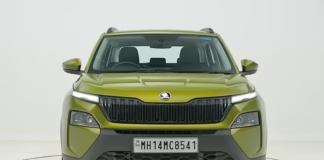
Volkswagen’s India operations, through Skoda Auto Volkswagen India, have remained relatively small compared with mass-market rivals. Recent reports say the group’s combined market share has hovered around 2%, which highlights how difficult it has been to scale in one of the world’s most competitive car markets.
For JSW, the deal would extend its rapid expansion into the auto sector. The group is already active in mobility and has been looking to build a larger role in electric vehicles and broader car manufacturing, making Volkswagen a potentially strategic fit.
What Each Side Wants
For Volkswagen, the appeal is straightforward: a strong local partner can reduce the financial burden of future India investments and improve execution on the ground. Reports suggest the company has been looking for an equity partner to support its next phase of India plans.
For JSW, the deal could provide access to German engineering, platforms, and vehicle technology. That would help the group accelerate its ambitions in passenger cars without starting from scratch.
A Bigger Industry Shift
This possible partnership is important beyond the two companies involved. India’s auto industry is moving toward electrification, software-led features, and higher localization, which makes scale and partnerships more valuable than ever.
That is why this transaction is being viewed as a potential turning point. It reflects a broader trend where global manufacturers are increasingly relying on local groups to navigate India’s market, supply chains, and capital requirements.
What Could Happen Next
The exact structure of any agreement is still unclear, and reports describe the talks as advanced but not final. That means the valuation, ownership split, and operating model are still open questions.
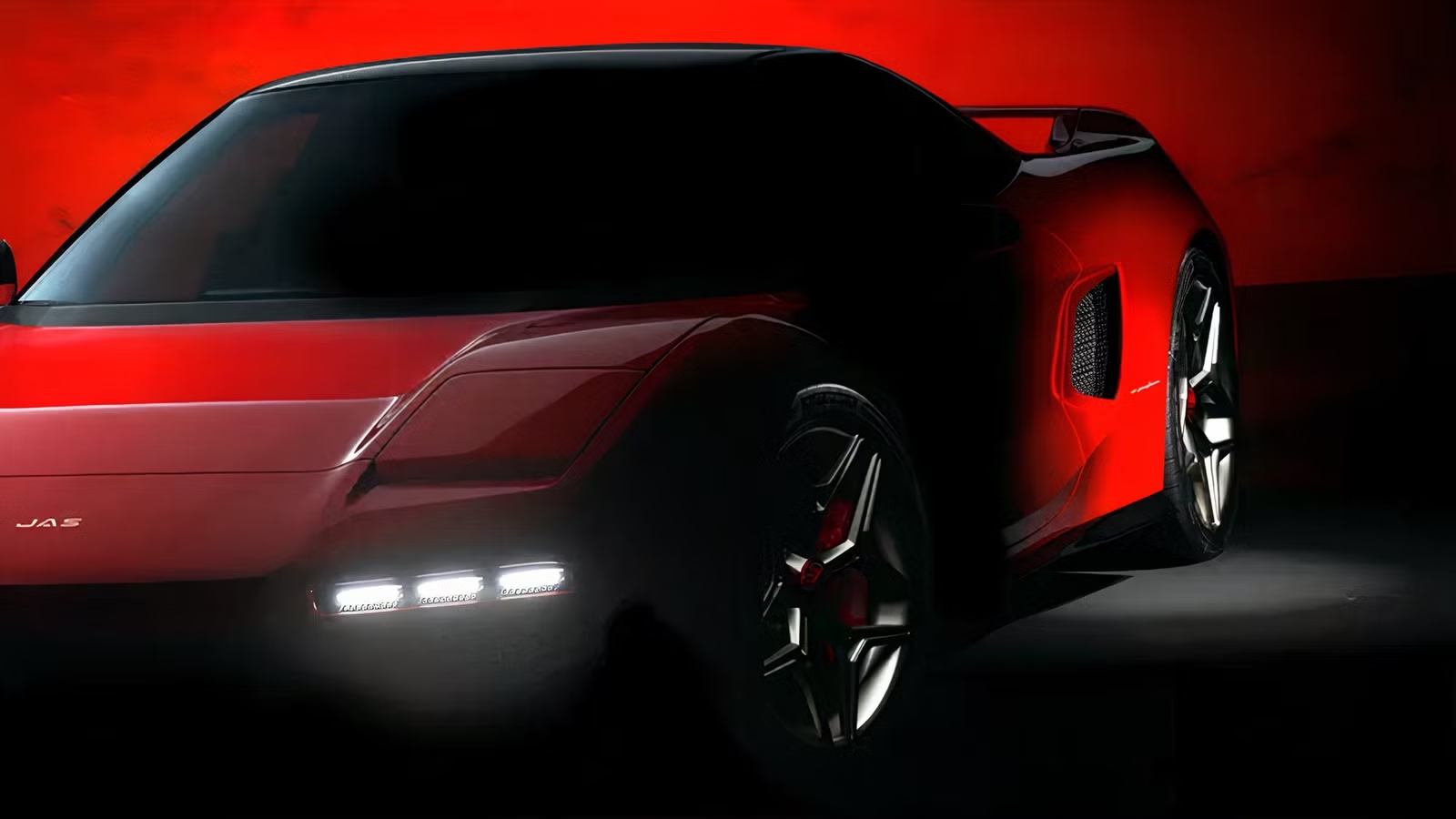
If JSW takes a controlling or significant stake, it could influence future Volkswagen products in India, especially upcoming SUVs, hybrids, and EVs. Some industry reports have already suggested the partnership could be tied to future platform sharing and localized product development.
Why Buyers Should Care
For car buyers, the real impact would likely show up in more locally adapted vehicles, better pricing efficiency, and potentially a faster product pipeline. A stronger India strategy could also improve Volkswagen’s competitiveness against established players that already enjoy scale advantages.
At the same time, a JSW-backed structure may help Volkswagen align more closely with India’s shift toward electrification and new mobility solutions. If the partnership is finalized, it could mark the beginning of a much more aggressive phase for both companies in the Indian market.
The Bigger Picture
In simple terms, this deal is about survival, scale, and strategy. Volkswagen needs momentum in India, and JSW wants a serious route into passenger cars; together, they could create a much stronger business than either could on its own.
That is why the market is watching so closely. A successful agreement could reshape not just Volkswagen’s India future, but also the competitive balance in the country’s auto industry.