

























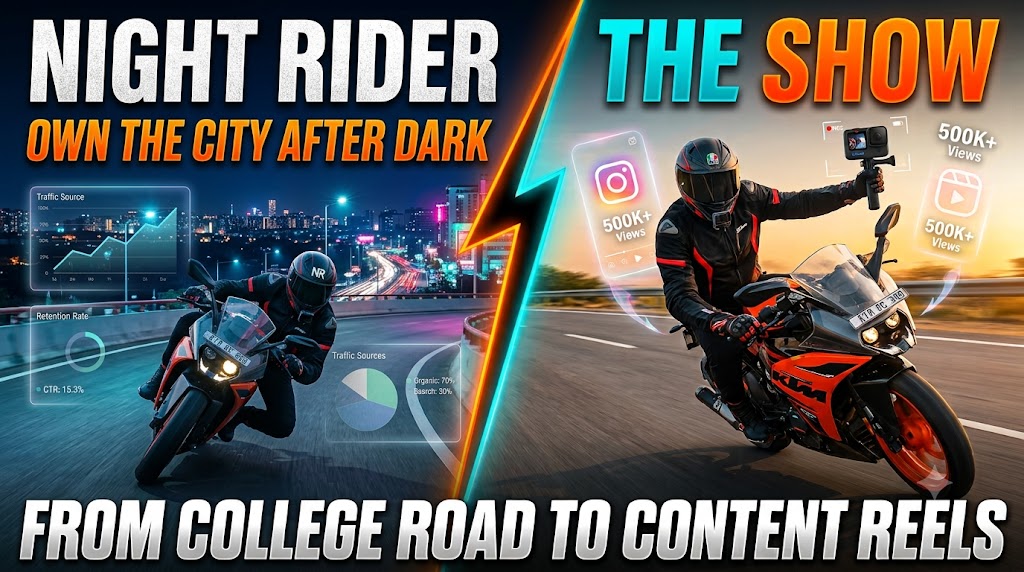
Indian cities change character after dark. When the office rush fades and traffic thins out, a different crowd quietly takes over: young riders on motorcycles and scooters, chasing cool air, city lights and a sense of freedom that’s hard to find in the daytime. For many, night rides have become a lifestyle part escape, part social ritual, part content moment and the streets are their diary pages.
Why the Night Feels Different
For Indian youth, especially college students and young professionals, the night offers something the day rarely does: space. Fewer cars, cooler temperatures and dimmed chaos make the same roads feel completely new. A flyover that was stressful at 6 pm becomes a smooth ribbon of tarmac at midnight. Streetlights, skyline silhouettes and long shadows turn even ordinary stretches into cinematic scenes.
There’s also an emotional factor. After a long day of classes, assignments or work, a late‑night ride is a reset button. The helmet goes on, the visor drops, and the noise of notifications and deadlines gets replaced by engine sound and wind. It’s not about speed as much as solitude and clarity. Many riders describe their favourite night route as a therapeutic loop a place they go to think, breathe and recalibrate.
The Night Rider Look: Style Meets Safety
Night riding has its own unspoken dress code. The classic “night rider” silhouette is instantly recognizable: full‑face helmet, darker visor, maybe a hoodie under a riding jacket, and reflective elements that glow under streetlights. For a lot of young riders, choosing gear is as much about the look as the protection.
Reflective stripes on jackets and gloves, glowing decals on helmets, and subtle luminous accents on shoes or backpacks make a rider visible while also giving off a futuristic aesthetic. Matte‑black gear remains popular for its stealth appeal, but many now mix it with neon highlights fluorescent yellow or green patches that catch light and cameras alike.
Frequent night riders tend to invest in better visors and clear lenses. A smoked visor might look cool for photos, but most serious night riders either switch to clear visors after dark or use helmets with internal sun visors they can retract. It’s the kind of lifestyle choice that shows maturity: balancing the desire to look sharp with the need to actually see and be seen.
Routes, Rituals and Quiet Adventures
Night riders rarely just “go for a ride”; they follow personal rituals. Some have a fixed loop – from home to a particular flyover, then to a lake or riverfront, ending at a favorite chai stall or café that stays open late. Others like spontaneous exploration: taking unfamiliar roads just to see where the city leads them when it’s half asleep.
Common night rider hotspots include:
-
Elevated corridors and flyovers with skyline views
-
Arterial roads that are packed by day but open and flowing at night
-
Lakesides, riverfronts and seaside stretches where the air feels cleaner
-
Quiet university areas or business districts once the crowds have gone
These rides rarely involve big groups; often it’s one or two close friends, or even a solo rider chasing headspace. But when small packs do form, the experience feels like a secret club meeting: a handful of bikes carving through empty lanes, sharing signals and gestures, followed by a parked‑up debrief over tea or coffee.
Content, Cameras and City Lights
In the age of reels and vlogs, night riding naturally spills onto screens. City lights, bridge structures, tunnel echoes and reflections on visors create visuals that daytime footage can’t match. Handlebar‑mounted phones or action cameras capture POV clips where streetlights streak past, and the bike’s instrument cluster glows like a cockpit.
Many young riders use night rides to shoot:
-
Slow‑motion clips of gear being worn helmet strap clicks, glove pulls
-
Wide shots of the bike under streetlights or neon signage
-
Rolling footage from behind friends’ bikes, capturing taillights and silhouettes
-
Atmospheric shots at empty intersections, lakesides or quiet café corners
The trick, for responsible riders, is to separate filming from actual riding. They’ll stop at safe spots, park properly, and then set up shots rather than juggling cameras mid-traffic. The smartest creators treat the city like a studio but never forget it’s still a public road with real risks.
Navigating Safety and Reality
Night riding in India is not without challenges. Visibility drops, some drivers are careless, and certain areas can be unsafe. The “Night Rider Diaries” lifestyle only works when safety is treated as non‑negotiable. That means:
-
Wearing proper helmets and protective jackets, not just hoodies or caps
-
Using clear visors and good lighting – headlamps and auxiliary lights where legal
-
Avoiding racing, stunting or reckless maneuvers on public roads
-
Staying off poorly lit, isolated stretches if they’re known to be unsafe
Many responsible night riders adopt their own rules: no filming while moving, no riding under the influence, and a strict cutoff time beyond which they don’t stay out. Some share live locations with family or friends, and keep emergency contacts handy. It’s a quiet maturity behind the “crazy” night aesthetic they know the thrill comes second to getting home alive.
Social Life After Dark: Cafés and Chai Stops
Night rides often revolve around small social anchors: a familiar tea stall under a flyover, a 24×7 café, a fuel pump that doubles as a meet‑up point. These places become recurring chapters in the riders’ diaries. The staff gets used to seeing the same helmets and jackets; jokes and stories get traded; friendships slowly deepen.
For many youths, these stops are the real heart of the lifestyle. The ride provides adrenaline and scenery; the halt provides connection. Discussions range from bikes and gear to relationships, career worries, future travel plans. The motorcycle keys on the table become symbols of shared independence everyone there chose two wheels and a night sky instead of staying home scrolling.
Owning the City, Respecting the City
“Owning the city after dark” doesn’t mean dominating it recklessly; it means feeling a sense of belonging and confidence within it. Night riders who truly love this lifestyle learn the patterns of their city when roads are safe, which areas to avoid, how to ride respectfully past housing colonies, how to keep noise low and behavior clean.
The best night riders blend into the city like responsible guardians: bright enough to be seen, calm enough not to disturb, alert enough to anticipate trouble, and grateful enough to enjoy the rare luxury of open tarmac and cool air. For them, the diary isn’t written in ink; it’s written in memories of empty roads, distant horns, reflections in the visor and the comforting hum of an engine under the stars.
In today’s India, where days feel overcrowded and online life never stops, these Night Rider Diaries offer young people something rare – time, space and identity. On a bike in a sleeping city, they’re not just students or employees; they’re riders, explorers and storytellers, quietly owning their few hours of freedom between dusk and dawn.