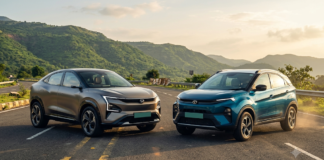










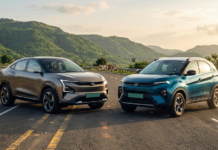
















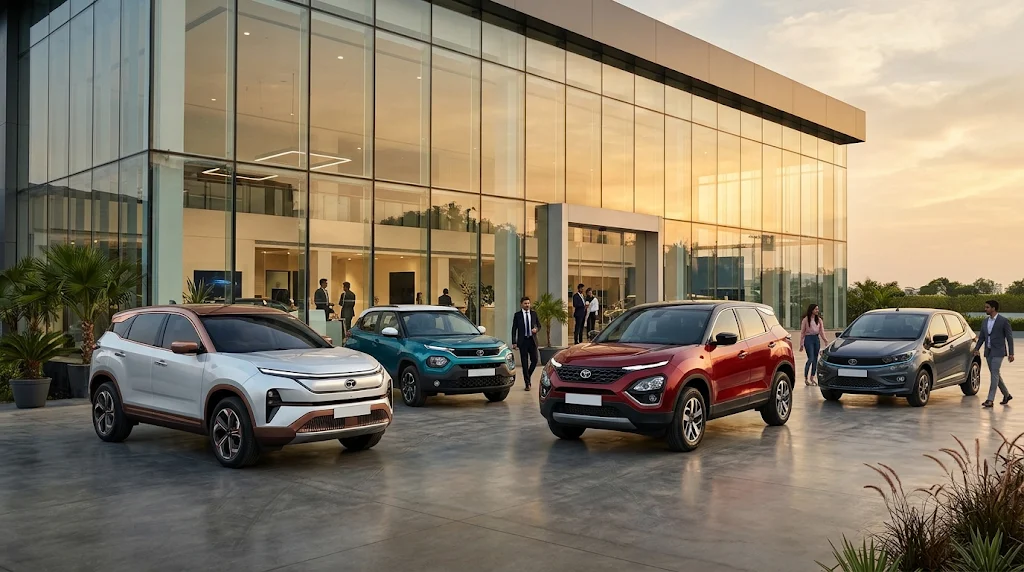
Tata Motors Passenger Vehicles has stated that it will be hiking the price of all of its vehicles including cars and SUVs.
The price rise will apply to both internal combustion engine (ICE) and electric (EV) powered vehicles. Overall, Tata is set to increase prices by an average margin of 0.5%.
Therefore, if a consumer wishes to buy a Tata vehicle from Dec 1 2026, they will now pay a little more. It will also depend on which model, specification, powertrain and specification a person is buying for the extent of the price increase as these will all be affected differently.
Reason for the price rise
Tata has cited increased costs as the reason behind the price rise. It has mentioned that production and running costs continue to be high and so the price increase is designed to help to compensate for this.
Despite this, Tata has also stated that it will continue to take on a large element of the added cost. This therefore indicates that the company is endeavouring to both maintain good value for consumers and prevent its profit margins from shrinking too much in response to heightened material, transport and production costs.
Across the industry, input costs have been a key issue. As the cost of materials, parts and transport – amongst other areas – has risen, numerous car companies have had to implement price rises at various points. Tata’s announcement follows similar moves by brands such as Maruti Suzuki, Hyundai and Audi.
Models to be affected
All of Tata’s car and SUV models will be impacted by the price rise. This includes its best-selling cars and SUVs such as the Tata Tiago, Tigor, Altroz, Punch, Nexon, Curvv, Harrier and Safari. Furthermore, Tata’s EVs will also be affected.
Both petrol/diesel and electric vehicles are included in the price rise. So, this is not just a price increase for one particular type of powertrain, but is instead applicable to all of the company’s vehicles.
Whilst Tata has yet to reveal specific new prices for each of its models and specifications, it has confirmed that, on average, there will be a 0.5% price rise. Depending on the model and specification, the percentage increase may differ.
Extent of price rise
Whilst 0.5% may not at first seem like a large price increase, for some vehicles it can add up. For example, a 0.5% increase on a car that costs, say, Rs 10 lakh would equate to an extra charge of approximately Rs 5,000. Similarly, the additional cost for a vehicle that retails for Rs 20 lakh could be around Rs 10,000.
It is also important to recognise that not all models will necessarily experience precisely the same 0.5% price increase. Tata has stated that different models and specifications will be affected to differing extents. This will depend on, for example, where a particular model sits within the Tata vehicle range and what specification it has.
The company is anticipated to reveal updated model and specification prices nearer to when the price rise will come into effect. In the meantime, consumers can still proceed with bookings for vehicles, as long as these are delivered and billed prior to Dec 1 2026.
Fourth price rise in 2026
This will be Tata’s fourth price increase in the current financial year. Indeed, Tata has already had to introduce price rises more than once this year as it continues to grapple with mounting costs.
Clearly then, car companies are still struggling with increasing costs. Although firms endeavour to shoulder as much of this extra expense as possible, it appears that, in order to continue to remain profitable, price increases are periodically required.
Consequently, for those intending to purchase a Tata vehicle soon, it may not always be most advantageous to wait for a vehicle to be priced differently. People should potentially book in for a vehicle ahead of Dec 1 2026 so as to benefit from existing, pre-price rise, pricing (dependent on dealership terms and lead-times).
Read this- Bajaj Pulsar 125 Neon to be revived
Effect on EV purchasers
It is particularly important to recognise that electric vehicles will also be impacted by the price rise. Tata is one of India’s main EV producers and currently has a range of EV models including the Tiago EV, Tigor EV, Punch EV, Nexon EV, Curvv EV and Harrier EV.
Many people opt for EVs as they can save money on vehicle running costs and avoid paying for fossil fuels. Nevertheless, vehicle pricing can also be influenced by initial outlay. Even a modest increase in ex showroom price can affect a consumer’s choice between petrol/diesel and electric vehicles.
Importantly, Tata Motors has given no indication that EVs will be treated differently in relation to the price rise. Therefore, owners of electric vehicles will also need to factor in the new pricing from Dec 1.
Action for consumers
If someone intends to purchase a Tata car, SUV or EV in the near future, they should ideally book in for a vehicle ahead of Dec 1 2026. As the price rise is applicable to all of Tata’s vehicles, consumers run the risk of paying a greater on road price if they delay their booking.
Consumers are advised to also consult their local Tata dealership in order to obtain definitive pricing information for the model and specification they are eyeing up. Furthermore, dealers can advise on current promotions, trade-in allowances, company discounts and finance options which could all contribute to helping to lower overall vehicle costs.
Industry-wide movement
Tata is not alone in implementing a price increase in response to heightened costs. Recently, Maruti Suzuki, Hyundai and Audi have either introduced or announced price rises. Thus, the Indian passenger vehicle sector is similarly experiencing this trend.
Automakers have found it increasingly challenging to hold vehicle pricing static for lengthy time-frames given persistently growing input costs. Although firms seek to minimise how much of this extra cost is transferred onto consumers, it appears that, in general, price rises are often implemented.
Tata Motors will be increasing prices for its cars and SUVs by an average margin of 0.5%. Both ICE and EV vehicles will be affected.
Consumers should ideally book in for a Tata vehicle ahead of Dec 1 2026. Although detailed model and specification pricing information has yet to be revealed, the general effect of the price rise is predicted to be relatively limited. Given that this will form Tata’s fourth price increase in 2026, the latest move emphasises the continued cost related difficulties being encountered by India’s car industry.
watch this-