
















Nissan has finally revealed the India pricing for the all-new Tekton, positioning the midsize SUV as a serious challenger in one of the most competitive segments in the country. With prices starting at ₹10.49 lakh and going up to ₹18.59 lakh, the Tekton is aimed squarely at buyers looking for a blend of bold styling, turbo-petrol performance, multiple transmission choices and premium features without stepping into a full-size SUV budget. The pricing strategy shows clearly that Nissan wants the Tekton to be accessible at the entry end while still offering rich equipment and strong performance at the top.
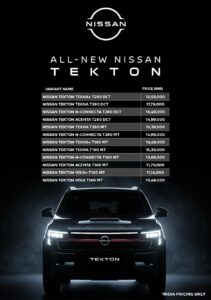
The Tekton range begins with the Visia T160 MT at ₹10.49 lakh and the Visia+ T160 MT at ₹11.14 lakh, both using the 1.6-litre T160 turbo-petrol engine with manual transmission. Moving up the ladder, the Acenta T160 MT is priced at ₹11.79 lakh, while the N-Connecta T160 MT comes in at ₹13.69 lakh. For buyers wanting more power and features, Nissan also offers the T280 engine, beginning with the N-Connecta T280 MT at ₹14.99 lakh and extending to the Acenta T280 DCT at ₹14.99 lakh, the N-Connecta T280 DCT at ₹16.49 lakh, the Tekna T280 MT at ₹16.39 lakh, the Tekna T280 DCT at ₹17.79 lakh and the range-topping Tekna+ T280 DCT at ₹18.59 lakh.
Powertrains and Positioning
Nissan is launching the Tekton with two turbo-petrol engine choices rather than a hybrid, which is a key point of differentiation from the Renault Duster. The image you shared from the launch event shows the T160 powertrain making 100 ps and 166 Nm, paired with a 6-speed manual gearbox and a claimed 19.4 kmpl efficiency. It also shows the T280 version producing 163 ps and 280 Nm, offered with a 6-speed manual or 6-speed wet DCT, with fuel efficiency figures of 17.8 kmpl and 18.5 kmpl respectively.
This engine lineup gives Nissan a clear two-tier strategy. The T160 variants are likely aimed at value-conscious buyers who want a turbocharged SUV with decent performance and a lower entry price, while the T280 variants target buyers looking for stronger acceleration, more premium equipment and automatic convenience. By contrast, Renault is expected to keep the Duster’s strong-hybrid powertrain for itself, using electrified tech as a brand differentiator in the same family of products.
Autocar India reports that the Tekton will miss out on the Duster’s strong-hybrid setup because Renault is retaining exclusive use of that powertrain for the Duster in India. This is significant because hybrid technology could have given Nissan a stronger efficiency and emissions story in a segment that is becoming increasingly competitive. Instead, Nissan appears to be relying on price, styling and petrol turbo performance to carve out its own space in the market.
The strategy also reflects the changed dynamics of the Renault-Nissan alliance in India. Renault has taken a more central role in local product development after buying out Nissan’s stake in the manufacturing joint venture, which means Nissan is now more dependent on Renault-origin platforms and technologies. That relationship has made powertrain allocation more important than ever, and the Tekton’s omission of a strong hybrid is one result of this realignment.
Market Strategy and Competition
The pricing places the Tekton in direct conflict with compact and midsize SUVs that dominate India’s urban and semi-urban market. The base price below ₹11 lakh makes it competitive against lower variants of rivals, while the top-end ₹18.59 lakh DCT trim pushes into territory occupied by better-equipped midsize SUVs. Nissan is clearly betting that buyers will respond to its design, feature set and powertrain variety, even without a hybrid option.
The SUV is expected to appeal to customers who want a premium-feeling car but may not be ready to pay hybrid pricing. Nissan’s launch approach also suggests that it wants the Tekton to act as a halo product that refreshes the brand’s image in India, especially after years of relatively limited success beyond the Magnite. If the Tekton is priced right on-road and backed by good dealer support, it could help Nissan regain some relevance in the midsize SUV segment.
Design and Features
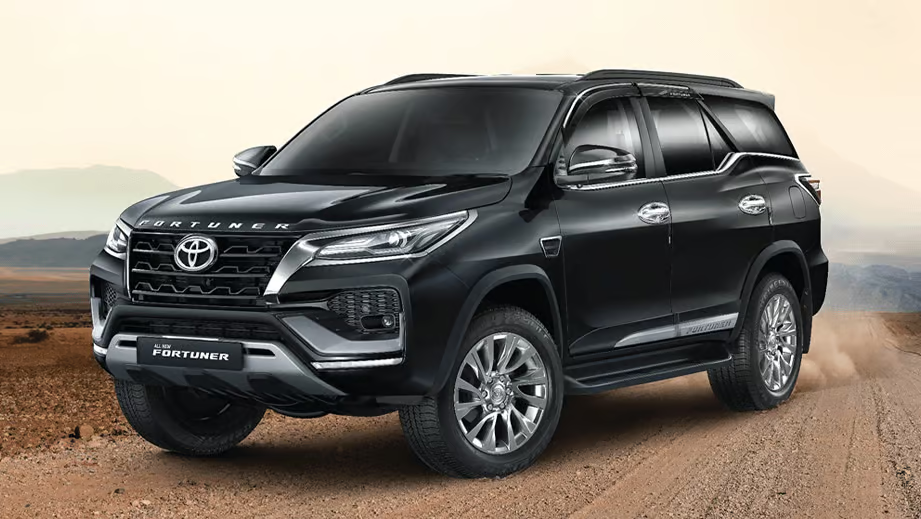
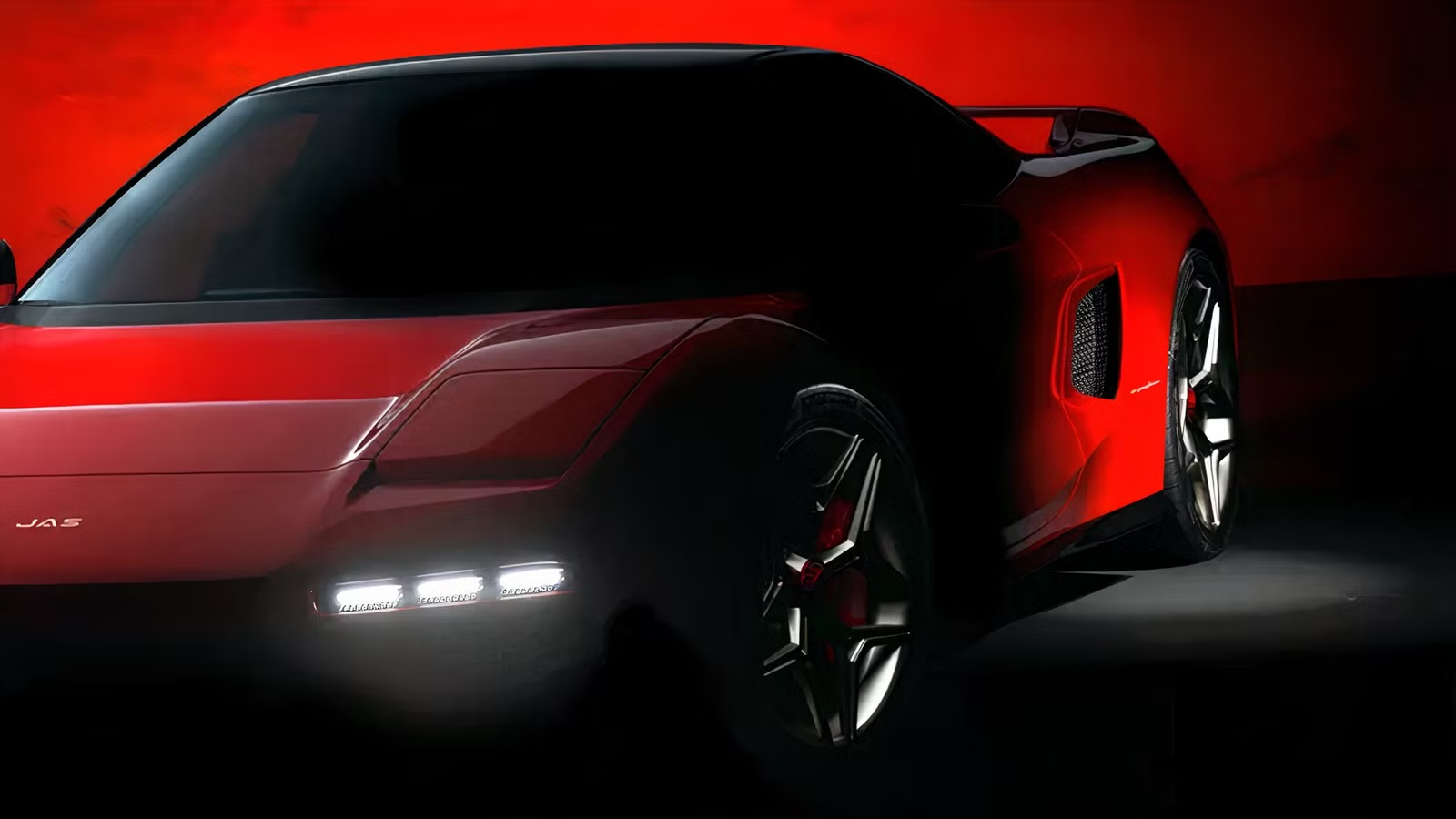
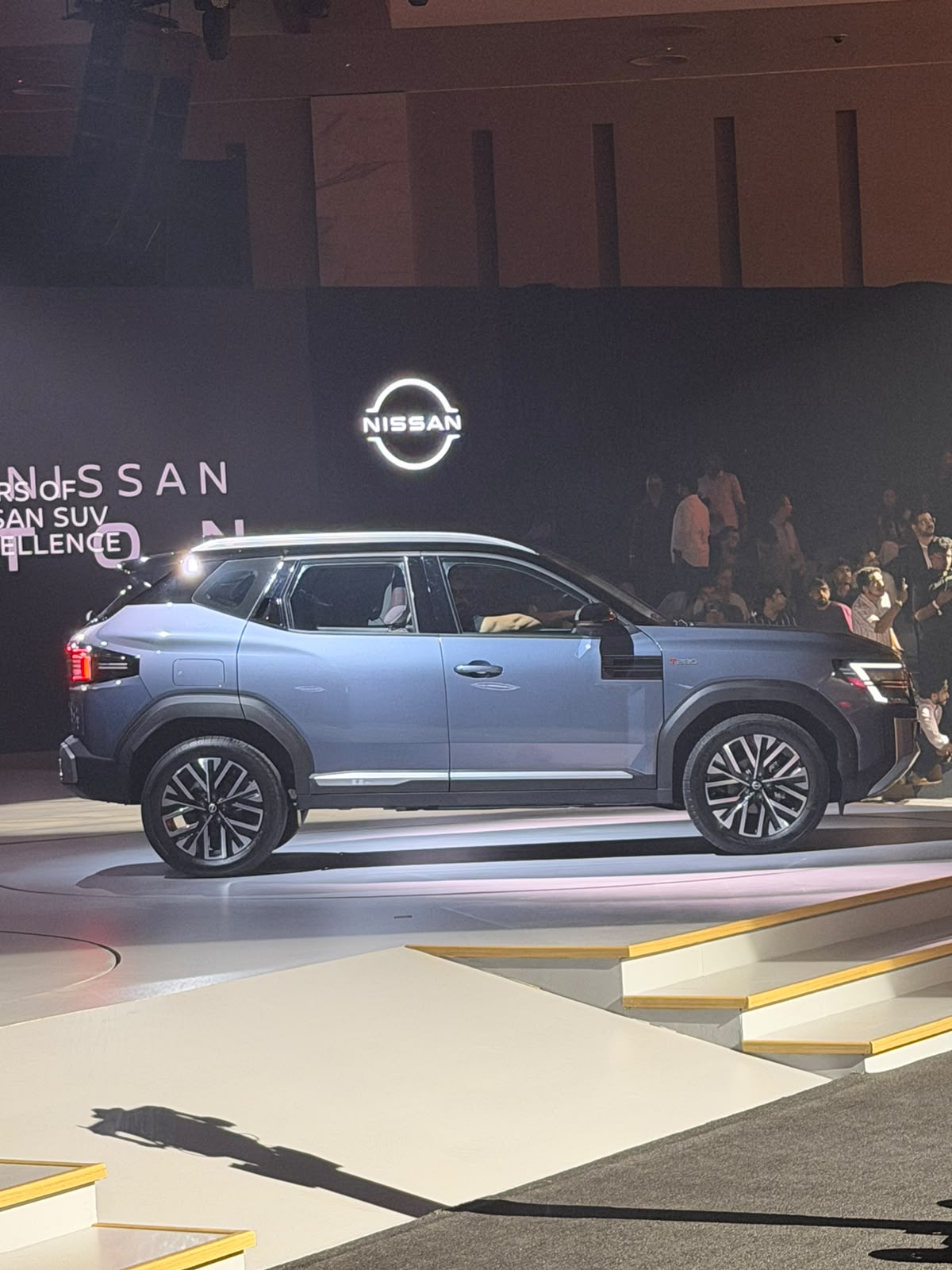
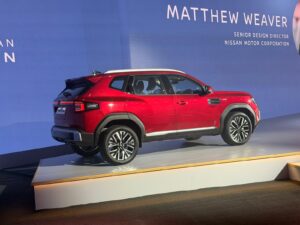
From the launch image, the Tekton appears to have a muscular, upright stance with strong shoulder lines and a bold front fascia. The illuminated Nissan badge and sharp lighting signature give it a more premium, concept-like presence, which Nissan will likely use to differentiate it from its sibling products. Even though the company has not yet detailed every feature in this discussion, the visual presentation indicates that Nissan is aiming for a more aspirational and modern SUV identity.
That matters because the midsize SUV market in India is no longer won by engine specifications alone. Buyers are looking for connected features, safety tech, automatic options, strong road presence and brand confidence. Nissan seems to understand this, and the Tekton’s split between T160 and T280 variants gives the company flexibility to cover both mass-market and more premium buyers.
The Nissan Tekton’s pricing and powertrain strategy show a carefully calculated attempt to enter the midsize SUV fight with competitive value and enough variety to attract different buyer groups. But the absence of Renault’s strong-hybrid system means Nissan must depend on turbo-petrol performance, smart packaging and aggressive pricing to stand out.