
























TVS Motor Company has announced a strategic partnership with Indian Oil Corporation Limited to modernise last-mile LPG cylinder delivery across India through cleaner and more efficient commercial mobility solutions. The collaboration will use TVS King Kargo HD vehicles for doorstep LPG deliveries, marking an important step toward reducing emissions, improving logistics efficiency and lowering the operating costs of distributors. At a time when businesses across sectors are under pressure to become more sustainable, this alliance shows how two trusted Indian brands can work together to reshape everyday commercial transport.
The partnership is significant because it connects TVS Motor’s experience in commercial mobility with IndianOil’s vast distribution network. IndianOil works with more than 13,000 LPG distributors across the country, which means the potential reach of this initiative is large from the start. By deploying TVS King Kargo HD vehicles for cylinder transport, the companies aim to improve the speed and efficiency of last-mile supply while also making distribution cleaner. This is especially relevant in a segment like LPG delivery, where repeated short-haul trips, dense urban routes and constant stop-start usage create high fuel consumption and operational costs.
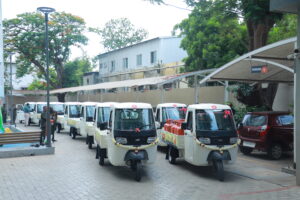
For IndianOil distributors, one of the biggest benefits of the TVS King Kargo HD platform is expected to be lower total cost of ownership. In commercial mobility, the total cost of ownership includes purchase price, fuel or energy cost, maintenance, uptime and resale value. If a vehicle can reduce fuel use, improve load-carrying efficiency and cut maintenance interruptions, it becomes financially attractive over time even if the upfront cost is higher. The companies say the deployment of this platform will help distributors run more efficiently while supporting greener operations, which is a practical combination of economics and sustainability.
The collaboration also fits into India’s broader green mobility push. The government has been encouraging cleaner transport options across logistics, public movement and freight delivery, and last-mile distribution is a particularly important area for improvement. Commercial vehicles are a major source of emissions in cities and industrial zones, especially when older vehicles are used for frequent local delivery. Shifting a large and essential service like LPG cylinder distribution toward more efficient vehicles can therefore create a measurable environmental impact while also improving service quality.
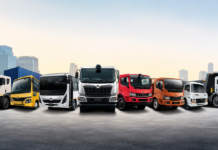
TVS Motor has positioned the King Kargo HD platform as a purpose-built solution for commercial applications, with features designed to support heavy-duty, high-frequency delivery work. The company says the platform combines superior power with advanced technology and offers segment-first as well as best-in-class features. That is important because last-mile cargo vehicles need more than just low operating cost. They also need strong load capacity, durability, driver comfort, braking confidence, route flexibility and the ability to withstand repeated use in challenging conditions. For LPG distribution specifically, these factors matter even more because the vehicle has to move safely through mixed traffic while carrying heavy cylinders on fixed routes.
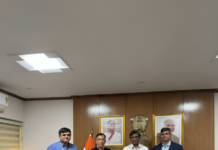
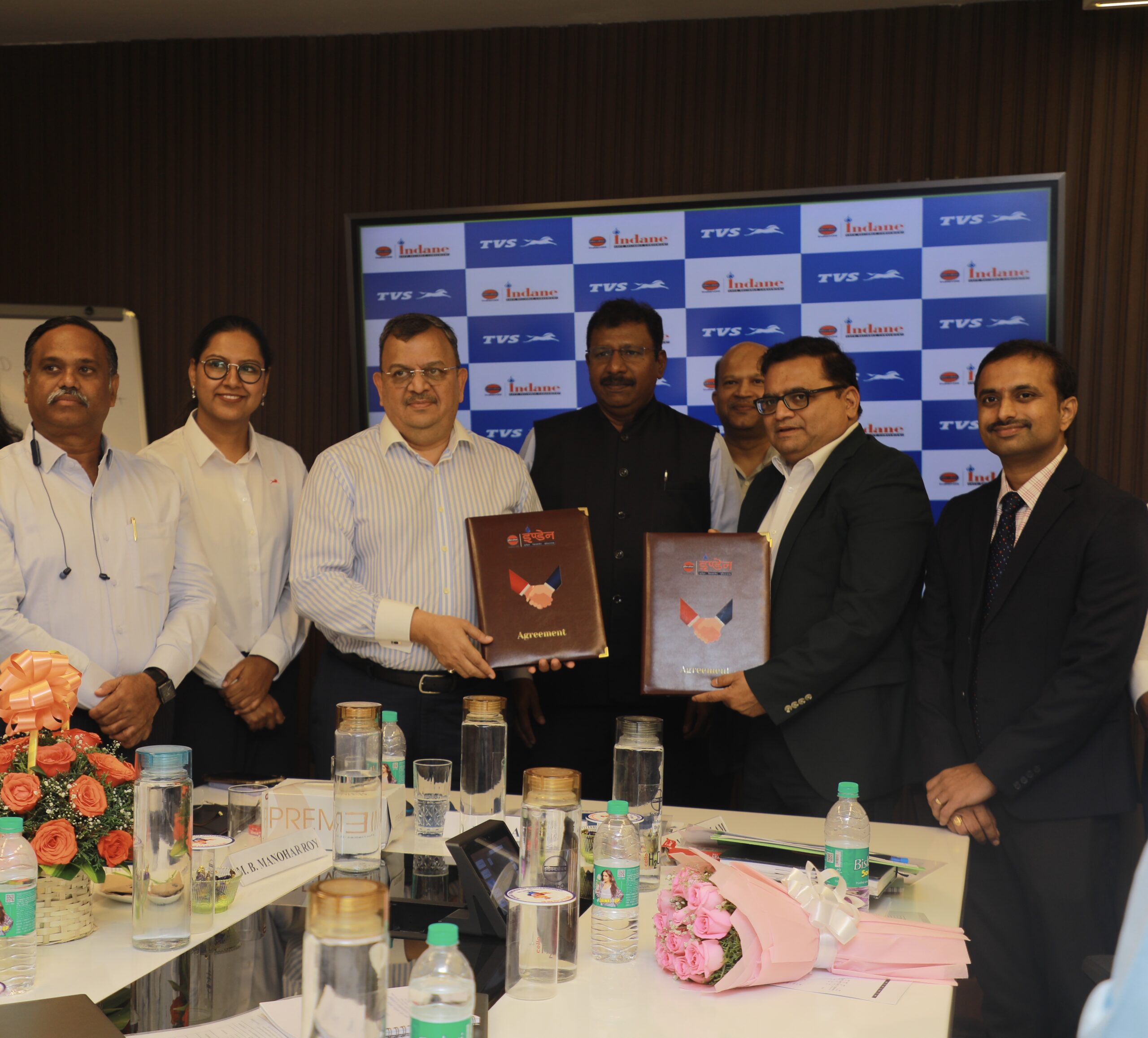
The Memorandum of Understanding was signed in Coimbatore by senior leadership from both organisations, signalling that this is not just a short-term pilot but the beginning of a long-term partnership. The first phase will involve vehicle deliveries to IndianOil distributors, which will allow the two companies to begin testing the model in real operating conditions. If the rollout performs well, the initiative could expand more broadly across IndianOil’s distribution ecosystem. That would make this one of the more meaningful examples of a public-private collaboration in commercial electrification and sustainable logistics.
From TVS Motor’s perspective, this partnership is also a strong validation of its growing commercial mobility business. The company has been building solutions not only for passenger and personal transport but also for business use cases where reliability and cost efficiency are critical. By working with IndianOil, TVS can showcase the relevance of its King Kargo HD range in a high-volume, mission-critical logistics segment. That helps the brand position itself as a serious player in the wider clean commercial mobility market, not just as a manufacturer of two- and three-wheelers for consumers.
For IndianOil, the agreement supports its role as an energy company that is also adapting to new logistics realities. As customer expectations evolve and environmental goals become more urgent, distribution networks must modernise just like the products they deliver. Cleaner delivery vehicles can contribute to lower carbon emissions, better operational discipline and a more future-ready brand image. In a segment as essential as LPG, where timely home delivery has a direct impact on millions of households, even small improvements in fleet productivity and fuel efficiency can create wide benefits.
The broader significance of this partnership lies in what it represents for India’s mobility transition. Sustainability is often discussed in terms of electric cars or premium EVs, but the real transformation will also come from commercial vehicles doing the daily work of cities and towns. LPG delivery, grocery logistics, courier services and small cargo movement are all areas where new mobility solutions can have an immediate and practical effect. TVS Motor and IndianOil are showing that greener logistics does not have to be theoretical or distant. It can begin with a vehicle, a distribution network and a shared commitment to better efficiency.
In the months ahead, the success of the initiative will depend on real-world performance, distributor acceptance and operating economics. If the TVS King Kargo HD proves reliable and cost-effective, the model could inspire similar partnerships across other sectors of logistics and energy delivery. For now, the MoU stands as a strong example of how industrial collaboration can support both business efficiency and India’s clean mobility vision at the same time.