















BMW Motorrad has filed a design patent in India for its futuristic Vision CE electric two-wheeler concept, and it could change the way people think about city scooters.
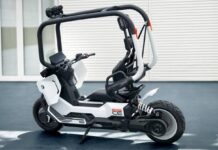
The Vision CE can balance on two wheels when stationary, so the rider does not need to put a foot down at traffic signals or use the side stand when the system is in operation.
What Is The BMW Vision CE?
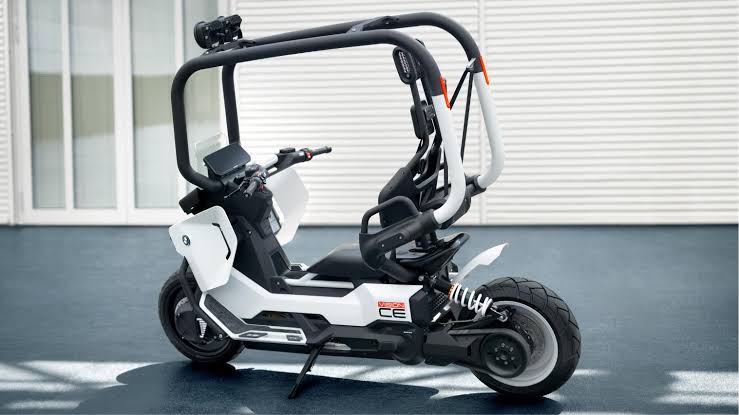
The Vision CE is a radical electric scooter concept that was first presented by BMW Motorrad at EICMA 2025. Unlike a standard scooter it combines self-balancing technology with a protective safety cage and a four-point seatbelt, as well as a car-like seating position.
BMW’s latest move to apply for a design patent in India suggests that the company is at least studying India as a potential market for this unconventional concept. However, the filing of a design patent does not confirm an India launch, production plan or commercial interest.
Self-Balancing: The Star Feature
The Vision CE’s star feature is also its biggest departure from what people currently know as a two-wheeler. BMW explains the system allows the scooter to constantly hold its vertical position and even stand independently on two wheels when the balancing system is turned off.
The technology is likely to use sensors, electronic control systems and electric actuators to monitor the leaning angle and make adjustments to keep the rider upright. In practice this could reduce the fatigue typically associated with stop-and-go city riding, particularly at traffic signals, toll booths and junctions.
The Vision CE also comes with a conventional stand, which may help to release the self-balancing system when the scooter is parked for long periods of time, thus saving battery power.
A Scooter With Car-Like Safety
The radical two-wheeler concept does not resemble a conventional scooter because BMW has invested in protection as its primary safety measure and incorporated elements that are usually associated with cars in a two-wheeler frame. The Vision CE concept boasts a protective safety cage around the rider as well as a four-point seatbelt, in order to hold the occupant in place during impact.
While the approach is similar to a microcar it is more likely that BMW is seeking to combine the agility and space of a scooter with the occupant-protection benefits of a car. However, the concept’s “no helmet needed” pitch should not be confused with a recommendation for the Indian roads, where safety measures and road conditions are regulated by law and cannot be ignored.
Design That Breaks The Rules
With a long wheelbase, low roof, and large disc-style wheels the Vision CE has a stretched out, futuristic shape that is completely different from anything in the current BMW two-wheeler line-up or indeed any Indian scooter. The enclosed bodywork, upright seating and protective frame make the concept look more like a two-wheeler version of a city pod, and it is this design that BMW wants to protect with a design patent in India.
Read this- TOYOTA FORTUNER’S NEXT GENERATION IS COMING
What The India Patent Means
A design patent protects the unique visual appearance of a product and BMW filing one in India suggests that the company wants to secure the Vision CE’s distinctive design in one of the world’s largest two-wheeler markets. It does not necessarily mean that BMW will launch the Vision CE here and patents are often filed years before – or without – any production decision for experimental concepts. But its filings in India suggest that the company clearly wants to explore the opportunity for a two-wheeler future mobility product in India.
Could It Work In India?
India’s traffic conditions make it a viable candidate for the Vision CE’s self-balancing technology, but on the other hand the concept’s size, complexity, cost and safety approval process might make it difficult to position it as a mainstream scooter. The Indian market is known for its price-sensitive buyers and a premium self-balancing EV with a safety cage will remain a niche product if it does reach production.
What BMW Has Not Revealed
BMW has not revealed any technical details about the self-balancing system, including the type of sensors, actuators, operating speed limits or power consumption. It has also not announced any production timeline, launch market or price. While the Vision CE still remains a concept, the filing of a design patent in India shows that they are serious enough about the product to want to protect its design and create new opportunities for two-wheeler mobility.
The BMW Vision CE is not just another electric scooter. It is also a glimpse of the future of urban two-wheeler travel when self-balancing technology, car-like protection and electric power are combined. If BMW ever turns it into a production model it could be one of the most futuristic two-wheelers ever offered in India.
Watch this-