































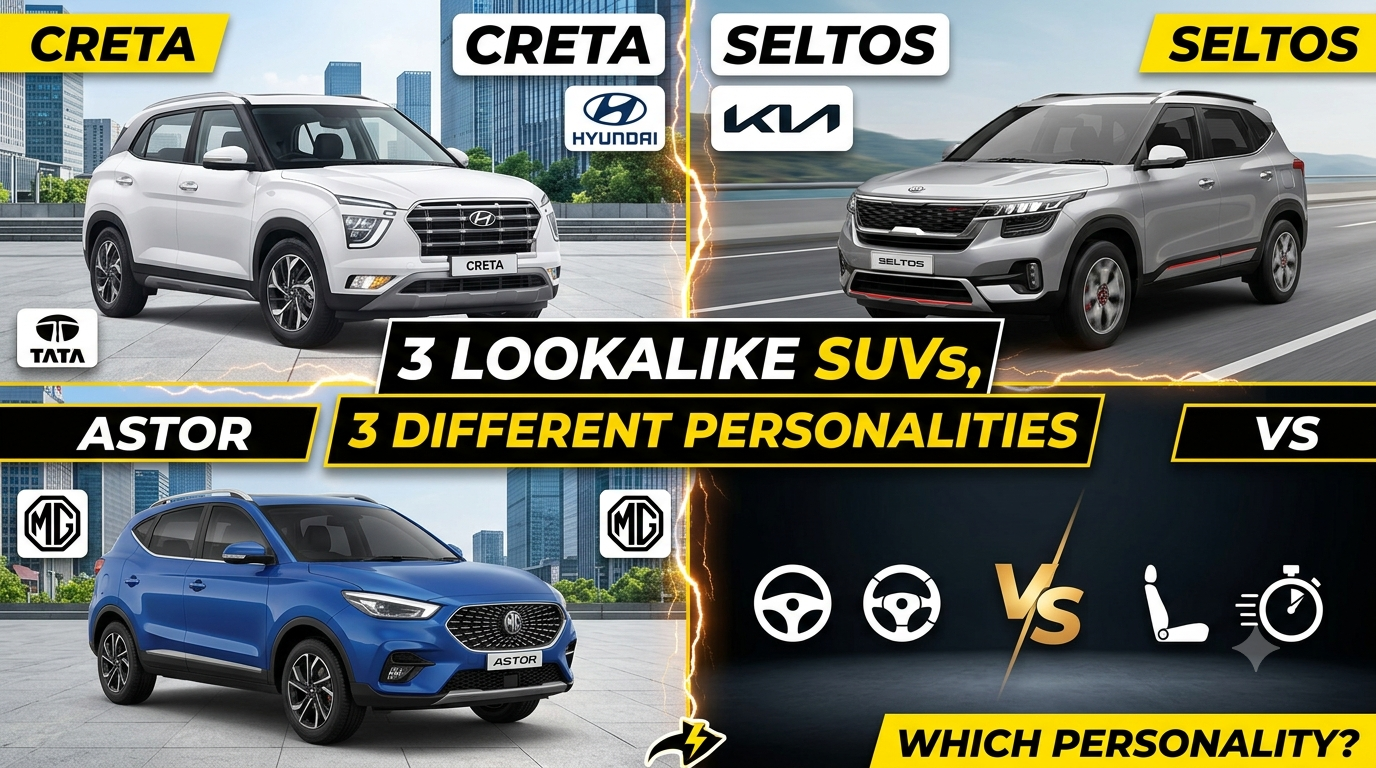
From a distance, the Hyundai Creta, Kia Seltos and MG Astor can easily be mistaken for one another. All three are mid-size SUVs with bold styling, similar footprints and overlapping price bands. Many buyers short-list them together, thinking they are essentially the same type of car with different badges. But once you look beyond the design and segment, you realise these three SUVs have very different personalities, strengths and priorities.
The Creta plays the role of the safe, well-rounded family favourite. The Seltos positions itself as the sportier, more tech-forward sibling. The Astor arrives as the stylish outsider with a focus on rich interiors and connected technology. That makes them perfect candidates for an article about cars that look similar, yet feel totally different when you live with them.
Design and first impressions
Visually, all three SUVs follow the same broad formula: strong road presence, elevated stance and modern detailing. The Hyundai Creta wears a more mature, family-friendly design language. It is bold, but not aggressive, and appeals to buyers who want a contemporary look that will age well. The latest generation accentuates width and uses distinctive lighting signatures, giving it a confident but approachable presence.
The Kia Seltos, although similar in size, goes harder on the sportiness and sharpness. Its design lines are crisper, the grille treatment more assertive and the overall stance more athletic. Younger buyers and those who enjoy a more dynamic aesthetic often gravitate towards the Seltos for this reason. Even small touches like alloy designs and dual-tone options help underline its slightly more extroverted character.
MG Astor, meanwhile, leans heavily into a premium, almost European-inspired style. The chrome usage, intricate grille pattern and sleek headlamp detailing aim to position it as the “classy” option in this trio. It may not be as instantly recognisable as the Creta or Seltos yet, but it tries to differentiate itself through sophistication rather than just boldness.
From the outside, then, these three SUVs look like variations on the same theme. But once you step inside, the differences start to become more obvious.
Cabin feel and everyday comfort
Inside, the Creta focuses on practicality and comfort. The layout is straightforward, visibility is good and seating is tuned for relaxed daily use. Hyundai typically balances feature count with usability quite well, so the Creta’s cabin tends to feel intuitive and family-friendly. Rear-seat comfort is a strong point, especially for buyers who often travel with parents or children.
The Seltos takes a slightly different approach. Its cabin design feels more driver-centric, with a stronger emphasis on sporty styling and integrated screens. While it still offers good space, it positions itself as a more engaging place to sit, especially in higher variants with rich feature packs. Buyers who value a sense of “being in command” may find the Seltos cabin more appealing than the Creta’s calmer layout.
MG Astor aims to impress with materials and ambience. It often features soft-touch surfaces, contrasting colour schemes and a more lounge-like feel. The focus is on making the cabin feel richer, putting an emphasis on perceived luxury and design finesse. For someone who judges a car heavily by how its interior makes them feel, the Astor can stand out, even if its brand is relatively newer in the segment.
On comfort, all three can handle daily commutes and long drives, but their flavour differs. Creta feels like the dependable all-rounder, Seltos feels more energetic and Astor feels more premium-focused.
Technology and features
This is another area where similarities mask deeper differences. All three SUVs offer touchscreen infotainment, connected car tech, multiple driving modes in some variants, and a long list of convenience features. But their technology emphasis varies.
Hyundai’s Creta tends to prioritise a balance of important features and ease of use. The tech is there to make life easier rather than to overwhelm. The Seltos, by contrast, often pushes more aggressively into the feature race, with a strong focus on screen integration, ambient lighting and driving aids that appeal to tech-savvy buyers.
MG Astor goes a step further by marketing itself as a “connected” SUV built around AI-enabled features and advanced driver-assistance systems in select variants. Voice interaction, digital assistants and more sophisticated safety tech play a larger role in its brand story. For buyers interested in feeling like they are driving a more futuristic car, Astor tries to claim that space.
So while the brochure lists might look broadly similar, the way each brand uses technology to build its personality is different: Creta as the sensible tech user, Seltos as the stylish tech enthusiast, and Astor as the connected-tech champion.
Driving character and ownership feel
Under the skin, engine and gearbox choices overlap in type, but on the road, the character diverges. The Creta typically aims for a balanced ride and handling package, keeping comfort and ease of driving at the forefront. It suits family owners who want a calm car that feels predictable and friendly in the city and stable on highways.
The Seltos is usually tuned to feel a bit more engaging. Steering feel, suspension setup and power delivery often lean towards a slightly sportier experience, particularly in certain engine variants. Buyers who enjoy driving and like a more responsive car often feel more at home in the Seltos.
MG Astor’s driving feel tends to reflect its premium intent. It focuses on refinement and composure, trying to deliver a more “solid” feel. While it may not chase outright sportiness as aggressively as the Seltos, it aims to feel sophisticated and comfortable, in line with its interior and tech positioning.
In ownership terms, brand networks and resale perceptions also differ. Hyundai and Kia have established, wide service networks and strong resale expectations. MG is still building its long-term image, and some buyers see it as a bit more niche, which can be a plus for those who like owning something not everyone has.
Same segment, different personalities
Taken together, the Hyundai Creta, Kia Seltos and MG Astor show how three cars can look similar and compete in the same segment, yet feel very different once you factor in design philosophy, cabin experience, technology focus and driving character.
For a buyer, this means the real decision should not be “which mid-size SUV is cheapest” but “which mid-size SUV’s personality matches my own and my family’s needs”. The Creta suits those wanting a safe, balanced family choice. The Seltos suits buyers who want style and a more engaging drive. The Astor suits those who prioritise a richer cabin and connected tech.
That contrast is exactly what makes them an interesting comparison topic: three cars that seem alike from the outside, but tell three completely different stories once you get to know them.