


























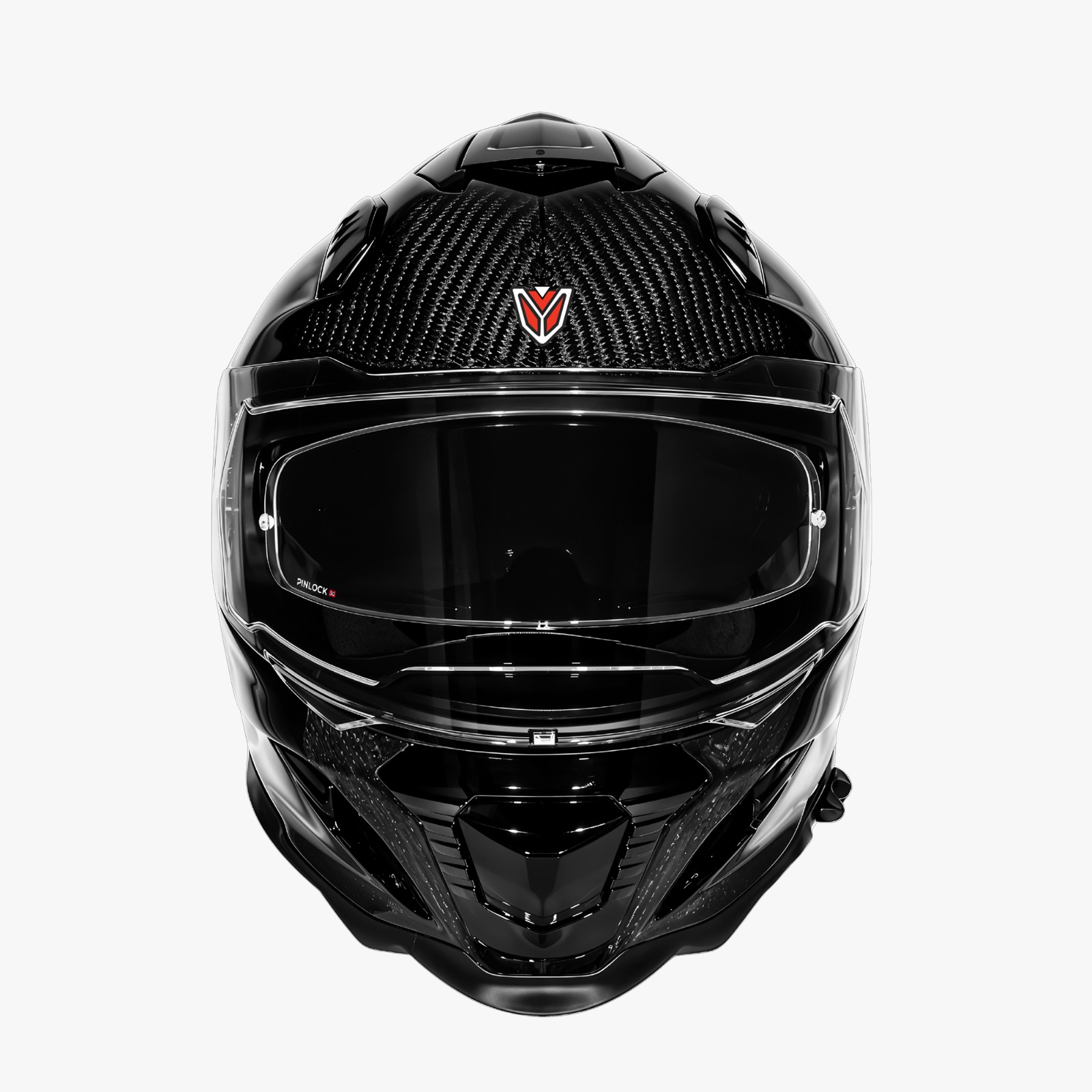
Steelbird Hi-Tech India Ltd has announced a major expansion of its manufacturing footprint with a new helmet plant coming up in Baddi, Himachal Pradesh. With this seventh manufacturing facility, the company is setting its sights on producing 2.5 crore helmets annually by 2032, further consolidating its position as India’s leading helmet maker and one of the largest in the world.
The new plant, for which the Bhumi Pujan has been performed, will be developed on a 22-acre integrated campus, equivalent to about 9.58 lakh square feet of land. Once fully built, the site will house close to 15 lakh square feet of manufacturing space. When operations commence at full scale, the facility will add capacity for 1 crore helmets a year. This will take Steelbird’s total installed capacity from the current 1.5 crore units annually to 2.5 crore units by 2032, creating one of the largest integrated helmet manufacturing ecosystems globally.
This expansion is not an isolated move, but part of a broader manufacturing strategy. Steelbird already operates six plants in Baddi and three highly automated production facilities in Noida. These are supported by a technology-driven corporate office in Janakpuri, New Delhi, an e-commerce hub in Panchkula, and an international operations office in Italy. Together, these assets give the company a strong base across design, manufacturing, distribution and global business development.
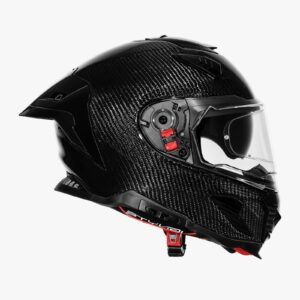
One of Steelbird’s key differentiators is the depth of its in-house manufacturing. Rather than relying heavily on external suppliers for critical components, the company designs and manufactures almost all major parts of its helmets under its own roof. This includes the outer shells, EPS liners, visors, visor films, buckles, interior padding, decals, retention systems and even packaging. By controlling such a large portion of the value chain, Steelbird is able to closely manage quality, safety, consistency and product performance, which is especially important in a category where reliability is directly linked to rider safety.
The new Baddi facility will also play an important role in Steelbird’s material technology ambitions. As part of the expansion, the company plans to set up dedicated manufacturing capacities for advanced energy management materials such as Expanded Polypropylene (EPP) and Expanded Thermoplastic Polyurethane (E-TPU). These materials are increasingly used in safety-critical applications because they offer better energy absorption, resilience and weight optimisation. For helmets, this means the possibility of lighter shells with improved impact protection and enhanced comfort for the wearer. By bringing these technologies in-house, Steelbird is aiming to stay ahead in the development of next-generation protective gear.
Innovation has been central to Steelbird’s growth philosophy, and the company’s approach to product development reflects that. Every year, it introduces more than ten new helmet models. Each of these products typically goes through an 18 to 24 month development cycle, covering concept, design, engineering, tooling, prototype creation, testing and homologation. Depending on complexity and technology, Steelbird invests between ₹1.5 crore and ₹5 crore in each new model. This level of investment indicates the company’s focus on long-term technical capability rather than incremental cosmetic changes.
Steelbird has already outlined its product roadmap for the next five years. Upcoming launches are expected to include premium helmets, smart helmets with integrated Bluetooth communication, models with built-in lighting systems for better visibility, advanced composite helmets and products certified to multiple global safety standards. This roadmap shows that the company is not only targeting volume growth, but also a move up the value chain towards more feature-rich, technologically advanced offerings that can appeal to both domestic and international customers.
Commenting on the expansion, Rajeev Kapur, Managing Director of Steelbird Hi-Tech India Ltd, said that the new plant is much more than a capacity addition. He described it as a reflection of the company’s long-term commitment to making world-class rider safety products in India for both local and global markets. In his view, the seventh facility represents Steelbird’s vision for the future, where innovation, technology and manufacturing excellence converge to deliver helmets that are safer, lighter and more advanced.
Kapur also pointed out that demand for certified protective gear is rising steadily, both within India and abroad. As more countries tighten safety regulations and more riders become aware of the importance of quality helmets, the need for reliable, standards-compliant products grows. Steelbird’s investment in expanded capacity and new technologies is intended to prepare the company for that demand curve, positioning India as a strong manufacturing base for helmet exports.
With this expansion, Steelbird is also aligning with broader national priorities such as self-reliant manufacturing and road safety. By deepening its local production capabilities, adding advanced material processing and building globally competitive facilities, the company is contributing to the vision of India as a hub for high-quality, safety-critical manufacturing. At the same time, by increasing the availability and range of certified helmets, it is helping make better rider protection more accessible to a wider population.
Steelbird’s journey since its founding in 1964 has been marked by steady scale-up and a constant emphasis on safety. Over more than six decades, it has grown into one of the world’s largest helmet producers, with a current annual capacity of more than 1.5 crore units, a pan-India dealer network and a growing international presence. The upcoming seventh plant in Baddi is set to push that capacity to 2.5 crore helmets a year by 2032. If executed as planned, this expansion will not only cement Steelbird’s leadership in India, but also strengthen its role in supplying world-class rider protection solutions to markets across the globe.