







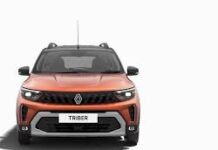



















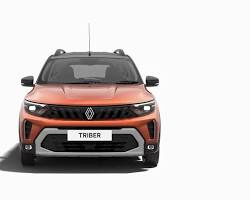
The Renault Triber has always been the best value buy in the Indian 7-seater segment, with its large interiors and modular seats at a price lower than most of its competitors.
However, it’s biggest weakness was the underpowered 1.0-litre naturally aspirated engine, which failed to propel the seven-seat family hauler at an acceptable pace, especially carrying more than two people. That has now changed with the launch of the Triber Turbo, which has been fitted with a more powerful turbo-petrol engine. But does this solve all the Triber’s problems, or are there new compromising to be made? Here are three reasons to buy the Triber Turbo and three reasons not to.
The single biggest reason to consider the Triber Turbo is obvious – the new 1.0-litre 3-cylinder turbo-petrol engine. The old Naturally-aspirated 72PS engine felt underpowered when carrying a family of 5 or 7. The new engine, produces 100PS and 180Nm of torque, which is a 39% increase in torque over the non-turbo petrol engine, providing ample power to haul up hills with the vehicle’s entire seating capacity, as well as on highways. The engine also feels more responsive to accelerate in day-to-day driving, and should be able to sprint to 100km/h in around 10.8 seconds. The increased power makes the vehicle feel less stressful to drive with a full family, giving it more credibility as a family hauler.

Reason 2 to Buy: Spacious Interiors
The Triber Turbo is fitted with the exact same body as the non-turbo variants of the Triber. This means that the improvements in performance don’t come at the cost of space, which is the car’s primary USP. Thanks to the modular X-seat system, the Triber can provide over 100 seating configurations, including folding the middle row to flat and removing the 3rd row completely. Furthermore, the 3rd row can be folded down to provide massive storage space, even with all 7 seats up, something that no competitor can match in the under-10 Lakh segment.
Reason 3 to Buy: Comprehensive Safety and Features
Renault has equipped the Triber Turbo with the best features on offer. The Emotion Turbo variant has a bevy of features not seen on other cars in this segment, including an 8-inch touchscreen with wireless Android Auto and Apple Car Play, a 7-inch digital cluster, dual airbags with rear AC vents, a wireless phone charger and cruise control. The safety equipment is also comprehensive, with 6 airbags, ABS with EBD, ESC, Hill Start Assist and Tyre Pressure Monitoring System all coming standard on the turbo variants, helping to justify it’s premium price.
Reason 1 Not to Buy: No Automatic Transmission
The biggest letdown of the Triber Turbo is that as of now, the turbo engine is only available with a 5-speed manual gearbox. While Renault has announced that a CVT automatic variant is in the pipeline, it is not available at launch. In a segment where other competitors like the Maruti Suzuki Ertiga offers a mild-hybrid automatic option, and the Citroen C3 Aircross will also arrive with an automatic, the Triber Turbo manual might put off some buyers considering the Triber as their family hauler.
If you are buying the Triber as a family hauler with your parents or elders, chances are they’ll want the convenience of an automatic gearbox. However, the Triber Turbo is not available with one unless you are willing to wait for the CVT automatic to arrive in a couple of months. Furthermore, the manual gearbox of the Triber Turbo is likely to be heavier and slower than the AMT (Automated Manual) gearbox of the older non-turbo Triber.
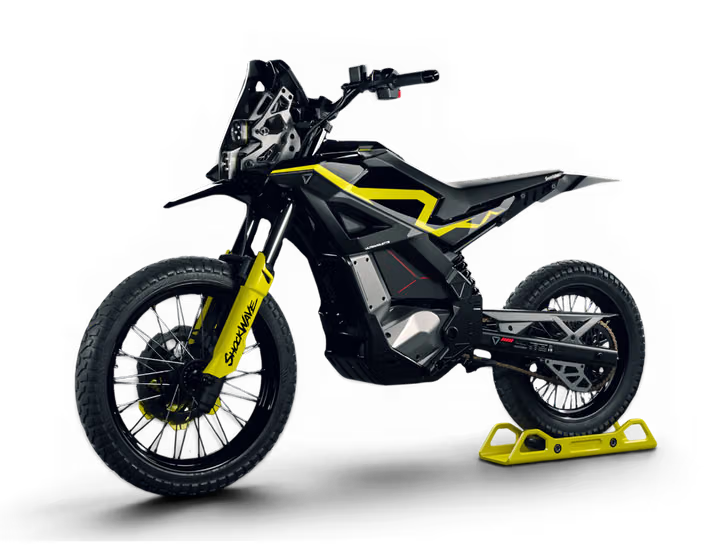
Read this- Ultraviolette Shockwave: India’s 100V Electric Trail Bike Is Coming to Shake Up 2027
Reason 2 Not to Buy: Underwhelming Ride and NVH
In an effort to keep costs down, Renault has kept the same chassis and suspension as the non-turbo variants of the Triber, which provides a mixed bag of a ride. While the suspension offers a degree of comfort at low speeds, it becomes crashy on bad roads and bumpy highways. The Triber’s body is also very prone to roll at higher speeds in bends, due to the high centre of gravity of the vehicle. Furthermore, the car’s inherent noise, vibration and harshness (NVH) levels are not at the same level as its competitors like the Toyota Innova Hycross or Maruti XL6, which limits its appeal as a premium family hauler.
Reason 3 Not to Buy: Premium Pricing
The Triber Turbo’s starting price is ₹7.84 Lakh, which is close to ₹1 Lakh more than the non-turbo variants. The top variant is priced at nearly ₹9 Lakh ex-showroom, which is right at the premium end of the 7-seater segment. In fact, at this price you could consider buying a 5-seater compact SUV like the Maruti Brezza or Hyundai Venue, which offers similar performance and is more practical in terms of resale value and brand image. There are also 5-seater alternatives like the Mahindra XUV300 and Tata Punch which offer automatic transmission variants, which is something the Triber Turbo won’t be able to offer at launch. Furthermore, in comparison to the non-turbo Triber AMT (Automated Manual) model, the turbocharged manual version may not represent value for money for some buyers.
The Triber Turbo represents an improvement over the standard Triber, with its more powerful engine. However, if you need a true 7-seater on a budget, it is arguably the best value car on offer. However, unless you’re willing to wait for the CVT automatic and accept the high price of the top-spec Turbo, there are several reasons why the Triber Turbo might not be for you. It is a great car for the right buyer, but this buyer must be prepared to shift gears.
Watch this-