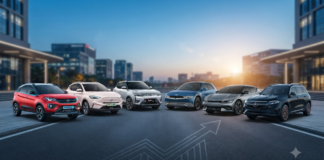






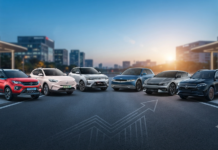

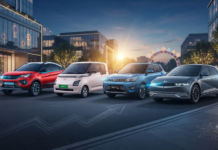














Electric vehicles (EVs) in India have performed strongly during the festive period, with sales up 69% year-on-year.
During this 32 day period, 40,122 EVs were sold. Petrol, diesel and CNG cars all dropped in sales. Overall, EV sales in India are on course for a record year, with Tata Motors and Mahindra accounting for almost 80% of all electric car sales.
Festive Period Sales
Across the automotive industry, the sales period between Navratri to Bhaidooj is very significant. Typically, 10-11% of the total annual industry sales occur during this time.
Within this period, EV sales increased significantly at 69%, increasing to 40,122 units, compared to 23,740 units last year. By contrast, passenger vehicle sales were down 7.2% in overall numbers during the festive period. 626,000 EVs were sold in 2025, compared to 581,000 units in 2026.
The drop in sales from internal combustion engine (ICE) vehicles can be attributed partly to an exceptionally busy festive period last year. Many customers had put off their purchase until the reduction in GST came into place. As a result, many people bought cars at the start of Navratri, therefore inflating sales in 2025.
Internal Combustion Engine (ICE) Drop
Petrol car sales had the largest drop in this period, decreasing by 14.5% year-on-year to 301,000 units. Despite petrol vehicles making up the biggest share of passenger vehicles in India, this is a large decrease.
Diesel car sales decreased by 6.8%. CNG vehicle sales had the smallest decline, decreasing by only 2.4%. As all three ICE sales types have dropped, and EV sales have increased significantly, it indicates that more people are switching to EVs during the festive period.
Rising EV Market Share
The market share of EVs in retail sales has increased significantly, rising to 6.9% during this period, compared to 3.8% during the same period in 2025. This represents almost 1 in 14 cars sold during this period being EVs.
This is a huge development for the EV market in India. Having a market share of 6.9% during the largest sales period in the country means that EVs are becoming a more popular option, rather than a niche market.
Tata Dominates EV Market
Tata Motors Passenger Vehicles dominated the electric vehicle market in India, with a total of 16,220 EVs being sold during this period, representing a 71% increase year-on-year.
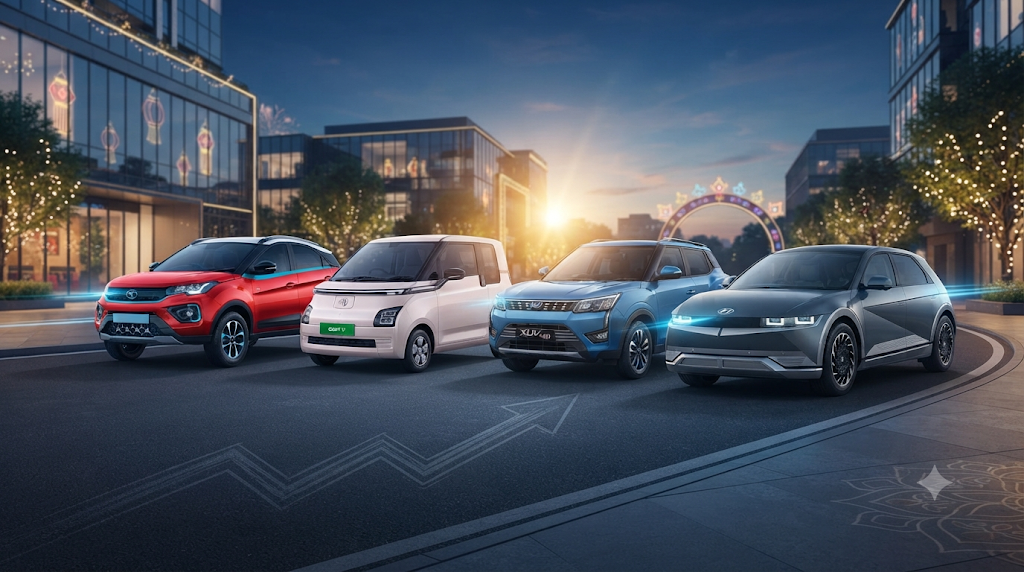
Tata has a broad range of EVs available, including Nexon.ev, Punch.ev, Tiago.ev, Tigor.ev, Curvv.ev and Harrier.ev. This means that they cover a wide variety of prices and car types, helping them to maintain a leading position in this market.
Mahindra Growing Strongly
Mahindra & Mahindra had 9,407 EVs sold during the festive period, a 84% increase year-on-year. This means that Mahindra is now the second largest EV brand in India during this period.
It is impressive to see this growth from Mahindra, as they have recently added several new EVs to their range. These include the XEV 9S and other Electric SUVs. This high demand indicates that Mahindra’s strategy in this market is being welcomed by customers.
Market Share
Tata Motors and Mahindra & Mahindra have dominated the Indian EV market during this period, accounting for almost 80% of sales. This demonstrates how dominant these two domestic brands have become in the EV market.
Both companies have strong manufacturing infrastructure, dealer networks and extensive ranges. They have invested heavily into developing EV technologies and infrastructure, and are seeing returns in the form of increased market share.
Record Year In 2026
As of 9 th November 2026, according to the government’s Vahan portal, 3,04,701 electric vehicles have been sold in India. This is 56% more than the record of 1,95,571, set in 2025.
If this trend continues, we could expect total EV sales in India to reach around 3,25,000 units by the end of 2026. This would be a 66% increase year-on-year, and create a record year for the EV market.
Factors Contributing to EV Sales
There are many factors causing EV sales to increase. Prices for batteries have dropped, recharging infrastructure is improving, and there is more variety in models.
Incentives from the government, subsidies from individual states, and cheaper running costs are making people switch to electric vehicles. Furthermore, EVs are now available in a variety of segments meaning they can appeal to a wider market. From small hatchbacks to large SUVs.
Challenges
However, there are still challenges. Charging stations are not evenly distributed in cities and on motorways. Range anxiety is also a concern for some people.
Finally, EVs can be expensive to buy compared to ICE vehicles. However, the high sales during this festive period indicate more people are willing to pay the premium for EVs.
The 69% increase in EV sales during the festive period indicates that the EV market in India is becoming established. People are no longer waiting for EVs to be ‘proven’, they are actively switching to EVs over Petrol, Diesel and CNG.
As a result, strategies for EVs are becoming even more important for car manufacturers. Brands who can provide competitive pricing, good range, quick charging and good after-sales service will be best placed to capitalise on this growing market.
Future Outlook
Due to the increase in sales during the festive period, and as we approach the end of the year, 2026 is set to be a record year for EVs in India. This momentum is likely to continue in 2027 as more models are released and recharging infrastructure improves.
Tata and Mahindra are expected to be the leaders in the market, however, with MG, Hyundai, Maruti Suzuki and other brands also entering the market, the competition may get fierce. The coming months will be decisive in determining if the EV market in India can continue this growth in sales beyond the festive period.
Watch this-