

































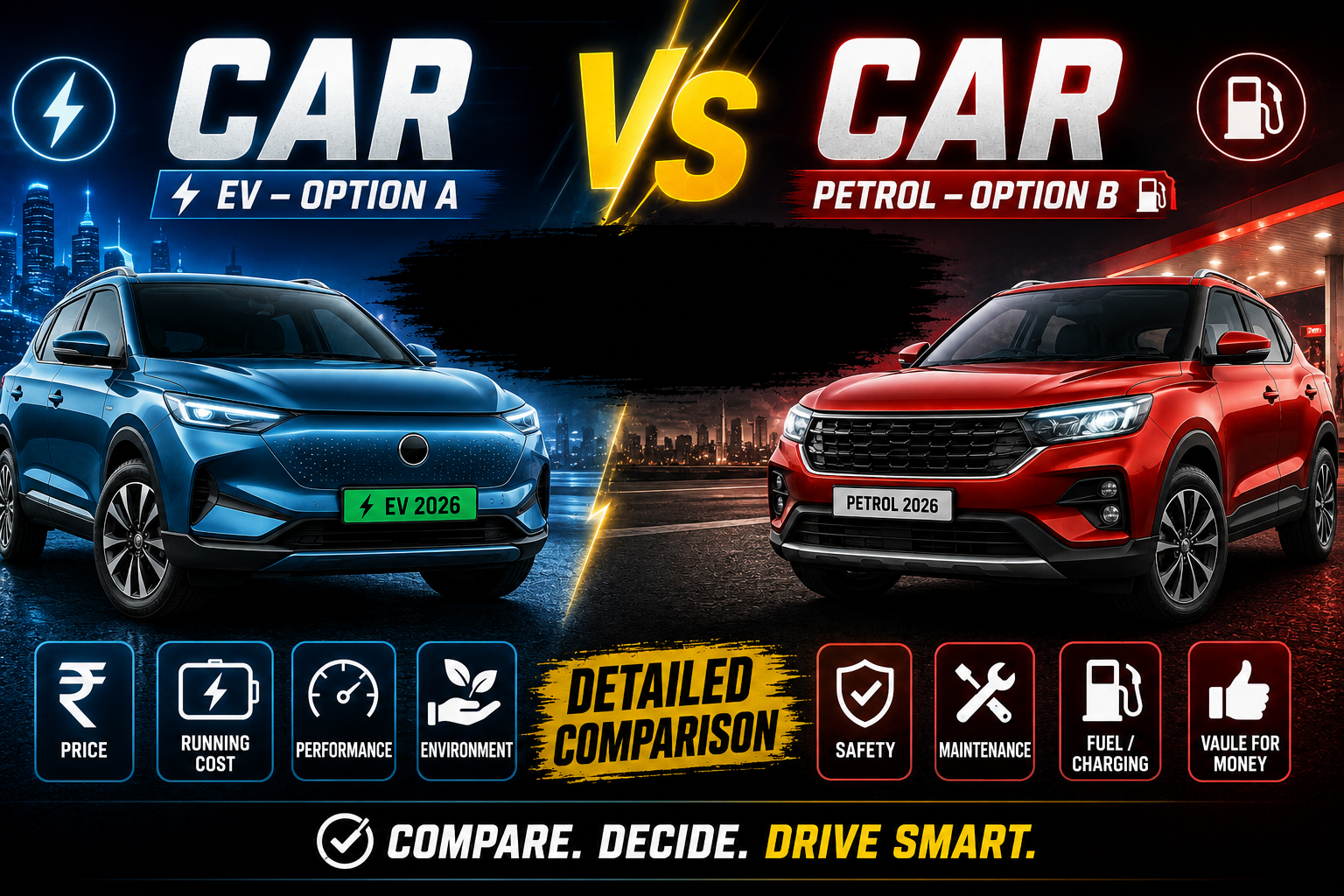
Choosing between an EV and a petrol car is one of the biggest decisions for today’s car buyer. There is no single winner for everyone, because the better choice depends on your driving pattern, budget, charging access and how long you plan to keep the car.
Purchase Price
Petrol cars usually win on upfront cost. In the same segment, an EV typically costs more at the showroom because of the battery pack and electric hardware, while petrol cars are easier to buy within a lower budget.
That price gap matters most for first-time buyers and families looking for value today rather than future savings. If the budget is tight, petrol still feels more accessible.
Running Cost
This is where EVs have a clear advantage. A real-world comparison for Indian conditions shows an EV can cost far less per kilometre than a petrol car, especially if you charge at home rather than using public fast chargers.
For buyers who drive a lot every month, the fuel savings can become very significant over time. Petrol cars are still easier to refuel quickly, but EVs are much cheaper to run if your use case is regular city commuting.
Maintenance and Ownership
EVs generally need less routine maintenance because they have fewer moving parts and do not require engine oil changes in the same way a petrol car does. That usually means lower service bills over the years.
Petrol cars, however, are still simpler to maintain in many parts of India because service infrastructure is widespread and technicians are familiar with them everywhere. That can make ownership easier, especially outside big cities.
Driving Experience
EVs are smoother, quieter and deliver instant torque, which makes them feel quick in the city. They are especially good in stop-and-go traffic because the driving experience is relaxed and refined.
Petrol cars still appeal to many buyers because of their familiar engine feel, longer highway flexibility and the comfort of refuelling in minutes. For people who enjoy conventional driving character, petrol remains attractive.
Range and Convenience
Range is the strongest argument for petrol cars. You can refuel almost anywhere in a few minutes, making petrol cars better for long-distance travel, spontaneous highway trips and areas where charging is still limited.
EVs are improving quickly, but charging time and charger availability still matter. If you have home charging and most of your driving is within the city, an EV makes much more sense. If you travel often between cities or live without dedicated parking, petrol is still safer and simpler.
Environment Impact
EVs have the edge on local emissions because they do not produce tailpipe pollution. That makes them cleaner for urban air quality and a better fit for a long-term shift toward greener transport.
Petrol cars are still dependent on fossil fuel and contribute to emissions every time they run. Even so, they remain part of the market because infrastructure, price and convenience still matter to many buyers.
Which One Should You Buy?
If your driving is mostly city-based, you can charge at home, and you want low running costs, an EV is usually the better choice. It is also the smarter option if you plan to keep the car for several years and want to recover the higher purchase price through fuel savings.
If your usage includes frequent highway travel, irregular long trips, or you do not have easy charging access, a petrol car is still the more practical choice. It is also better for buyers who want a lower upfront price and maximum convenience today.
EVs are the better option for future-focused buyers, especially in cities, because they offer lower running costs, lower maintenance and cleaner mobility. Petrol cars are still better for buyers who want affordability, easy refuelling and long-distance flexibility.
So the answer is simple: EV is better for economy and urban use, while petrol is better for convenience and flexibility. The right choice depends on your lifestyle, not just on trends.