






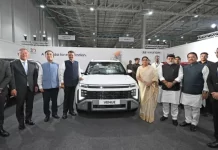













Hyundai is planning an aggressive offensive in India through the introduction of 26 new vehicles by the year 2030. This has been revealed in the course of the 2026 CEO Investor Day which took place in Seoul and which outlined the global growth strategy for the manufacturer and reaffirmed its aim of 5.55 million sales annually by the end of the decade.
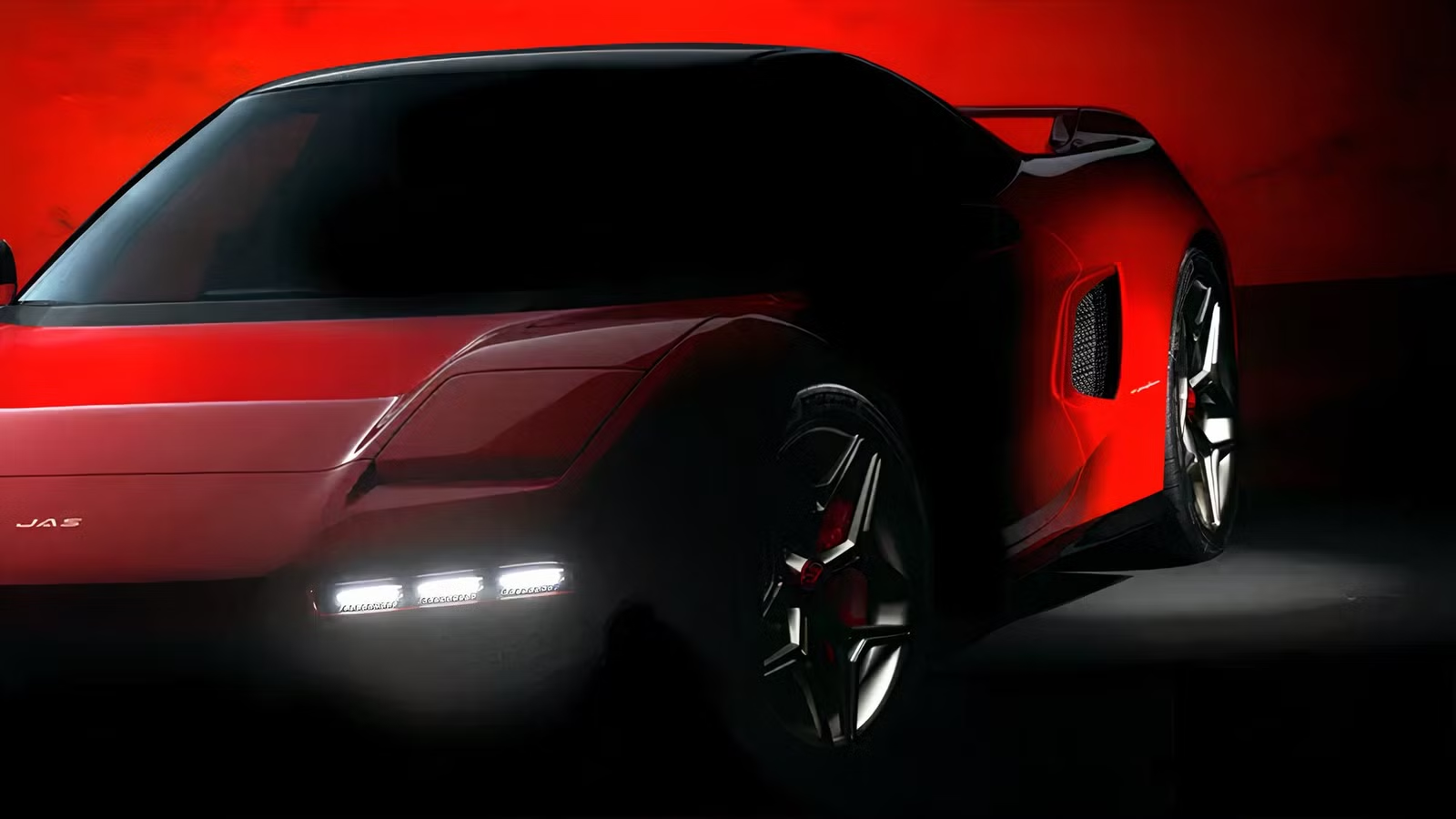
India is going to play an important role in this offensive for Hyundai. The automaker is going to introduce seven new nameplates, new segments including MPVs and off-road SUVs as well as its first locally made dedicated electric SUV aimed specifically at India.
India-Centric Electric SUV in Q4 2026
The first vehicle of this program is the all-new A-segment electric SUV which is going to launch in India in Q4 2026. Hyundai said that this vehicle will be designed and localised for the needs of the Indian market.
Following the all-new A-segment electric SUV, Hyundai will launch a new ICE-powered midsize SUV. These two vehicles will be the starting point of Hyundai’s offensive in India.
Hyundai India-Centric electric SUV is likely to take the form of a compact SUV which is likely to compete in the market with other upcoming small electric SUVs.
Capacity Expansion and Localisation
Hyundai currently has an annual manufacturing capacity of 1.1 million vehicles in India, which makes India the biggest production hub outside of Korea. To enable the implementation of this offensive, Hyundai will be adding 3.2 lakh units of additional capacity by 2030.
This will enable Hyundai to manufacture even more vehicles which will be able to sell domestically and be exported to different markets. At the moment, India is an important base of export production which sends its products to more than 140 countries.
Localisation will also be raised from its current level at 84% up to over 90% in 2030. Hyundai has a supplier network of over 1,400 local companies and over 900 engineers working in India.
Global Product Offensive
Hyundai is planning an extensive offensive across the globe which will see the launch of more than 100 models by 2030. The breakdown of these launches is as follows:
58 launches in North America
49 in South Korea
41 in Europe
26 in India
22 in China
This product offensive will cover SUVs, electric vehicles, hybrid cars, extended-range electric vehicles and refreshed models.
Hyundai plans to launch another seven global models in the next eight months alone. This will include the all-new Elantra, all-new IONIQ 3, new Tucson and Tucson Hybrid, the first-ever Santa Fe EREV, A-segment electric SUV for India, an all-new global B-segment SUV, and a B-segment SUV for Europe.
EREV and Hybrid Strategy
Hyundai is also making massive investments in EREVs. The company’s first ever EREV model will be the Santa Fe EREV that is expected to come in the first half of 2027. It will offer a range of more than 600 miles, or 966 km, in a combination of electric range and petrol power for the range extender.
While the Santa Fe EREV is initially slated for launch in North America, the technology can possibly be adapted in future for other geographies, including India, depending upon demand and regulatory environment there.
The company’s multi-pathway approach to vehicle electrification involves developing not just BEVs but also hybrids and EREVs for those who are either not prepared to make a switch to BEVs or do not require frequent charging for their long-range drives.
New Creta, i10, and Possibly Genesis Entry in India
In relation to the 26-model plan for India, Hyundai has confirmed the launch of the all-new Creta and a new i10 ahead of 2030. Both of these products are essential for Hyundai’s volume and presence in India.
Creta is one of the most successful SUVs of Hyundai in India. And a new-generation variant will be crucial for its continued success against its competitors like the Kia Seltos, Maruti Grand Vitara, Hyundai Exter and other mid-sized SUVs.
Similarly, the i10 is important for Hyundai’s presence in the entry-level hatchback segment. An all-new variant can help Hyundai protect itself from its main rivals like Maruti Swift, Tata Tiago, and even some new electric competitors.
Hyundai’s luxury brand, Genesis, might also come to India in the near future. Though the timeline is not available, a new entry in the luxury space will signal Hyundai’s first venture in the premium luxury category in India.
India as the Hub for Emerging Markets
For Hyundai, its India operations are important because India is its hub for emerging markets. The combination of competitive production scale, flexible manufacturing and robust supply chain gives Hyundai an edge here and makes India an important base for manufacturing of vehicles that will be sent to other emerging geographies.
Read this- New Skoda Superb Diesel Confirmed for India with 7-Speed DSG and Luxury-Focused Cabin
Emerging Market Hub
India has been viewed as the ideal emerging market hub for the company as it will benefit from the competitive production scale and flexible manufacturing along with the availability of suppliers.
The plans by Hyundai to increase exports of its cars alongside the domestic sales indicate that there will be several India-made Hyundai vehicles which will be exported to other developing regions of Africa, Latin America, South East Asia and the Middle East.
By viewing India as the manufacturing and development hub, Hyundai hopes to increase its global competitiveness while also adding to its domestic product portfolio.
Competitive Environment
Hyundai’s aggressive plan of product offerings comes in a time where there is intense competition in India. Maruti Suzuki, Tata Motors, Mahindra, Kia, Toyota and even several other start-ups which offer EVs have expanded their portfolios.
The plans by Hyundai to introduce new products such as SUVs, EVs and new categories of MPVs and off-road SUVs show that the company is gearing up for the diversified market.
In addition to this, the introduction of hybrid and EREVs would also enable the company to appeal to those buyers who would want to drive electrified but not the full BEVs.
Overall, with the launch of 26 new or refreshed models by 2030, the electric SUV for India, the expansion of capacities and increasing localisation, Hyundai has bet big on India as one of its major growth markets. If this strategy is executed successfully, Hyundai will gain a strong position in India’s passenger-vehicle market over the next five years.
Watch this-