






























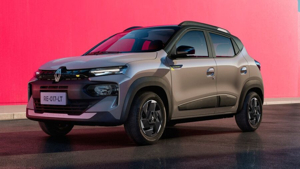
The facelifted version of the Renault Kwid has been launched in Brazil, coming with a refreshed look along with an entirely redesigned dashboard featuring two screens and revised equipment. Being the second major facelift for the current generation of the hatchback, the 2027 Kwid features modest visual changes as well as a considerably upgraded interior.
The Brazil-spec Kwid is powered by the same 1.0-litre, three-cylinder naturally aspirated flex-fuel engine, which it had before. The new interior, advanced technologies and fresh design make the hatchback more appealing in a very competitive entry-level segment.
Revised Exterior Design
The changes in the exterior design are mostly limited to the front side of the facelifted Kwid. The brand has redesigned the bumper and added a new gloss-black grille treatment, which is equipped with the latest design language of the manufacturer.
Now LED daytime running lights are available on all trim levels, making the vehicle look more contemporary. In addition, the new shark-fin antenna replaces the conventional roof-mounted antenna.
The rear end of the hatchback has changed insignificantly. There have been added transparent lenses along with the black interior for the tail lamps. Moreover, the reversing camera was relocated and positioned in the Renault logo on the tailgate.
The rest of the body, its proportions and size remained the same. As in the India-spec Kwid, the wheelbase of the Brazil-spec version is still 2,423mm. However, the boot of the Brazil-spec Kwid is bigger and is able to accommodate 290 litres of luggage, which is 11 litres more than the boot of the Indian variant.
The Outsider version gets additional design changes in the form of a dual-tone roof, special graphics, body cladding and 14-inch diamond-cut alloy wheels.
Completely Redesigned Dashboard
The most important update of the facelifted Kwid was made inside the cabin. The brand has redesigned the dashboard of the 2027 model, which is now looking more modern compared to the predecessor.
Higher trim levels get a new 7-inch TFT digital instrument cluster along with the 10.1-inch touchscreen infotainment system located next to the instrument cluster. The new larger Media Evolution infotainment system works with wireless Android Auto and Apple CarPlay.
The center console has gotten an update, while the steering wheel is a new three-spoke multifunction wheel. Hard plastics have been kept in mind Renault due to the Kwid’s positioning as an affordable hatchback, however, some tweaks have been done to the textures, upholstery, and trim in order to enhance the whole interior experience.
The Techno variant receives a blue fabric upholstery, whereas the Outsider variant features a combination of fabric and synthetic upholstery. These changes help bring a bit of premium feel without increasing the cost of manufacturing.
Some of the other notable additions include a manual AC, two Type-C USB charging ports, power-operated front windows, and electrically adjusted outside rearview mirrors. There is also a reversing camera with sensors.
Same 1.0-Litre Flex-Fuel Engine
Read this- Ather Konarc Launched at ₹99,999 with Up to 200km Range and Metal Body
There aren’t any mechanical changes in this update. The Brazil-spec 2027 Kwid comes with the same 1.0-litre, three-cylinder SCe flex-fuel engine.
When running on ethanol, the engine outputs 71hp and 98Nm of torque. When run on petrol, the output figures stand at 68hp and 92Nm. The power is transmitted via a five-speed manual gearbox.
It is the same engine as the one fitted in the Indian model. The difference is that the Brazil-spec Kwid gets only a five-speed manual transmission, while the Indian model has a five-speed AMT as well.
The lightweight construction of the car is still an advantage for Kwid. The claimed fuel economy for petrol is 14.4km/l in the city and up to 15.4km/l on the highway under Brazilian standards. The boot volume remains the same at 290 litres and increases to around 1,100 litres with the rear seat folded.
The 0 to 100kmph acceleration time is quoted at 13.5 seconds on ethanol and 14 seconds on petrol. These figures are fairly typical for an entry-level hatchback focusing on being affordable and economical as opposed to having impressive performance numbers.
Safety Features
The safety features of the 2027 Brazil-spec Renault Kwid include electronic stability control, hill-start assistance, tyre pressure monitoring, four airbags, and two ISOFIX mounts.
The four airbags are standard in all variants, which is a big step forward compared to other entry-level hatchbacks that usually come with two airbags at best, with many of them even lacking two airbags in their base variants.
In terms of standard equipment in the case of the Evolution variant, we have four airbags, ESC, traction control, hill-start assist, rear parking sensors, air conditioning, electric power steering and tyre-pressure monitoring.
As for the higher variants of the car, there are digital instrument cluster, touchscreen infotainment system, wireless smartphone connectivity, electrically adjustable ORVMs and more styling bits.
Will the Facelift Make its Way to India?
The launch of the car in Brazil is especially interesting in this regard, as the Kwid is the model that was developed around the CMF-A platform with India being one of the countries where the car became famous and which played an important role in the story of this model. As of today, Renault sells the Kwid in India along with the Duster, Triber and Kiger.
Renault has not officially announced the launch of this 2027 facelift of the Kwid for India; however, it is possible that thanks to the massive interior upgrade the Kwid would get a chance to receive a much-needed update. The dual-screen dashboard, wireless smartphone connectivity and cabin redesign would definitely make it easier for the Kwid to compete with its competitors like Maruti Suzuki S-Presso, Alto K10, Tata Tiago and Hyundai Grand i10 Nios.
However, Renault is working on its product offensive in India and plans to introduce the new-generation Duster, among other models. We will see whether or not Renault is going to launch the updated Kwid in the country.
For now, the launch of the car in Brazil clearly shows how serious Renault is about maintaining competitiveness of the Kwid in the most important markets for it.
Watch this-












[…] Renault Kwid Facelift Revealed for Brazil with Dual-Screen Cabin and Revised… […]
[…] Read this- Renault Kwid Facelift Revealed for Brazil with Dual-Screen Cabin and Revised Styling […]