


















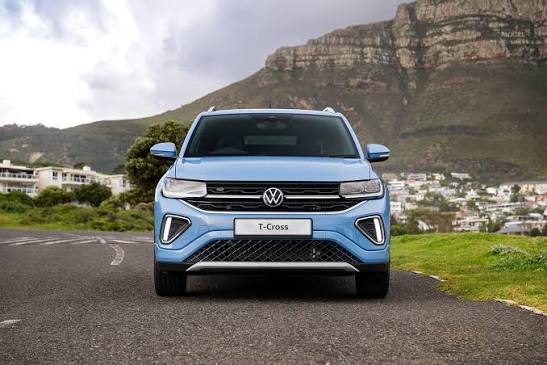
Volkswagen has unveiled the Tera-based compact SUV for the African market under a new name: TENGO. The TENGO, a local version of the Brazilian Tera, will be assembled in Kariega, Eastern Cape from 2027, along with the Polo and Polo Vivo. It is an entry-level SUV which fits in between the Polo Vivo and the T-Cross in South Africa’s Volkswagen range.
A Tera by another name: Why TENGO exists
The TENGO is essentially the Brazilian Volkswagen Tera re-designed for African conditions and customers’ expectations. Whereas the Tera in Brazil makes use of the MQB A0 platform with 1.0-litre naturally aspirated and turbo-petrol engines, the TENGO has been adapted to cater for a variety of road systems, fuel quality and usage patterns across the African continent.
Sharing the MQB underpinnings of the Polo, Volkswagen Group Africa has been able to make use of up to 75% of the Polo’s componentry for the TENGO, facilitating an established local supply chain while controlling costs, which is key to an affordable mass-market vehicle. Making use of the existing Kariega assembly line also means that Volkswagen can slot in TSI powertrains for the TENGO in South Africa, putting it in line with the wider Polo family in the region.

Design and engineering changes for Africa
While the TENGO does look like a Tera – there are some significant changes made to local tastes and conditions:
More robust suspension: The rear suspension system has been retuned for improved durability and compliance versus the Brazilian Tera, for a sturdier ride on Africa’s notoriously pitted road systems.
Higher ground clearance: The TENGO sits roughly 30 mm higher than the modern Polo hatch (which has a more SUV-like stance), to improve ground clearance for easier navigation of speed bumps, dirt tracks and uneven urban roads.
Stronger visual identity: The African-market SUV has more robust-looking wheel arches, a taller bonnet and sharper strake lines, as well as functional roof rails borrowed from the Taigo, rather than the purely aesthetic rails on the Brazilian product.
Front-end styling: According to reports, the TENGO will get an exclusive front-end design for Africa, differentiating it further from the Tera, and slotting it in line with Volkswagen’s global SUV family.
Read this- Kia India Records Best-Ever August Wholesale at 29,042 Units, Up 48.1% YoY
Engine options: 1.6 NA at launch, 1.0 TSI likely later
The TENGO launch in 2027 is expected to make use of a naturally aspirated 1.6-litre petrol engine, the same engine which is used in models such as the Volkswagen Saveiro in Brazil. This 4-cylinder engine is reported to put out around 105 PS and 153 Nm of torque, and will be offered with either a 5-speed manual or a 6-speed automatic gearbox.
The reason for choosing the naturally aspirated 1.6-litre engine is that it can be tuned to run reliably on lower quality or “dirty” fuel in certain African markets, providing a more durable option which is less sensitive to fuel quality variations – an advantage if the TENGO is expected to be exported across Africa. Volkswagen has indicated that a 1.0-litre TSI turbo-petrol engine is likely to be added to the range at a later stage. In South Africa, the 1.0 TSI is already available in 2 states of tune in the Polo: 95 PS and 175 Nm and another which makes 116 PS and 200 Nm. A TSI-powered flagship TENGO could also have the popular Black Package, which adds sportier styling cues and equipment to appeal to the younger and style-conscious buyer.
Variants, features and localisation
Volkswagen has confirmed that the TENGO will be offered in 3 variants, although specification details are yet to be confirmed. Expected features, based on what has been seen in previews and in other regions, include:
A central infotainment display with smartphone connectivity
Apple CarPlay and Android Auto integration
A wireless smartphone charger with a cooling function
Modern safety equipment to match the Polo’s platform
Local production is a cornerstone of the TENGO strategy, as it allows Volkswagen to keep costs in check, provide local jobs and make use of the Kariega plant as a gateway to other African markets. The project has a R4 billion investment in the Eastern Cape facility, which President Cyril Ramaphosa has been effusive about, speaking of his confidence in South Africa as a manufacturing destination.
So far, the Kariega plant has produced nearly 40 models, including the Beetle, Kombi, Golf, Jetta, Polo and Polo Vivo, with over 4.8 million vehicles rolling off the production lines, with over three million of them going towards the local South African market. The TENGO will become the third model produced there, alongside the Polo and Polo Vivo, further bolstering the plant’s status as Volkswagen’s African production hub.

Positioning and competition in South Africa
In South Africa’s competitive compact SUV segment, the TENGO aims to target value-conscious buyers who want SUV styling and practicality but don’t want to reach into the premium price brackets. It will be competing against established sub-compact and compact SUVs from global and Chinese brands, with price, running costs and after-sales support as key decision factors for buyers.
By fitting in between the Polo Vivo and the T-Cross, the TENGO fills a key void for Volkswagen, providing a more affordable entry into the SUV space while maintaining the brand’s quality and safety reputation. The combination of local production, flexible powertrains and African-specific engineering should put it ahead of the curve against competitors which are either 100% imported or not as well-tailored to local conditions.
What this means for India and other markets
While TENGO is an Africa-specific product, it has an interesting implication for how Volkswagen is looking to leverage the Tera platform across emerging markets. Volkswagen is already working on a sub-4-metre compact SUV for the Indian market, based on the Škoda Kylaq platform, expected around early 2027. This is likely to utilise 1.0-litre TSI turbo-petrol engines and an 8-speed automatic, and will be competing against the Tata Nexon, Maruti Brezza, Hyundai Venue and Kia Sonet.
While the Indian SUV and the African TENGO share the idea of an affordable Volkswagen compact SUV, they are built on different platforms and tailored to very different regulatory and fuel environments. For Volkswagen, it allows them to maximise their small-SUV investment by tapping into a wider variety of markets. With local production starting in 2027, the TENGO represents Volkswagen’s bet that an affordable and locally-built compact SUV could boost their presence in Africa, just as similar strategies are being pursued in India and Latin America.
Watch this-