

































Every time you get behind the wheel, you take responsibility not only for your own safety but also for the lives of passengers, pedestrians, and fellow road users. Despite advancements in vehicle safety technologies like airbags, ABS, Electronic Stability Control (ESC), and Advanced Driver Assistance Systems (ADAS), road accidents remain a major concern in India. Most crashes occur due to human error rather than vehicle failure.
Following a few simple driving habits can significantly reduce the risk of accidents. Whether you’re a new driver or have years of experience, these 10 essential road safety tips will help you drive smarter and safer.
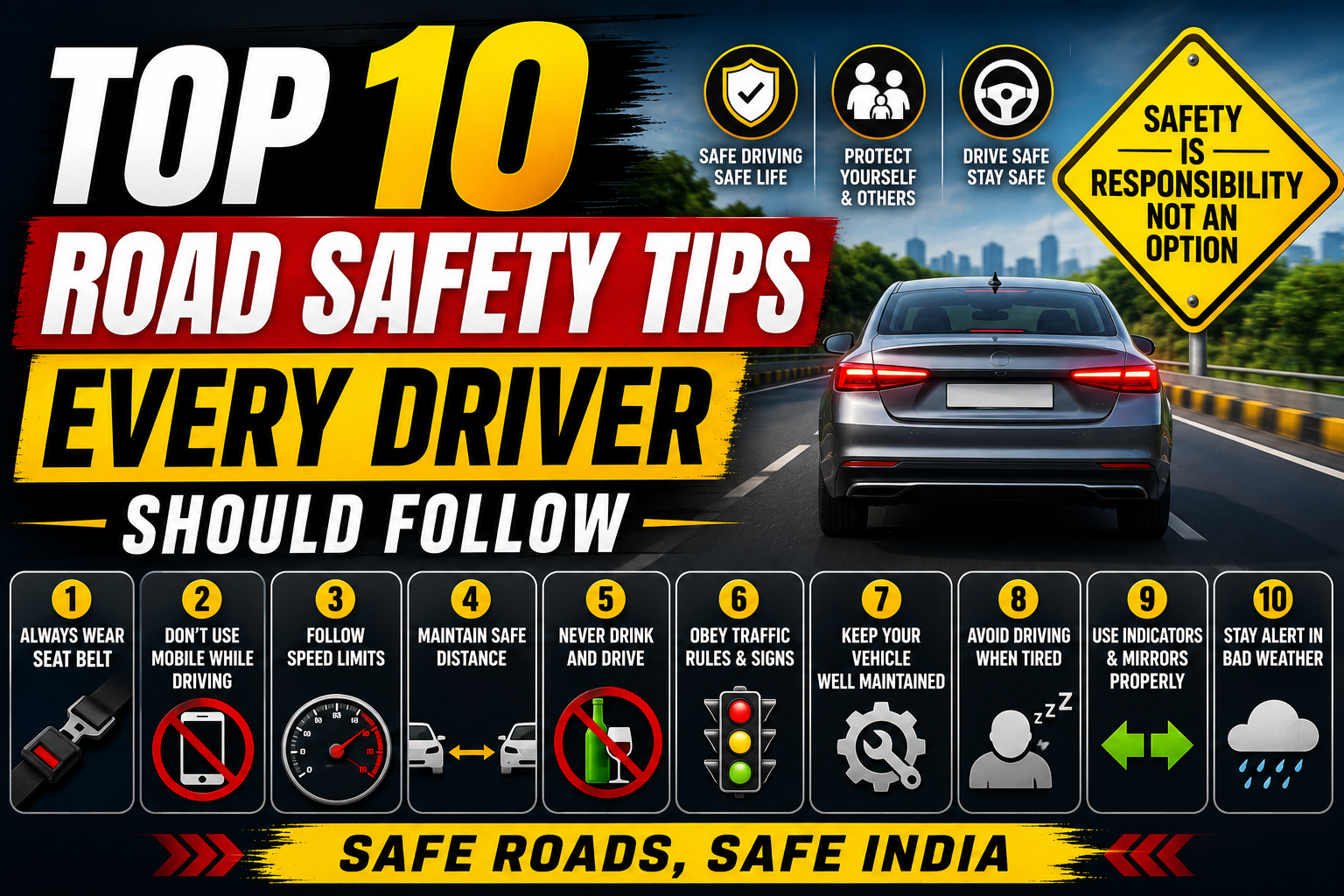
1. Always Wear Your Seat Belt
A seat belt is your first line of defense during an accident. It keeps occupants securely in place and reduces the chances of serious injury during sudden braking or collisions.
Highlights:
- Mandatory for both front and rear passengers.
- Reduces the risk of fatal injuries.
- Works effectively with airbags.
Never start your journey until everyone in the vehicle is buckled up.
2. Never Use Your Phone While Driving
Using a mobile phone while driving even for a few seconds can distract you from the road and increase the risk of an accident.
Highlights:
- Avoid texting or browsing while driving.
- Use hands-free systems only when necessary.
- Pull over safely if you need to make or answer a call.
Keeping your attention on the road can save lives.
3. Follow Speed Limits
Overspeeding is one of the leading causes of road accidents. Driving within the speed limit gives you more time to react to unexpected situations.
Highlights:
- Adjust speed according to road and weather conditions.
- Maintain control while cornering.
- Slower speeds reduce the impact during collisions.
Remember, reaching your destination safely is more important than reaching quickly.
4. Maintain a Safe Following Distance
Driving too close to the vehicle ahead leaves little time to react if it suddenly brakes.
A simple rule is the three-second rule maintain at least three seconds of distance from the vehicle in front. Increase this gap during rain, fog, or heavy traffic.
Highlights:
- Prevents rear-end collisions.
- Improves reaction time.
- Essential during bad weather.
5. Never Drink and Drive
Alcohol impairs judgment, slows reaction time, and affects coordination, making driving extremely dangerous.
If you’ve consumed alcohol:
- Book a cab.
- Ask a sober friend to drive.
- Stay where you are until you’re fit to drive.
Highlights:
- Alcohol significantly reduces driving ability.
- Drunk driving carries severe legal penalties.
- One poor decision can have lifelong consequences.
6. Obey Traffic Signals and Road Signs
Traffic signs and signals are designed to keep roads organized and safe.
Ignoring red lights, stop signs, or lane markings can lead to dangerous situations.
Highlights:
- Stop completely at red lights.
- Respect pedestrian crossings.
- Follow lane discipline.
- Watch for speed limit signs.
Safe driving begins with following the rules.
7. Keep Your Vehicle Well Maintained
A well-maintained vehicle is less likely to experience mechanical failures that could cause accidents.
Regularly inspect:
- Brakes
- Tyres
- Lights
- Wipers
- Battery
- Engine oil
- Coolant levels
Highlights:
- Better braking performance.
- Improved fuel efficiency.
- Lower chances of breakdowns.
Preventive maintenance is always cheaper than emergency repairs.
8. Avoid Driving When Tired
Fatigue affects concentration almost as much as alcohol.
If you’re feeling sleepy:
- Take a break every two hours.
- Stretch and hydrate.
- Switch drivers if possible.
- Avoid late-night driving when exhausted.
Highlights:
- Fatigue slows reaction time.
- Microsleep can occur without warning.
- Rested drivers make better decisions.
9. Use Indicators and Mirrors Properly
Communication with other road users is essential.
Always:
- Check mirrors before changing lanes.
- Use turn indicators well in advance.
- Check blind spots before overtaking.
Highlights:
- Prevents side-impact collisions.
- Helps other drivers anticipate your movements.
- Makes lane changes safer.
Small actions can prevent major accidents.
10. Stay Alert During Bad Weather
Rain, fog, and poor visibility require extra caution.
When driving in adverse weather:
- Reduce speed.
- Turn on headlights.
- Increase following distance.
- Avoid sudden braking.
- Ensure tyres have sufficient tread depth.
Highlights:
- Wet roads increase stopping distance.
- Fog reduces visibility.
- Smooth driving improves vehicle control.
Patience is your greatest safety tool in difficult conditions.
Bonus Safety Tips
Want to become an even safer driver? Keep these additional practices in mind:
- Always carry your driving licence, registration certificate, insurance papers, and PUC certificate.
- Keep a first-aid kit and emergency toolkit in your vehicle.
- Never overload your car.
- Ensure children use appropriate child safety seats.
- Learn basic emergency procedures like changing a flat tyre and using hazard lights.
Why Road Safety Matters
Road safety isn’t just about avoiding fines or following regulations—it’s about protecting lives. Every responsible driving habit contributes to safer roads for everyone.
Modern vehicles now offer advanced safety technologies such as:
- ABS (Anti-lock Braking System)
- Electronic Stability Control (ESC)
- Six airbags
- 360-degree cameras
- Blind-spot monitoring
- ADAS features
While these systems provide valuable assistance, they cannot replace attentive and responsible driving.
Safe driving is a combination of awareness, discipline, and preparation. Wearing a seat belt, obeying speed limits, avoiding distractions, maintaining your vehicle, and staying alert are simple habits that can dramatically reduce the risk of accidents.
As India’s road network expands and traffic volumes continue to grow, every driver has a role to play in creating safer roads. No technology can substitute for good judgment behind the wheel. By following these ten road safety tips consistently, you not only protect yourself and your passengers but also contribute to a safer driving environment for everyone.
Key Highlights
- Always wear seat belts and ensure all passengers do the same.
- Never use a mobile phone while driving.
- Follow speed limits and maintain a safe distance from other vehicles.
- Never drink and drive or drive when fatigued.
- Obey traffic signs, signals, and lane markings.
- Regularly service your vehicle and inspect tyres, brakes, and lights.
- Use mirrors and indicators correctly before every lane change or turn.
- Drive cautiously during rain, fog, and other challenging weather conditions.
- Keep emergency supplies and vehicle documents readily available.
- Remember that responsible driving is the most effective safety feature any vehicle can have.