



































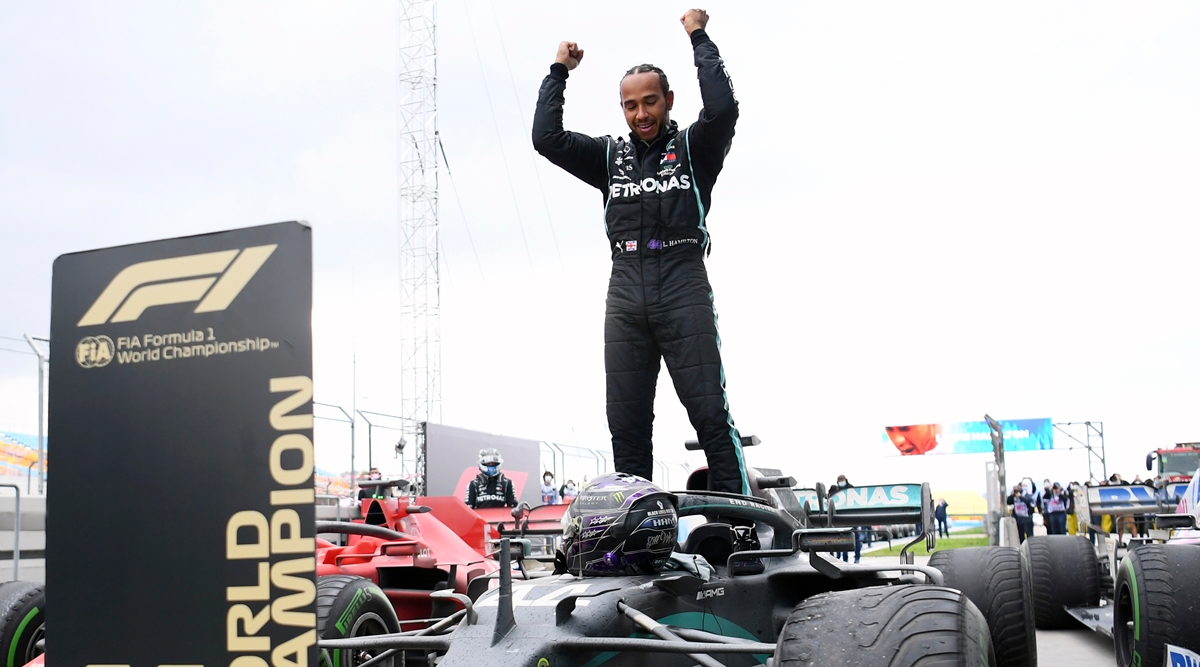
Lewis Hamilton’s latest Formula 1 chapter is not just about speed, but about belief. This story follows how the seven-time world champion transformed pressure, criticism and uncertainty into one of the most compelling comebacks of his career.
Hamilton has spent much of his career carrying the weight of expectation, and this piece captures how that burden often comes with doubt from outside and within. Even for a driver with a record as decorated as his, every move is judged, every mistake magnified, and every result measured against the standards of greatness. Yet what stands out here is not the doubt itself, but the way Hamilton appears to use it as fuel.
The article frames Hamilton’s journey in a vivid, almost poetic way. The “scarlet” in the headline points to Ferrari, and more broadly to the emotion, history and intensity that come with wearing the famous red. For Hamilton, stepping into that environment means more than changing teams. It means entering a new identity, where legacy, pressure and expectation are all magnified at once.
What makes the story engaging is the contrast between uncertainty and control. Hamilton has often been viewed through the lens of achievement, but this piece suggests something deeper. It shows a driver who understands that greatness is not only about winning when conditions are ideal, but about adapting when the situation is unfamiliar and the doubts are loud. That is where his mindset becomes central to the narrative.
The article also reflects a broader theme in sport, which is that champions are rarely defined only by their trophies. They are defined by how they respond when the road becomes difficult. Hamilton’s career has included dominant victories, fierce rivalries and moments of struggle, but those experiences have shaped his resilience. The current phase of his journey seems to be about proving that belief, not age or opinion, is what continues to drive elite performance.
There is also a human side to the story. Hamilton is not presented as an untouchable icon, but as someone still searching, still adjusting and still pushing himself in a new setting. That makes the narrative more relatable. It reminds readers that even the most successful athletes must face reinvention, and that reinvention often begins with doubt before it becomes destiny.
The tone of the piece is not purely technical or statistical. Instead, it leans into emotion, character and momentum. That choice works well because Hamilton’s story is bigger than lap times. It is about identity, ambition and the courage to start again in a place where the expectations are enormous. The result is a portrait of a driver who does not simply chase victory, but carries the mental strength to turn skepticism into purpose.
In that sense, the article reads as more than a sports profile. It is a story about resilience, reinvention and the power of self-belief. Hamilton’s journey in red becomes a symbol of how doubt can sharpen rather than weaken a champion. When pressure is at its highest, that is often when true greatness becomes visible.
If there is one idea at the heart of the piece, it is this: Hamilton is not being shaped by doubt. He is shaping it into destiny.