


































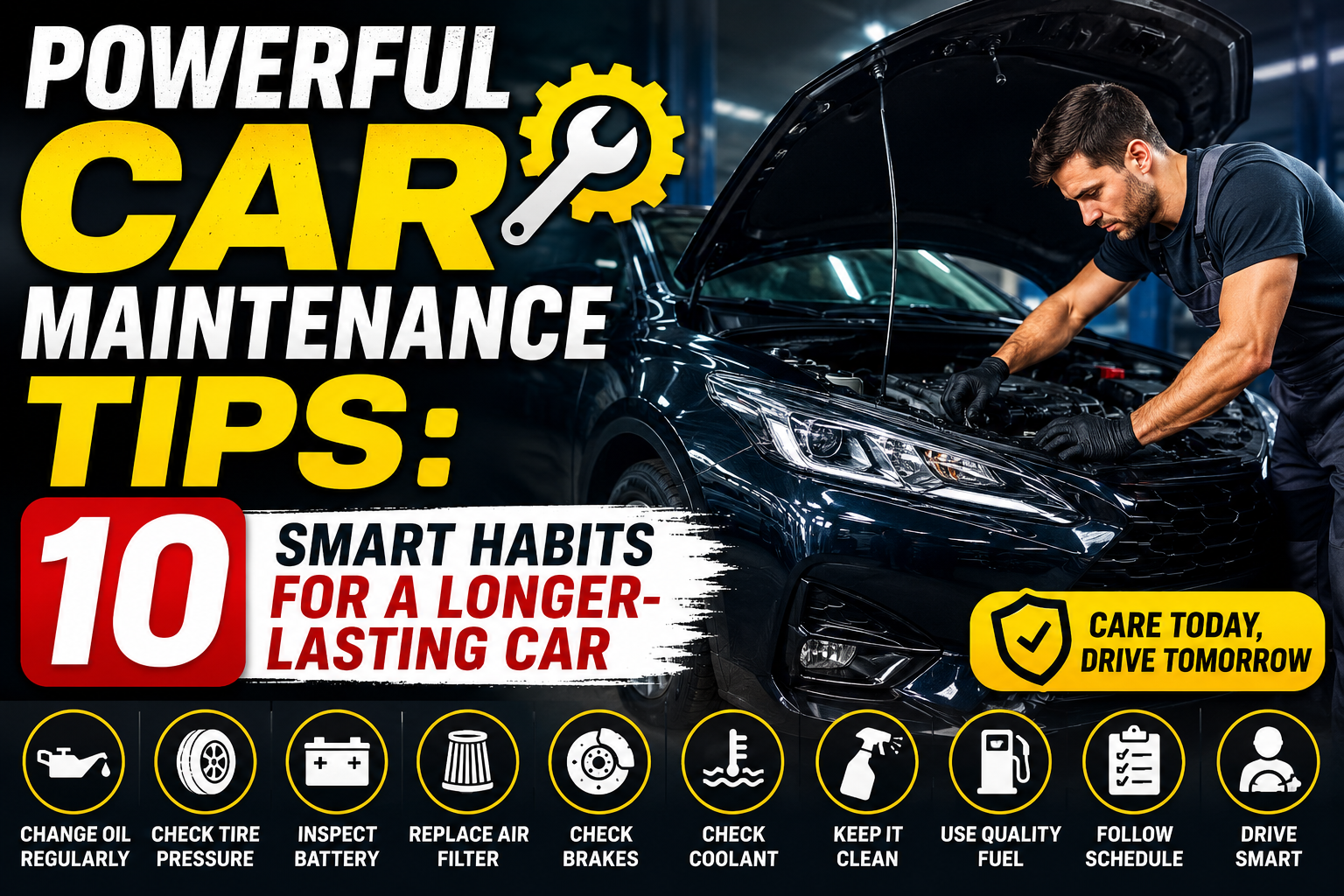
Car maintenance tips can help every driver save money, improve safety, and avoid sudden breakdowns. These habits also keep your vehicle performing better for longer, which makes ownership far less stressful.
1. Check fluids regularly
One of the most important car maintenance tips is to check the essential fluids often. Engine oil, coolant, brake fluid, transmission fluid, and windshield washer fluid all play a major role in how your car works. Low or dirty fluids can lead to overheating, poor braking, or expensive damage.
Make it a habit to inspect these levels every few weeks. If a fluid looks dark, dirty, or unusually low, get it checked as soon as possible. A quick inspection can prevent a small issue from becoming a costly repair.
2. Keep tires in good shape
Tires affect safety, fuel use, and ride comfort. Check tire pressure at least once a month and before long trips, because underinflated tires wear out faster and can reduce control. Also inspect tread depth and look for cuts, bulges, or uneven wear.
Rotate your tires on schedule so they wear more evenly. Alignment matters too, especially if your car pulls to one side or the steering wheel feels off. Good tire care improves handling and can extend tire life.
3. Replace filters on time
Air filters and cabin filters are easy to ignore, but they matter more than many drivers realize. A dirty engine air filter can affect performance and fuel efficiency, while a clogged cabin filter can reduce air quality inside the car. Replacing them on time keeps things running smoothly.
Check your owner’s manual for the recommended intervals. If you drive in dusty traffic or harsh weather, you may need to replace them sooner. This simple step helps both the engine and the people inside the car.
4. Watch your brakes closely
Brakes are not something to postpone. If you hear squealing, grinding, or feel vibrations when stopping, your brakes need attention. Soft brake pedals or longer stopping distances are also warning signs that should never be ignored.
Brake pads, rotors, and brake fluid all need regular care. Getting brake issues checked early can help avoid larger and more expensive repairs. Safe driving starts with a braking system you can trust.
5. Follow the service schedule
Your owner’s manual is one of the best tools for car maintenance tips. It tells you when to service the engine, change fluids, inspect belts, and replace parts. Following the schedule helps your car stay reliable and may even improve resale value.
Many drivers wait until something goes wrong, but planned maintenance is far better. Regular servicing catches small problems before they become major ones. A routine service plan is one of the simplest ways to protect your vehicle.
6. Maintain the battery
A weak battery can leave you stranded without warning. Check the battery terminals for corrosion and make sure the connections are secure. If your car is slow to start or the lights seem dim, the battery may need testing.
Battery life depends on usage, weather, and age. Hot and cold temperatures can shorten its lifespan, so regular checks are wise. Replacing an aging battery before it fails can save you time and stress.
7. Keep the car clean
Washing your car is not just about appearance. Dirt, salt, and grime can damage paint and bodywork over time. Interior cleaning also helps protect seats, carpets, and dashboards from wear.
Try to clean the underbody too, especially if you drive in rain, mud, or salty conditions. A clean car is easier to inspect for leaks, scratches, and damage. It also feels better to drive every day.
8. Drive with care
Good driving habits are part of smart car maintenance tips. Hard braking, rapid acceleration, and aggressive cornering all put extra strain on the vehicle. Smooth driving helps save fuel and reduces wear on the engine, tires, and brakes.
Warm up the car gently, avoid overloading it, and do not ignore dashboard warnings. Careful driving can add years to the life of your car. Small choices behind the wheel make a big difference over time.
9. Inspect lights and wipers
Working lights and wipers are essential for visibility and safety. Check headlights, brake lights, turn signals, and reverse lights regularly. Replace burned-out bulbs quickly so other drivers can see your vehicle clearly.
Wiper blades should also be inspected for streaking, skipping, or cracking. Poor visibility during rain can become dangerous fast. Keeping these parts in good condition is a simple but effective habit.
10. Listen for warning signs
Your car often tells you when something is wrong. Strange noises, unusual smells, warning lights, leaking fluids, or changes in performance should never be ignored. Early attention usually means easier and cheaper repairs.
If something feels different, have it checked before it gets worse. Trusting small warning signs can prevent breakdowns and keep you safer on the road. This is one of the most practical car maintenance tips any driver can follow.
Car maintenance tips work best when they become part of your routine. You do not need to be a mechanic to care for your vehicle well. A little attention to fluids, tires, brakes, batteries, and service schedules can make a major difference.
Use these habits to protect your car, reduce repair costs, and drive with more confidence every day.