

























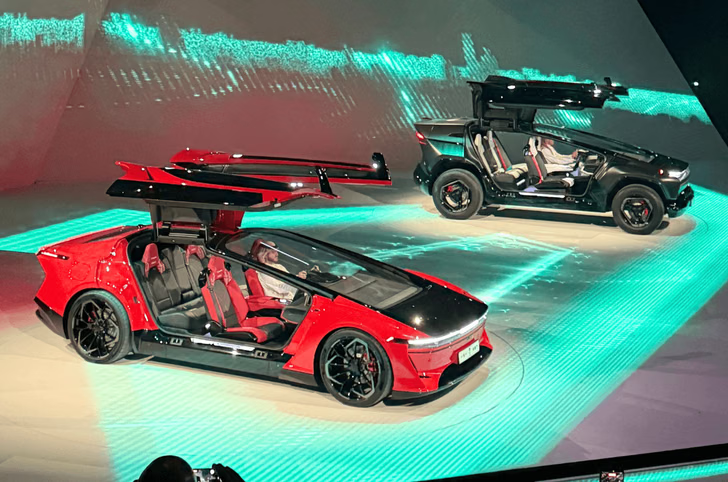
Saudi Arabia has officially jumped into the EV fray. The Kingdom’s CEER (Center for Engineering & Research) has announced its first two production models.
the future-forward Exobot electric sedan and Exobot electric SUV – with the aim of boosting domestic car manufacturing under Vision 2030.
A historic debut
Unveiled by Crown Prince Mohammed bin Salman on 21 September 2026, the Exobot line-up is the product of a joint venture between Saudi’s Public Investment Fund (PIF) and Foxconn, with technical support from BMW, and motors from Rimac.
CEER has a clear vision for the future of automotive in the Kingdom, and unveiled this week that seven models are set to be launched in the next five years, including midsize and compacts with various powertrain options – a clear sign that Saudi wants to build on its reputation as a cutting-edge carmaker.
Exobot Sedan: 850 hp, 670 km range
The sedans are the flagship performance models, the one that set tongues wagging.
Power and torque: 850 hp and 1,000 Nm
0-100 km/h: 2.6 seconds
Claimed NEDC range: up to 670 km
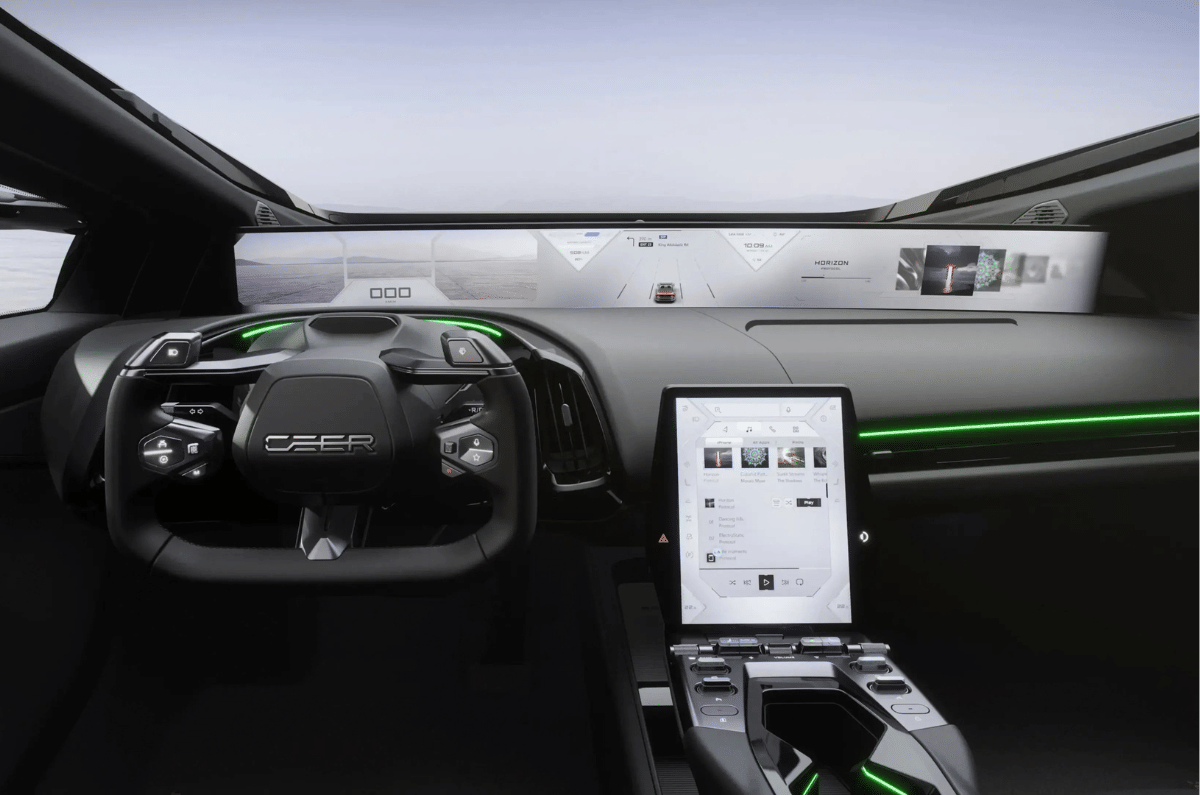
Battery and charging: 112 kWh pack, 800V architecture, 10-80% in about 30 minutes.
The sedan measures 5,260 mm long, 2,102 mm wide, and 1,428 mm high, with a 3,200 mm wheelbase, and is targeted to compete with the likes of the Lucid Air, Tesla Model S and Porsche Taycan.
This is no ‘city car’, this is a high-tech long-range performance sedan, a statement piece from Saudi, destined to capture the hearts and minds of EV enthusiasts around the globe.
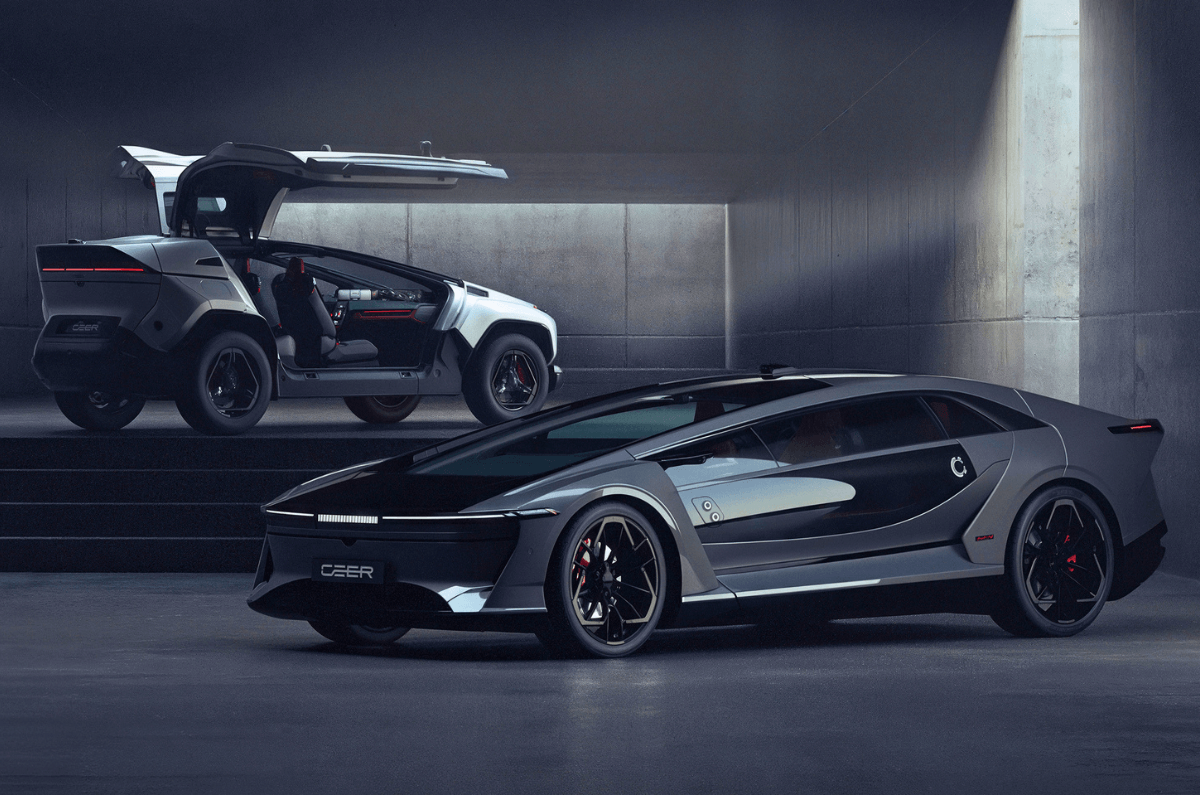
Exobot SUV: 850 hp, 560 km range
The SUV mirrors the sedan’s 850 hp / 1,000 Nm dual-motor AWD setup, and 112 kWh battery, but sacrifices range for space and practicality:
Claimed NEDC range: up to 560 km
0-100 km/h: 2.9 seconds
Charging: 10-80% in about 30 minutes.
The SUV will be a premium performance electric SUV with luxury, space and technology, and buyers can choose from a Limited Launch Edition and a highly customisable Plus version, to experience personalisation from day one.
Saudi’s EV strategy: more than just cars
CEER’s launch is part of a larger plan to diversify Saudi’s economy away from oil, and build a local automotive supply chain, with production set to commence at King Abdullah Economic City.
Production at CEER’s King Salman Automotive Cluster is set for launch in January 2027, with first customer deliveries targeted for March 2027. The company has also teased that the Exobot models are just the tip of the iceberg, and five more models are set to be launched by 2030, including more affordable and compact EVs.
What makes Exobot stand out
There are a few things that make the Exobot line-up intriguing for global EV observers:
Extreme performance: The 850 hp and sub-3 second 0-100 km/h times are right up there with the best performance EVs on the market.
Long range: The 670 km (sedan) and 560 km (SUV) claimed NEDC figures are right in line with the top of the range Lucid Air.
Fast charging: The 800V architecture and 30 minute 10-80% charging makes for practical long-distance travel.
Local manufacturing: Unlike many EV startups, CEER has the backing of the Saudi government, and is building cars in the Kingdom.
Read this- EV Scooters Double in Sales While SUVs Dominate: Inside India’s August Auto Record
The bigger picture: oil to electrons
Saudi Arabia’s embrace of EVs may be ironic, but it’s a smart move for the long-term. With investments in companies like Lucid and the launch of its own brand Exobot, Saudi is diversifying its economy away from oil, and building a future where its cars are exported around the world.
The Exobot models are a sign of things to come: Saudi Arabia is not a country that just sells oil, but a country that builds cars.
Challenges ahead
There is always a price to pay, and when it comes to building cars, the challenges are many. CEER has to navigate the same pitfalls as any other EV startup, and contend with the same issues – scaling production, ensuring quality, establishing a service network, and convincing buyers to come to a new brand. The fact that deliveries have been pushed back from 2025 to March 2027 is a sign of the difficulties ahead.
Pricing is also a concern, as CEER has not yet announced official prices for the Exobot models, and with their high-spec hardware, they are likely to be positioned in the premium EV segment, with limited volumes in the short term.
Saudi Arabia has joined the EV fray, and the first models to come out of the Kingdom’s CEER division are set to make a splash in the automotive world. The Exobot sedans and SUVs offer extreme performance, long range and fast charging, and are built in the Kingdom.
With sales set to commence early in 2027, and five more models set to launch by 2030, CEER has the potential to become a major player in the global EV market. For now, all eyes are on how the Exobot line-up performs, and whether it can meet the lofty expectations set by its dramatic debut.
If you want, I can adapt this into a shorter news brief, a YouTube short script, or a reel with punchy lines and key stats.
Watch this- MG Hector Tomahawk EV Range Test 100-0%!