

























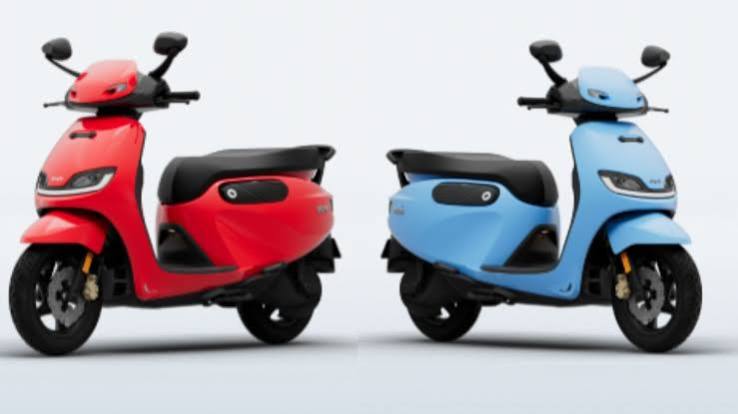
Bengaluru-based EV startup Simple Energy has crossed an important threshold this year, crossing the 10,000-unit mark in sales in just eight months of 2026. As per Vahan data, the EV startup has sold 10,429 two-wheelers in January-August 2026. This represents a stupendous 203% YoY growth, compared to just 3,436 units sold in the same period last year. It also marks the first time that Simple Energy has crossed the five-digit sales threshold in annual sales – a sign that both the performance-oriented Simple One and the soon-to-launch family scooter Wave are paying off.
From performance-first startup to family scooter player
Simple Energy kicked-off its two-wheeler journey with a focus on creating a performance electric scooter that could match petrol 150cc scooters in terms of acceleration and top-speed. The Simple One – with its sporty design, powerful motor and claimed range of more than 150 km – carved-out a niche for itself among performance enthusiasts and early adopters of electric vehicles. The startup has had consistent sales growth since its launch in February 2025 – and has stayed within the top 10 electric two-wheeler original equipment manufacturers (OEMs) in India in monthly rankings, averaging around the 9th position.
While double-digit growth is healthy, focusing on a performance-first approach has its limits – and Simple Energy needed to enter the bigger, family scooter category to truly scale its sales. This space is currently dominated by TVS iQube, Bajaj Chetak, Hero Vida and the rising Ather Rizta – and Simple Energy has decided to enter this competitive segment with its new Wave model. Priced at ₹1.10 lakh (ex-showroom Bengaluru), the Simple Wave aims to offer affordability, practicality and range.
Watch this- 1 करोड़ 40 लाख की Most Affordable V8 SUV
Simple Wave – practical, affordable and family-friendly
While the Simple One and Simple Wave share the same platform, the Wave has been developed as a more practical and family-friendly alternative to the performance-oriented One. It offers comfort and flexibility, prioritising range and affordability over sportiness. The Wave targets a much broader buyer-demographic – students, working professionals, homemakers and families – who are looking for a vehicle for their day-to-day commuting needs.

Simple Energy has created a four-tier product architecture for the Simple Wave – with variants in battery sizes and ranges:
Wave S (2.2 kWh): IDC range of 110 km
Wave S (2.7 kWh): IDC range of 132 km
Wave (3.7 kWh): IDC range of 171 km
Wave+ (5.0 kWh): IDC range of 243 km (top-range)
This approach allows buyers to choose the battery size based on their individual requirements. A student or a young professional with a short commuting distance would find the 2.2 kWh battery sufficient, while a family or a delivery aggregator partner might prefer the 3.7 kWh or 5.0 kWh options for longer range and fewer charges required.
Deliveries of the Simple Wave are expected to start from September 25, 2026 – and the company expects it to soon overtake the Simple One as its best-selling product.
EV sales – from 66 units to 10,000+ units in just three years
Simple Energy’s sales growth trajectory over the past three years demonstrates the potential for exponential growth of EV startups with the right product.
CY2023: 66 units
CY2024: 1,433 units (up 362% YoY)
CY2025: 6,628 units (up 362% YoY)
CY2026 (Jan-August): 10,429 units (up 203% YoY)
In total, Simple Energy has been able to sell an incredible 18,556 units since its launch. The company has steadily climbed the rankings of electric two-wheeler OEMs – it placed at 13th in CY2025 and crossed into the top 10 for the first time in February 2026, averaging around the 9th position for the past few months. Sales peaked in March 2026 with 1,780 units – mostly driven by the Simple One. With the launch of the Simple Wave, the company hopes to see consistent monthly sales above this peak, as it leverages its extensive dealer network to sell the family-friendly Wave.
Scaling up manufacturing, distribution, and service infrastructure
With Simple Energy’s aggressive sales growth plans for the Simple Wave, it is scaling-up its manufacturing and dealer network capabilities.
Currently, Simple Energy has a production capacity of 3,000 units per month, with its manufacturing base in Bengaluru. In terms of dealer network, it has over 75 dealers across 63 cities – including key metropolitan cities such as Bengaluru, Delhi, Patna, Nagpur, Bhopal, Agra, Goa, Vijayawada, Hyderabad, Kochi, Chennai and many more.
This extensive dealer network is vital for an EV startup that needs to convince consumers to switch from petrol to electric vehicles. For a performance EV startup such as Simple Energy, building a dealer network and service infrastructure is even more vital as they need to convince consumers to buy their niche product. With the introduction of the family-friendly Simple Wave, Simple Energy now has to scale its dealer network even further to meet the demand.
Competitive landscape- simple vs iQube, chetak, vida, rizta
The family scooter category is one of the most competitive in the Indian EV two-wheeler market, with several established and emerging players. On one hand, there are the established names such as TVS and Bajaj- who have extensive dealer networks, good product offerings, and strong brand image. On the other hand, there are the new entrants such as Ather and Hero- with significant funding and experience from their two-wheeler businesses. Additionally, there are also disruptors such as Konarc that are targeting the entry-level electric scooter segment.
Strengths of Simple Energy in this competitive landscape include:
Segment-leading range: The Simple Wave offers one of the highest ranges in the segment, with 243 km IDC on the top 5.0kWh battery.
Customisability: Unlike most other competitors in the segment, the Simple Wave can be bought in different battery sizes to match individual needs.
Powerful motor: The Wave builds on the performance reputation of the Simple One – offering powerful acceleration and stable higher speeds.
Affordable pricing: The 2.2kWh battery option of the Simple Wave starts at ₹1.10 lakh – which is much lower than most of its competitors.
With the combination of these strengths, if Simple Energy manages to establish its service and dealer network, it has a good chance of entering the top 5-6 electric two-wheeler OEMs in India in the next 12-18 months.
Next steps for Simple Energy
Having crossed the 10,000 mark in sales in just eight months for the Simple One, Simple Energy’s focus will be on continuing to scale its sales – while also strengthening its service infrastructure. Some of the key initiatives for the next 6-12 months would be:
Consistently selling more than 1,500-2,000 units with the Simple Wave.
Creating more service centres and mobile service units to reduce downtime for repairs and maintenance.
Building the charging infrastructure to support home and office charging of its customers, and partnering with third-party networks as well.
Releasing additional products or variants – such as a sportier alternative to the Simple One or a delivery version of the Simple Wave.
As Simple Energy crosses this important five-digit threshold in annual sales, it provides a good lesson to other Indian EV startups that target the family scooter segment. It shows that while performance is good, practicality is essential if an EV company is to truly scale its sales in the next 12-24 months.
Watch this-