























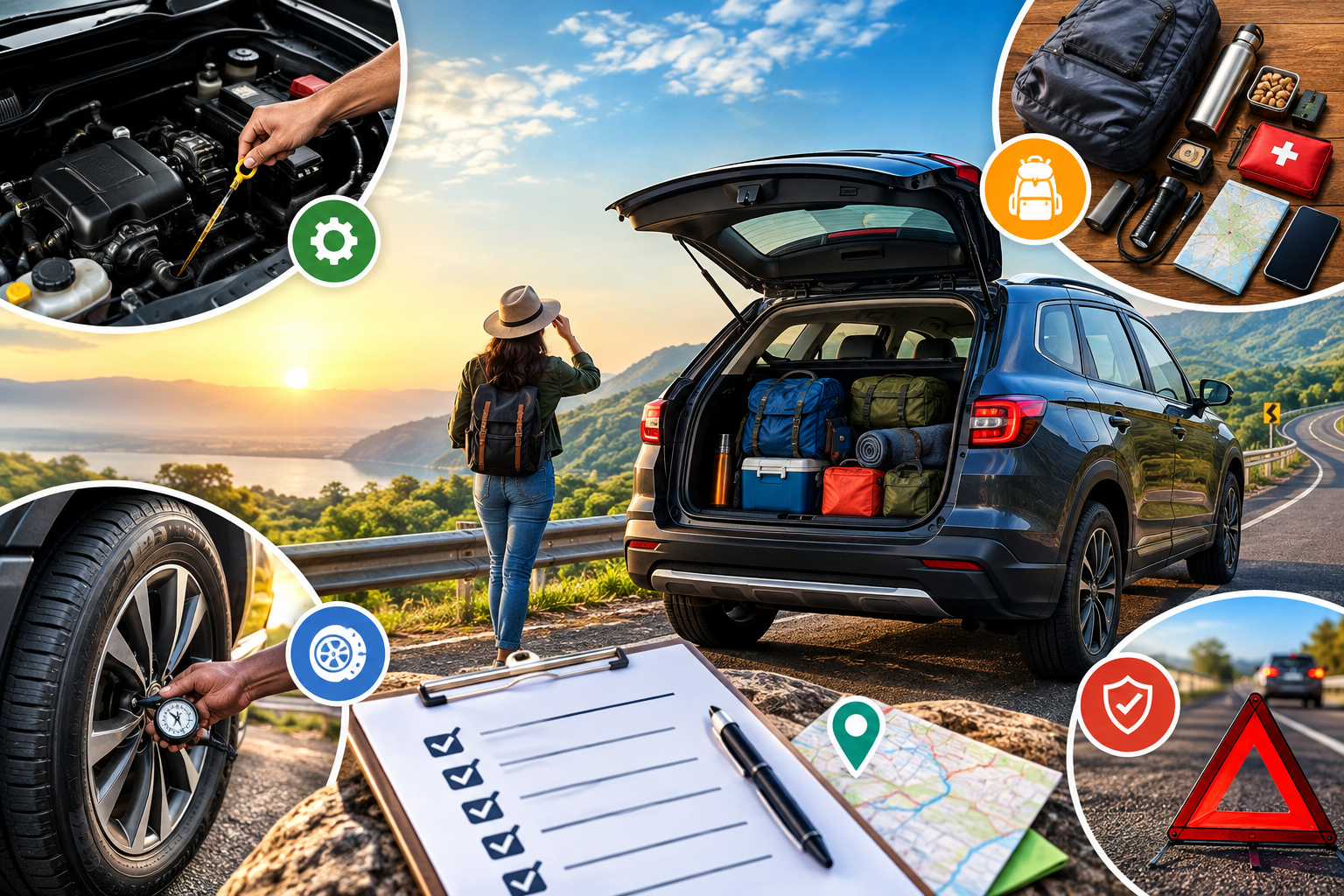
A well-planned road trip can be one of the most exhilarating experiences in India, but the highways can be a mixed bag of good and bad. They have their share of mixed traffic, bad patches, night hazards, and long distances between help. What separates a happy highway explorer from a broken-down wreck is preparation. The right preparation, the right tools, and the right attitude can make all the difference.
That’s why I’ve put together this checklist for you as a guide to what all you must do before hitting the highway, what all you must carry, and how to be a good highway explorer in India.
Part 1: Pre-Trip Car Preparation Checklist (25 point quick check)
As per many Indian automobile forums, almost 75% of highway breakdowns are avoidable with a simple 30-minute pre-trip check. Here are the 25 key points that must be checked before embarking on a long drive:
Tyres and wheels
Check the tyre pressure in all 4 tyres and the spare using a digital pressure gauge. The recommended pressure is written on a sticker on the driver’s door jammer. It is usually between 30-35 PSI per square inch for cars.
Check the tread depth using a ₹10 note. If the entire edge of the note is visible, the depth is under 3 mm and the tyre should be replaced before embarking on the long drive.
Check the spare tyre and wheel for any damage and that the pressure is fine.
Check if the wheel nuts, jack, and spanner are in good condition.
Brakes, steering, and suspension
Test the brakes for any sponginess, pulling to one side, or unusual noises. Get it checked by a mechanic if something seems wrong.
Test the steering for any play or vibration at higher speeds.
Listen for any clunking sounds while driving over bumps and check for oil leaks from the shock absorbers.
Fluids and engine
Check the engine oil level, quality, and topping if required.
Check the coolant level in the engine. Do not open the radiator cap when the engine is hot.
Check the levels of brake fluid and clutch fluid and look out for any leaks.
Check the power steering fluid level and washer fluid level and top them up if necessary.
Check the battery terminals for corrosion, and make sure they are not loose. Get it tested if the battery is more than 3 years old.
Lights, wipers, and visibility
Check all the lights – headlights (low and high beam), fog lamps, indicators, brake lights, reverse lights, and number plate light.
Check the wiper blade for tears and washer jets for proper spray and fill the washer fluid tank.
Clean all the interior and exterior mirrors and check for any major cracks or scratches that may obstruct your view.
AC, electronics, and other misc.
Test the AC for proper cooling. Turn on the AC on the maximum cooling mode and check if there is an unusual smell coming out of the vents or if there is not enough airflow.
Make sure the horn, hazard lights, and parking brake are in working condition.
Get the OBD-II diagnostic scan done if possible to check if there are any emission-related problems.
Watch this- New BMW X1 LWB First Drive review
Part 2: Essential Carry-Ons and Emergency Kit
The emergency carry-on items must be stored somewhere that is easily accessible. Remember the 4 Ps – Tools, Safety, First Aid, and Comfort.
Tools and Recovery
Jack, wheel spanner, and tool kit (screwdrivers, pliers, spanner)
Jumper cables
Tow rope (made of nylon, 2-3 tonne towing capacity)
Puncture repair kit or a tyre inflator (12V inflator or foot pump). If you know how to use a puncture sealing solution, carry it along.
Duct tape and cable ties (for temporarily fixing minor pipe or wire leaks)
Safety and visibility
2 warning triangles to indicate a breakdown
Reflective safety vest
Torch / Flashlight with extra batteries (preferably one that has a red flashing mode)
Fire extinguisher (1kg ABC type)
First Aid and medicines
A good first-aid box with adhesive bandages, gauze, cotton, antiseptic wipes, and antiseptic cream.
Scissors, tweezers, and safety pins.
Pain relief topical cream or spray.
Some commonly available medicines like paracetamol, ibuprofen, antacid, anti-allergic (cetirizine), anti-diarrhoeal, and motion sickness tablets.
ORS Sachets and a digital thermometer.
Any other medicines that you may be regularly taking.
It is a good idea to keep a separate pouch for all the medicines that you take on a daily basis so that you don’t have to rummage through the first-aid box every time. You can keep your personal first-aid box along with you in the car.
Documents and money
Make sure to carry both physical copies and digital copies (DigiLocker/scanned PDFs) of the following documents:
Driving Licence
Vehicle Registration Certificate (RC)
Insurance papers (comprehensive)
PUC certificate
FASTag with sufficient balance (keep at least ₹1,500 – ₹2,000 in the FASTag for long trips)
ID proof for checking into hotels (Aadhaar, Passport, Voter ID)
Emergency contact card with your family’s contact details, roadside assistance details, and insurance helpline number.
Carry some cash in small notes as some places may not be equipped with UPI payment options.
Comfort and convenience
Drinking water and some light snacks (unsalted nuts, biscuits, etc.)
Phone chargers (car charger, and a 10000-20000 mAh power bank)
Printed offline maps of the route you are taking.
Wet wipes, sanitizer, tissues, and small trash bags.
A light blanket or shawl (especially for night driving in AC cars)
Part 3: Highway Driving Safety Tips for Indian Roads
Preparation will get you only so far if you have unsafe driving habits. Here are some essential driving practices to follow when on Indian highways.
Before you start
Get a good 7-8 hour sleep before embarking on a long drive.
Plan your trip and breaks ahead of time. Know where to get fuel, have meals, and where you can stop for the night if necessary.
Check the weather forecast and traffic updates. Avoid bad weather and hazardous roads if possible.
While driving
Always keep to the left or the middle lane on the highway and overtake from the right. Avoid weaving from one lane to another.
Maintain a safe distance from the vehicle ahead. At 80 km/h, the driver should maintain a 3-4 second gap.
Use lights at all times. Use low beam lights in towns and while driving at night. Use high beam on empty highways. Always dip your lights when driving at night or when you are following another vehicle.
Watch out for trucks, buses, two-wheelers, cows, and pedestrians. They tend to appear on the road with little to no warning, especially near villages and dhabas.
On long drives, it is essential to take regular breaks every 2 hours or so. Walk around, stretch your legs, and drink some water.
If possible, have another driver take over after every 3-4 hours of driving.
Avoid heavy meals and eating while driving. They can cause indigestion and make you sleepy.
Most road accidents in India occur between 8 PM and 4 AM. It is best to avoid driving during these hours if possible. If you have to drive at night, do not do it on an unfamiliar route. Drive slow and maintain a safe distance.
Do not try to fight drowsiness. Take a nap if you feel sleepy. Caffeine and music are not effective substitutes for a good night’s sleep.
In case of a breakdown or an accident
Move your vehicle to the side of the road or as far to the left as possible.
Put on hazard lights and put up warning triangles at least 50-100 meters behind the vehicle (on high-speed roads). Wear a high-visibility safety vest if you need to get off the vehicle to clear it.
Call your roadside assistance or insurance provider and let them know your location (Google Maps location pin). In case of an accident, do not get into an argument with the other driver. Call for medical help and notify the nearest police station.
A good road trip on India’s highways is never a matter of luck. It requires preparation, discipline, and a good set of tools to tackle any kind of problem. The above-mentioned pre-trip, tools, and driving discipline checklist should help you have a safe and fun highway trip.
Watch this-