






























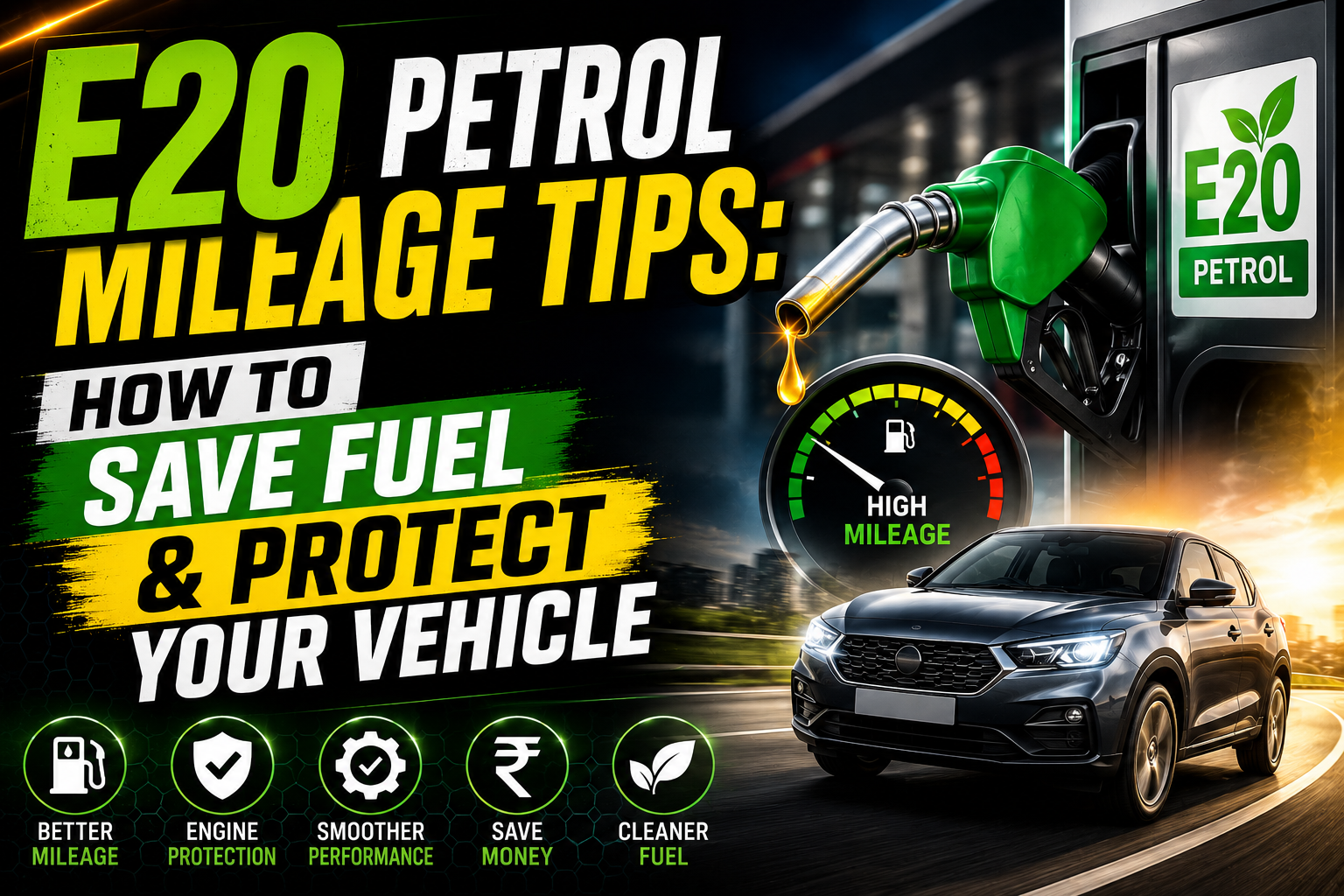
With E20 petrol becoming more common, many car owners have noticed that mileage can feel lower than before. That does not mean your vehicle is in danger, but it does mean your driving habits, service routine and fuel habits matter more than ever.
The good news is that you can still get respectable mileage from an E20-compatible car or bike if you drive smartly and maintain the vehicle well. In many cases, small changes in how you use the vehicle make a bigger difference than people expect.
Why mileage drops
E20 petrol contains a higher ethanol blend, and that can affect efficiency compared with older fuel blends. Owners often report a small mileage drop after switching, especially in city traffic where stop-and-go driving already increases fuel consumption.
The effect is usually more noticeable in older vehicles or in vehicles that are not tuned as well for ethanol-blended fuel. That is why maintenance and driving style become important parts of the solution.
Drive smoothly
One of the simplest ways to improve mileage is to avoid hard acceleration and sudden braking. Smooth throttle inputs help the engine work more efficiently and reduce wasted fuel.
Traffic patience also matters. If you anticipate stops earlier and keep a steady pace, you can save fuel without changing anything else in the car. In city driving, this habit alone can make a noticeable difference.
Check tyre pressure
Tyre pressure is one of the most overlooked mileage factors. Underinflated tyres create extra resistance, which forces the engine to burn more fuel than necessary.
Checking tyre pressure at least twice a month is a simple habit that can help both mileage and tyre life. It also improves safety, which is just as important as fuel economy.
Cut extra weight
Carrying unnecessary weight affects mileage more than many drivers realize. Heavy items in the boot, unused roof carriers or extra accessories can all add drag and make the engine work harder.
The lighter your vehicle is, the easier it moves. This is especially useful for SUV owners, since larger vehicles feel the effect of added weight more than smaller hatchbacks or sedans.
Use AC wisely
Air conditioning can reduce efficiency if used heavily in city traffic. In slow-speed driving, moderate AC use and sensible temperature settings are better than running it at maximum all the time.
On highways, keep windows shut and use AC moderately, because open windows create more aerodynamic drag at higher speeds. This is one of those small habits that can quietly improve fuel efficiency.
Avoid long idling
Leaving the engine running while the vehicle is stationary wastes fuel. If you are waiting for a long time, switching off the engine can save petrol, especially in traffic jams or long parking waits.telugu.
Modern engines handle restarts efficiently, so there is usually no need to keep the car idling for long periods. The habit of turning off the engine during extended stops can help over time.
Keep servicing on time
Regular maintenance is even more important with E20 fuel. Dirty injectors, clogged filters or a poorly maintained throttle body can reduce mileage and affect smoothness.
Many experts recommend checking fuel-system components more frequently, especially in older vehicles. Using the engine oil recommended by the manufacturer is also essential, since ethanol-blended fuel can place a different kind of load on the engine.
Protect the fuel system
If your vehicle is not fully E20-ready, it helps to be extra careful with storage and fuel freshness. Do not leave fuel sitting in the tank for too long, especially if the vehicle is used rarely.
Ethanol can attract moisture, so keeping the tank reasonably full can reduce condensation inside the tank. Make sure the fuel cap is properly closed after refuelling as well.
Plan trips smartly
Short, separate trips often use more fuel than one well-planned run. If possible, combine errands into one outing instead of starting the engine multiple times through the day.
Cold starts use more fuel, so reducing the number of short, repeated journeys can improve average mileage. This is a simple but effective habit for city users.
What older owners should watch
Owners of older vehicles should pay close attention to fuel line condition, seals, hoses and injector health. Ethanol-blended fuel can expose weak parts faster if the vehicle is already aging.
If mileage suddenly drops sharply, do not assume the fuel alone is the problem. A service inspection can reveal whether the issue is tyre pressure, air filter condition, injector cleanliness or something more serious.
You cannot completely control the mileage impact of E20 petrol, but you can reduce its effect significantly with the right habits. Smooth driving, proper tyre pressure, timely servicing, sensible AC use and careful fuel-system maintenance all help.
The goal is simple: drive efficiently, maintain the vehicle properly and avoid habits that waste fuel. If you do that, your car or bike can stay healthy and reasonably efficient even in the E20 era.