













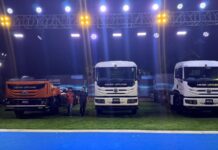
















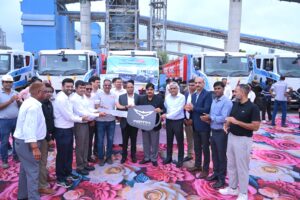
Wonder Cement and Montra Electric have announced one of India’s biggest electric freight deployments yet, with around 250 Montra Electric Rhino 5538 EV 4×2 TT trucks set to operate across a 1,450-km industrial corridor. The route connects Nimbahera to Dahej Port and Nimbahera to Tuna Port, covering Rajasthan, Madhya Pradesh, Maharashtra and Gujarat, and is being described as the country’s longest commercial electric freight corridor.
This is a major milestone for India’s commercial EV space because it moves electric trucking from pilot-scale experimentation to real high-utilisation freight operations. The trucks will run fully loaded on daily duty cycles, matching the operating pattern of a conventional diesel cement fleet, which makes this deployment an important test of long-haul electric logistics in real-world conditions.
What has been deployed
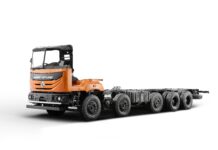
The vehicle at the centre of this project is the Montra Electric Rhino 5538 EV 4×2 TT, a 55-tonne Gross Combination Weight electric tractor-trailer designed for heavy industrial use such as cement and steel transport. It is powered by a 282 kWh LFP battery, a Permanent Magnet Synchronous Motor, and delivers 280 kW of peak power along with 2,000 Nm of torque.
The truck also gets an 18% gradeability rating and a 6-speed Automated Manual Transmission, which are critical for hauling heavy loads over varied terrain. Montra says the vehicle has been engineered specifically for demanding operations where uptime, torque delivery and consistent performance matter most.
Why this route matters
The Nimbahera–Dahej Port and Nimbahera–Tuna Port routes are not short local runs. They stretch across a wide industrial network and are used for high-volume freight movement, which makes them an ideal proving ground for electric trucking.
By placing electric trucks on a corridor that long and demanding, Montra Electric and Wonder Cement are addressing the biggest doubts around electric freight: range, payload and battery performance under heavy load. If EVs can work here, they can potentially be scaled to other bulk-cargo corridors across India.

Charging and uptime support
To support the fleet, the corridor will be backed by 13 charging stations with 39 chargers, enabling the trucks to complete their daily cycles within the turnaround times required by industrial logistics.
Montra Electric has also offered two operating configurations for the Rhino EV. The fixed-battery version can fast-charge from 20% to 100% in about 60 minutes, while the battery-swap version can replace a full battery in under 6 minutes, which is especially important for routes where downtime directly affects logistics efficiency.
This charging and swap flexibility is one of the strongest parts of the deployment because it tackles the biggest commercial challenge for electric trucks: keeping them working with minimal interruptions.
Environmental impact
At full deployment, the 250-truck fleet is expected to save 39,500 tonnes of CO₂ annually. That makes the project significant not only for freight operators but also for industries trying to reduce emissions without compromising operational reliability.
For Wonder Cement, this is part of a broader sustainability push. The company has said that decarbonising logistics is now a key part of its growth strategy, and the shift to electric freight supports its environmental goals beyond the manufacturing process itself.
What the companies said
Wonder Cement said the deployment reflects its commitment to responsible growth and a lower-carbon future. The company described the move as a meaningful step toward decarbonising logistics and said the partnership shows that long-haul freight electrification is both commercially and operationally viable.
Montra Electric said the deployment proves that electric heavy-duty trucks can handle daily, fully loaded long-duty cycles on one of India’s busiest freight routes. The company sees this not as a question of whether electric trucks can do the job, but how quickly fleets can scale them across the country’s major industrial corridors.
Why this is important for India
India’s freight emissions are heavily concentrated on long-haul industrial corridors, so electrifying that part of logistics can have a large impact. This deployment shows that the commercial EV conversation in India is no longer limited to last-mile delivery or short urban routes. It is now moving into core heavy freight operations.
That shift is important because it can open the door for more cement, steel, mining and bulk-material companies to consider electric trucks. If the numbers work and the uptime is reliable, the business case becomes much stronger.
Wonder Cement’s deployment of 250 Montra Electric Rhino trucks is more than a fleet order; it is a statement about where India’s freight sector is heading. With a 1,450-km electric corridor, dedicated charging support and a heavy-duty truck built for long-haul work, the project could become a benchmark for industrial EV logistics in India.
If successful, this deployment may help prove that electric trucks are ready for the toughest jobs in commercial transport, not just the easiest ones.