






























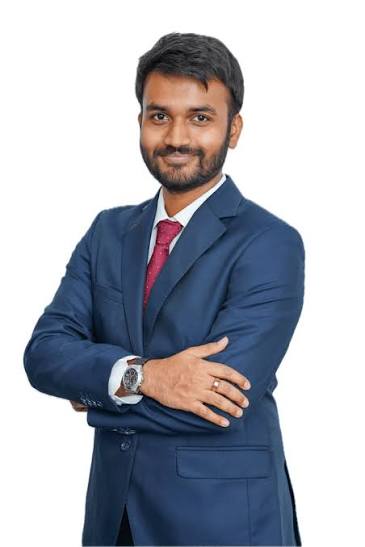
Sanyam Gandhi is not your typical transport industry executive. As the Whole-Time Director of Chartered Speed Limited, he represents a new generation of mobility leadership in India one that blends engineering, sustainability, and digital thinking with a clear focus on cleaner public transport.
At a time when Indian cities are struggling with congestion, pollution and the need for better last-mile and mass-transit solutions, Gandhi has become one of the most visible voices pushing for electric and low-emission mobility. His work at Chartered Speed is closely tied to the company’s move toward electric buses, multimodal transport and technology-led operations.
Early foundation
Gandhi studied Mechanical Engineering at the Karlsruhe Institute of Technology in Germany, where he specialised in Energy Engineering. His academic research focused on superconductors in wind turbines, which reflects a long-standing interest in renewable energy and sustainable technologies.
That background is important because it helps explain the way he approaches mobility. Rather than seeing transport only as a business of moving people, he sees it as a system that must be cleaner, more efficient and future-ready.
Young leadership role
In 2018, when he was just 22, Gandhi was among the 100 young entrepreneurs invited by Prime Minister Narendra Modi to the Champions of Change initiative. The recognition placed him in a national conversation around how India’s mobility landscape could evolve by 2025.
That early national exposure appears to have shaped his broader outlook. Since joining Chartered Speed’s board in March 2018, he has played an active role in identifying technologies and strategies that improve efficiency, scalability and sustainability.
Chartered Speed’s mobility push
Chartered Speed is one of India’s leading passenger mobility companies, and under Gandhi’s leadership it has expanded beyond conventional transport thinking. The company operates across city buses, intercity coaches, micro-mobility, and even self-drive and bicycle-sharing-related mobility solutions.
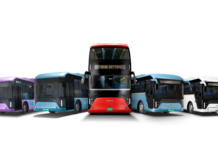
The company has also made a strong push into electric buses. In 2025 and 2026, Chartered Speed announced major EV bus deployment plans, including more than 900 electric buses under the PM e-Bus Sewa Scheme and a broader target of around 3,000 electric buses across 18 cities.
Those are not small announcements. They show that Gandhi and Chartered Speed are working on one of the largest public-transport electrification stories in the country.
Vision for cleaner mobility
Gandhi’s core vision is to move India away from traditional engines and toward greener alternatives that are both sustainable and affordable. He has consistently spoken about electric mobility not as a distant idea, but as a practical transition that can be scaled through the right policy support and partnerships.
That is why he has repeatedly argued for a stronger ecosystem around electric buses, including financing, public-private partnerships and better operating models. His speaking engagements at events such as the Mission Net Zero India Summit, India Clean Transportation Summit, WRI India events and electric bus reform forums underline how deeply involved he is in policy and sector-level discussions.
A broader mobility philosophy
One of Gandhi’s strongest ideas is that public transport should not be seen in isolation. He has advocated for multimodal mobility, where buses, walking, cycling, shared transport and first- and last-mile connectivity all work together as one system.
This is a modern and practical view of urban transport. Instead of building fragmented solutions, Gandhi appears focused on creating an integrated mobility ecosystem that can serve modern India more effectively.
Why he stands out
What makes Sanyam Gandhi interesting is the combination of technical training, early leadership recognition and a clear sustainability mindset. He is not just speaking about electric buses; he is helping build the operational and business case for them.
His leadership style also seems rooted in implementation rather than only vision. At Chartered Speed, he has been involved in scaling operations, improving efficiency and aligning technology with public transport goals. That practical approach is one reason the company has become a significant player in India’s cleaner mobility transition.
Looking ahead
As India pushes toward cleaner cities and more efficient public transport, executives like Sanyam Gandhi are likely to become more important. The future of mass mobility will depend not just on vehicles, but on how well they are financed, operated and integrated into the wider transport system.
Gandhi’s focus on electric buses, sustainable infrastructure and multimodal transport places him at the centre of that shift. If Chartered Speed continues to scale its EV deployments successfully, his role in shaping India’s public mobility future will become even more visible.